Lent in medieval Europe was not a soft suggestion. It was a social, legal, and spiritual reality that structured daily life for nearly everyone from peasant to king. For forty days leading up to Easter, Christians were expected to fast, abstain, and discipline the body in imitation of Christ’s suffering in the wilderness. Food was not just sustenance in this season. It was moral territory.
If you’re enjoying my recipes, check out my e-cookbooks at the Eats History Shop!
Today, breaking a Lent fast or indulging in a chocolate bar might make you a bit disappointed in yourself. In medieval England, it could lead to fines, public penance, or ecclesiastical punishment. Diet was regulated by the Church, reinforced by civic authority, and embedded into the rhythm of the year. Markets changed. Kitchens changed. Even agriculture adjusted to the demands of fasting days.
Out of these restrictions came creativity. The wealthy developed entire cuisines around abstinence. One such dish survives in the 14th-century royal manuscript known as The Forme of Cury, and it is a perfect example of how even boiled fish could become refined.
What Medieval Lent Actually Required
The rules were strict.
Ash Wednesday and Good Friday were what later writers described as black fasts. These consisted of one meal taken after sunset, typically of bread, water, and simple herbs. No indulgence. No comfort.

On the other weekdays of Lent, no food was eaten until roughly midafternoon, around the ninth hour, the hour associated with Christ’s death. Water was permitted. In practice, watered-down ale or wine was commonly consumed due to sanitation concerns. Later, when tea and coffee entered Europe, they were permitted within fasting structure.
Most importantly, no animal flesh was allowed. That meant no beef, pork, lamb, or poultry. But the restrictions went further. No eggs. No dairy. No butter. No cheese. These were called lacticinia, and they were forbidden. Fish, however, was permitted.
When Breaking Lent Was a Crime
In 14th and 15th-century England, civic authorities enforced fasting regulations because fish markets, agricultural production, and trade depended on it. Records show fines issued for butchers selling meat during prohibited times. In some towns, meat shops were ordered closed during Lent entirely.
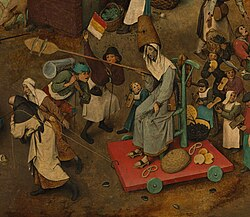
Ecclesiastical courts also handled cases of fasting violations. Church court records from England and continental Europe document individuals accused of secretly eating meat during fast days. Offenders might receive public penance, fines, or other disciplinary measures. In certain cases, the offense was tied to broader moral suspicion.
Peasant Pottage vs Noble Experimentation
For most peasants, Lent did not drastically change their diet. Meat was already scarce. Pottage made of grains, onions, cabbage, and legumes formed the backbone of daily life. Removing occasional pork or fat did not transform their kitchen.
The upper classes, however, had more to lose.
Medieval elites were accustomed to roasted meats, rich sauces, and layered dishes. Lent required culinary adaptation. Out of necessity came innovation. Almond milk replaced dairy, and fish replaced flesh. Spiced sauces and fresh herbs carried flavor where fat once did.
This is where manuscripts like The Forme of Cury shine. Compiled in the late 14th century by cooks serving King Richard II, it preserves recipes that reflect both restraint and refinement.
The Fish and the Green Sauce
The original recipe calls for conger eel. Eel was common in medieval England and prized in both freshwater and coastal environments. For practicality, I substituted catfish, a plausible medieval freshwater fish with similar texture.

The fish (or eel) is simply scalded, cut, and boiled. There is no browning. No roasting. Medieval cooking did not chase crust in the modern sense. Texture and sauce mattered more.
The brilliance lies in the green garlic-herb sauce. Parsley, mint, rosemary, a little sage, garlic, bread crumbs, powder fort, and vinegar are ground into a paste. Powder fort was a common spice blend of nutmeg, mace, cloves, and ginger. The sauce is strained with vinegar and poured over the fish cold.
The result reminds me of a sharp medieval pesto. Bright. Herbaceous. Vinegar-forward. Aromatic from warm spice.
My Verdict
I will be honest, I’m not a boiled fish guy.

No matter how you frame it historically, poached or boiled fish rarely excites me. The texture is soft. The flavor is delicate to the point of fragility. But the sauce surprised me.
The herb and vinegar mixture carried real intensity. The mint and parsley lift it. The powder fort adds warmth. The garlic cuts through the softness of the fish. Sort of reminds me of a zesty garlic pesto without the pine nuts, cheese, and olive oil.
Overall, I give it a 5.7 out of 10.
Not a dish I would crave (or quite frankly make again), but a fascinating window into how medieval cooks navigated Lent with creativity and sophistication.
Green Garlic Sauce for Fish Recipe:
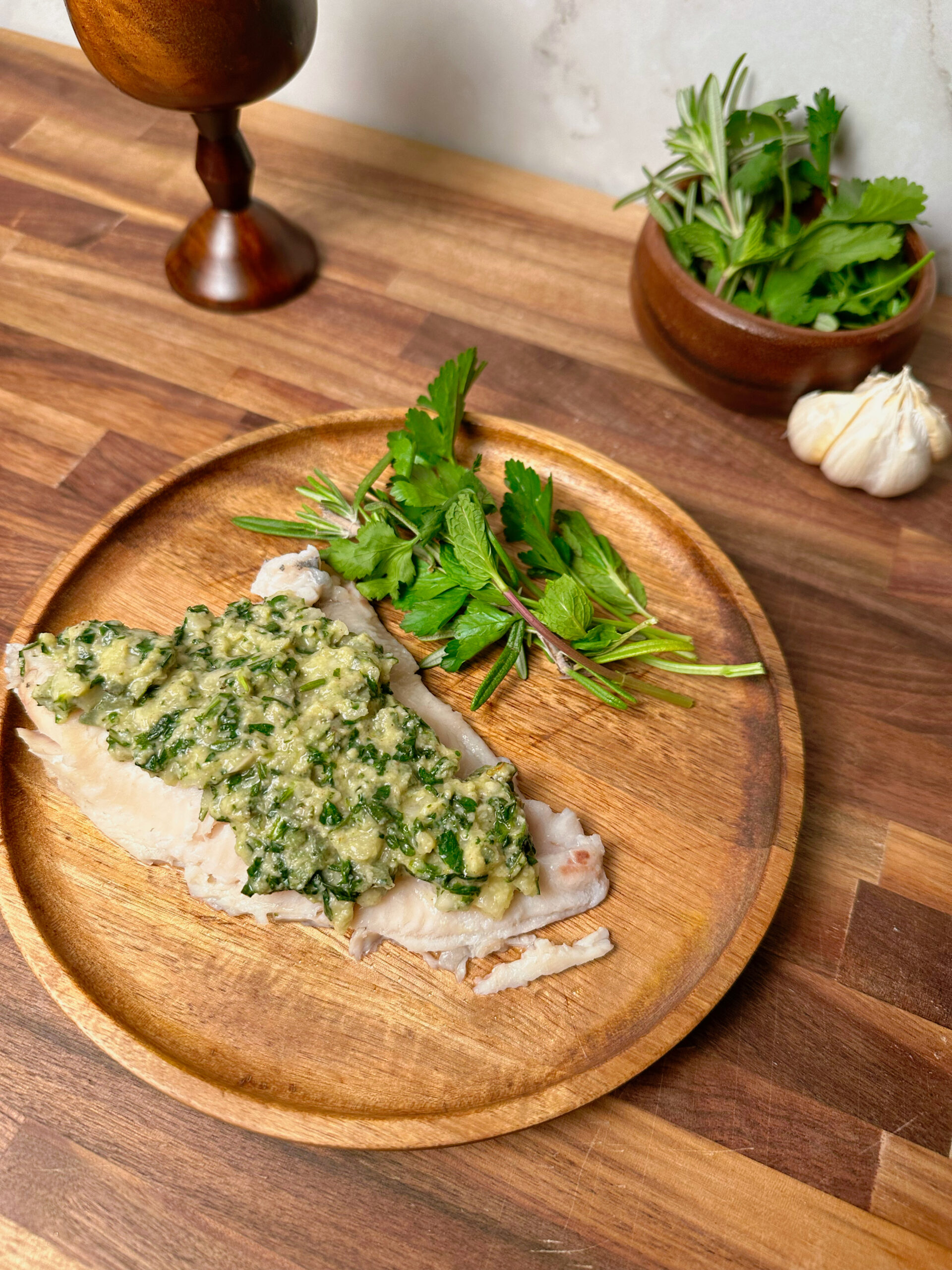
“Congur in Sawse” – Fish/Eel in Garlic Sauce
Ingredients
- 2 catfish fillets
- 2 tbsp wine vinegar
- 1 tbsp fresh parsley
- ½ tbsp fresh cilantro
- ½ tbsp fresh mint
- ½ tbsp fresh sage
- ½ tbsp fresh rosemary
- ¼ cup white bread crumbs
- ½ tsp hot mustard powder
- ⅛ tsp powder fort nutmeg, mace, cloves, ginger blend
- Salt to taste
Instructions
For the Fish:
- Bring a pan of water to a gentle boil.
- Add fish fillets and simmer about 10 minutes until tender.
- Remove and place on serving dish to cool slightly.
For the sauce:
- Combine herbs, bread crumbs, mustard powder, powder fort, garlic, and salt in a mortar and pestle.
- Grind into a thick green paste.
- Add vinegar gradually while grinding to form a sharp, spoonable sauce.
- Spoon the sauce over the fish and serve cool.
Video
Notes
- Do Not Overcook the Fish: Medieval boiling was gentle, not aggressive. Keep the water at a soft simmer, not a rolling boil. Overcooking will make the fish stringy and dry, which will overpower the delicate sauce.
- Grind the Sauce Properly: The mortar and pestle matters here. A blender will emulsify too smoothly and lose texture. Medieval sauces were rustic but cohesive. You want a slightly coarse paste that still holds structure.
- Balance the Vinegar Carefully: The vinegar should sharpen the herbs, not dominate them. Add gradually while grinding. Medieval palates appreciated acidity, but the sauce should taste bright and aromatic, not sour.