
Go Back

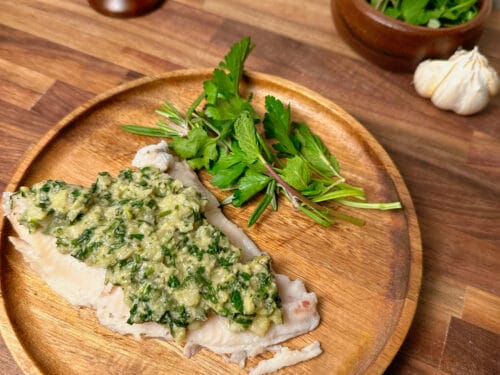
"Congur in Sawse" - Fish/Eel in Garlic Sauce

Print Recipe
This 14th-century Lenten fish from The Forme of Cury is a study in restraint and ingenuity. Tender boiled catfish is topped with a vivid green garlic and herb sauce sharpened with vinegar and warmed by powder fort, the medieval spice blend of nutmeg, mace, cloves, and ginger. The fish itself is simple and delicate, but the sauce carries the dish with bright acidity, fresh herbs, and aromatic depth. It is not indulgent, nor is it meant to be. It reflects the disciplined structure of medieval Lent while revealing the creativity of royal English kitchens navigating strict dietary laws.
Prep Time 15 minutes
Cook Time 10 minutes

Ingredients

  • 2 catfish fillets
  • 2 tbsp wine vinegar
  • 1 tbsp fresh parsley
  • ½ tbsp fresh cilantro
  • ½ tbsp fresh mint
  • ½ tbsp fresh sage
  • ½ tbsp fresh rosemary
  • ¼ cup white bread crumbs
  • ½ tsp hot mustard powder
  • tsp powder fort nutmeg, mace, cloves, ginger blend
  • Salt to taste

Instructions

For the Fish:

  • Bring a pan of water to a gentle boil.
  • Add fish fillets and simmer about 10 minutes until tender.
  • Remove and place on serving dish to cool slightly.

For the sauce:

  • Combine herbs, bread crumbs, mustard powder, powder fort, garlic, and salt in a mortar and pestle.
  • Grind into a thick green paste.
  • Add vinegar gradually while grinding to form a sharp, spoonable sauce.
  • Spoon the sauce over the fish and serve cool.

Video

Notes

  • Do Not Overcook the Fish: Medieval boiling was gentle, not aggressive. Keep the water at a soft simmer, not a rolling boil. Overcooking will make the fish stringy and dry, which will overpower the delicate sauce.
 
  • Grind the Sauce Properly: The mortar and pestle matters here. A blender will emulsify too smoothly and lose texture. Medieval sauces were rustic but cohesive. You want a slightly coarse paste that still holds structure.
 
  • Balance the Vinegar Carefully: The vinegar should sharpen the herbs, not dominate them. Add gradually while grinding. Medieval palates appreciated acidity, but the sauce should taste bright and aromatic, not sour.