Every Easter, millions of people eat a spiced bun marked with a cross without knowing that the tradition began with a single monk in 14th century England who baked them by hand, gave them away to the poor at the abbey door, and washed them down with free wine. The hot cross bun is one of the most eaten seasonal foods in the world.
Its origin is one of the most specific and well-documented food origin stories in British history. And the medieval version, made with honey instead of sugar and with the cross cut into the dough rather than piped on top, is genuinely different from anything you will find in a supermarket. This is that recipe.
The Monk, the Abbey, and the Original Recipe
The story begins at St Albans Abbey in Hertfordshire, England, in 1361. Brother Thomas Rocliffe, a monk attached to the refectory of the abbey, began baking small sweet spiced cakes marked with a cross and distributing them to anyone who came to the abbey door on Good Friday. Alongside the buns he gave out a customary basin of sack, a fortified wine similar to sherry. The account of this, preserved in a copy of Ye Booke of St Albans and later reported in the Herts Advertiser in 1862, records that the cakes so pleased the palates of the people who received them that they became talked about across the country, and various were the attempts to imitate the cakes of Father Rocliffe all over the country, but the recipe was kept within the walls of the Abbey.
The bun became known as the Alban Bun, named after the abbey’s patron saint Alban, the first Christian martyr of Britain, whose shrine inside the cathedral is believed to be the oldest continuous site of Christian pilgrimage in Great Britain. Brother Thomas had created something that would outlast the abbey itself, outlast the medieval world that produced it, and outlast every political and religious upheaval England would experience over the following six and a half centuries.
The known ingredients of the original recipe, still held as a closely guarded secret by St Albans Cathedral today, include flour, eggs, fresh yeast, currants, and grains of paradise or cardamom. Grains of paradise is an African spice that was the dominant warming spice in medieval English cooking before black pepper became cheap and widely available in later centuries. It tastes somewhere between pepper, cardamom and ginger with a floral edge. It is the ingredient that most clearly distinguishes the medieval Alban Bun from any modern supermarket version and the one detail that most strongly places this recipe in the 14th century.
The cross on the original Alban Bun was not piped on top in a flour paste. It was cut into the surface of the dough with a knife before baking, dividing the bun into four distinct quarters. This is still how St Albans Cathedral makes them today. The piped cross is a later commercial innovation. The knife-cut cross is medieval.
The Reformation and the Bun That Almost Disappeared
For nearly two centuries the Alban Bun spread quietly across England, baked by local bakers attempting to replicate what Brother Thomas had created at St Albans. Then the English Reformation intervened and nearly destroyed the tradition entirely.
When Henry VIII cut ties with the Roman Catholic Church in 1534 and proceeded with the dissolution of the monasteries between 1536 and 1541, the spiced buns marked with a cross were identified as a Catholic practice from the old religious order. They were seen as dangerous. The London clerk of markets issued an edict that permitted the spiced buns to be sold only at funerals, at Christmas, or on Good Friday. Any baker found selling them outside those occasions faced having the entire batch confiscated and distributed to the poor.
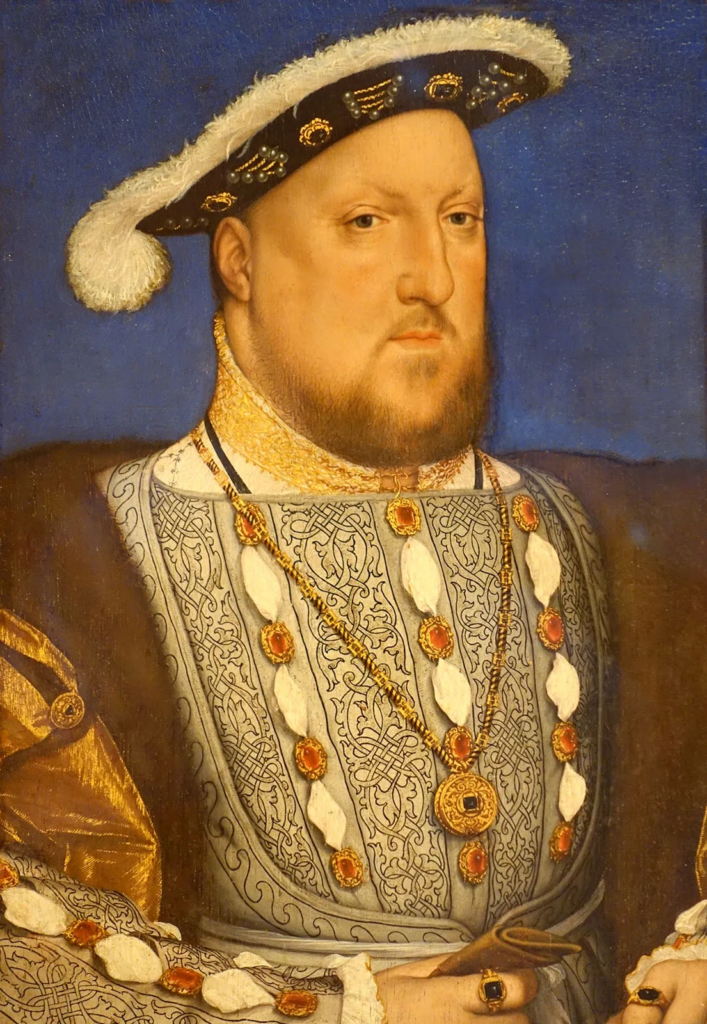
The restriction was extraordinary. A bun so strongly associated with Catholic tradition that the Protestant government legislated specifically against it. Yet the bun survived. Local bakers in Lancashire, Yorkshire, and across the north of England kept making them, kept selling them on Good Friday, and the tradition held through the Reformation, through the English Civil War, and into the Georgian and Victorian eras when it finally gained the national popularity it has today.
St Albans Abbey itself lost its mill and much of its land to Henry VIII in 1539, when the king seized the abbey estates and parcelled them off. The Redbournbury Mill, once owned by the abbey and closely connected to the bread-making tradition that produced the original Alban Bun, was given to the king’s daughter, later Queen Elizabeth I. It now produces the flour used to bake the modern Alban Bun, sold at St Albans Cathedral every Lent. The mill and the cathedral are still working together, nearly five hundred years after Henry VIII tried to separate them.
How the Hot Cross Bun Became a Global Tradition
By the 18th and 19th centuries the hot cross bun had shed most of its explicitly Catholic symbolism and become a fixture of English Easter culture across all denominations. Street vendors in London sold them on Good Friday mornings, shouting the famous cry of hot cross buns, hot cross buns, one a penny, two a penny through the streets. The nursery rhyme that most English-speaking children still know today is a direct record of this street trade.
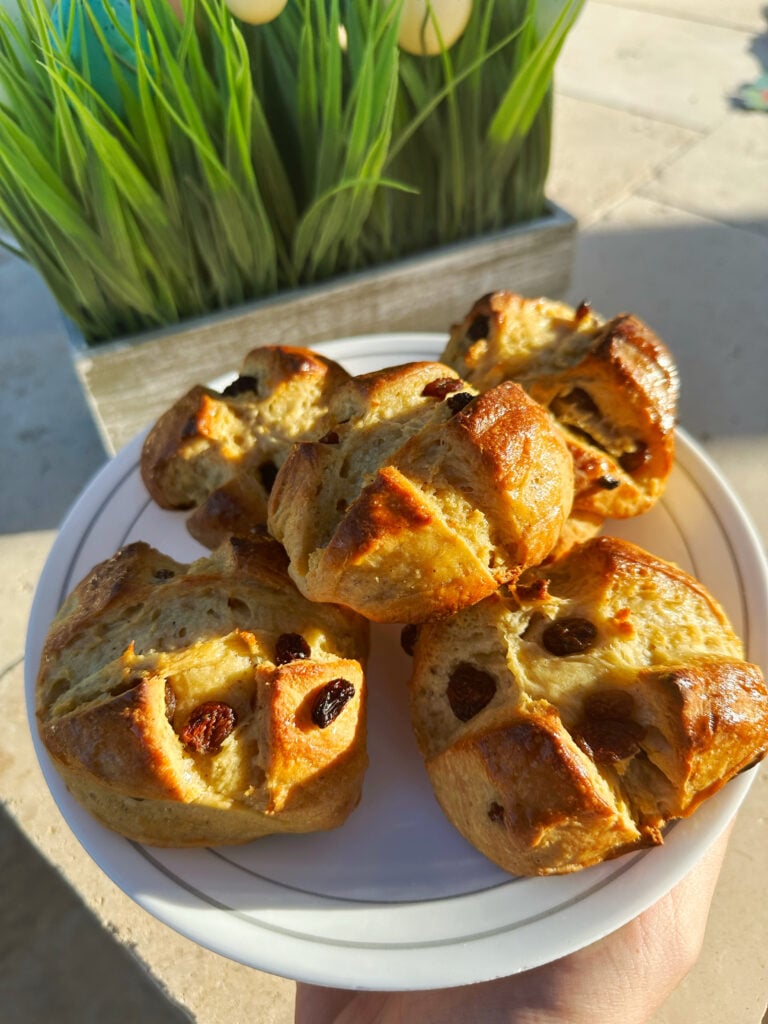
The bun travelled with British settlers and colonial networks across the world. It took root in Australia, New Zealand, Canada, South Africa, and the United States, where it became part of the Easter calendar in communities with British heritage. By the late 20th century supermarket chains were producing them months in advance of Easter, a development that drew considerable complaint from food historians and from St Albans Cathedral, whose Dean noted publicly that the Alban Bun might be a way of reaffirming the significance of the bun as a symbol of Good Friday and Christ’s death and resurrection, as opposed to simply a year-round supermarket product.
The Alban Bun itself, the closest thing to Brother Thomas’s 1361 original, is still baked and sold at St Albans Cathedral every year from Ash Wednesday through to Easter Monday, made with the cathedral’s own secret spice blend at Redbournbury Mill. It is hand-formed, irregularly shaped, cut with a knife cross on top, and sells out regularly. People travel specifically to buy it. The bun that a medieval monk gave away free with wine in 1361 is now a pilgrimage destination in its own right.
What Makes the Medieval Version Different
The modern supermarket hot cross bun and the medieval Alban Bun are related but distinct. Three differences matter most.
The first is the sweetener. Medieval baking used honey, not refined sugar. Sugar was an expensive imported luxury in 14th century England, used primarily as a spice or medicine rather than a baking ingredient. Honey was the everyday sweetener of the medieval kitchen. It changes the flavour of the bun noticeably, adding a floral depth and a slight acidity that refined sugar does not produce, and it caramelises differently in the oven, giving the crust a darker, richer colour.
The second is the spice. The key medieval spice is grains of paradise or cardamom, not the cinnamon-forward blend that dominates modern commercial versions. Medieval English baking leaned heavily on warming spices from the eastern spice trade, and the flavour profile of the original Alban Bun was more complex, more perfumed, and less sweet than what we eat today.
The third is the cross. The knife cut rather than the piped flour paste. It sounds like a minor detail but it changes the look of the bun entirely, giving each one four slightly puffed quarters that open during baking, creating a more rustic, dramatic appearance than the neat white cross piped on a smooth surface.
My Review of the Medieval Version
I made these as close to the original as I could get, using honey instead of sugar, cardamom and grains of paradise as the primary spice, and cutting the cross into the dough with a sharp knife before baking. The result is genuinely different from any hot cross bun I have eaten before.
The honey gives the dough a depth that sugar simply does not produce. The crust comes out darker and slightly stickier, with a floral sweetness underneath the spice. The cardamom is more prominent than most modern versions and slightly more surprising, warmer and more complex than a straight cinnamon hit. The knife-cut cross opens beautifully in the oven and gives each bun a character that the piped cross version lacks.
They are denser than a modern commercial hot cross bun, which is correct. Medieval baking produced a more substantial product than the light, airy bun we are used to. They are best eaten warm, with a good amount of butter, which is also correct.
Rating: 7.9 out of 10. The honey and cardamom combination is genuinely excellent and I would choose this over a supermarket version without hesitation. The density takes some adjustment if you are used to a lighter bun, but once you understand that is a feature rather than a flaw, these are deeply satisfying. Brother Thomas Rocliffe was making something worth travelling across medieval England for, and I think the recipe proves it.
The Recipe: Medieval Alban Buns, 1361
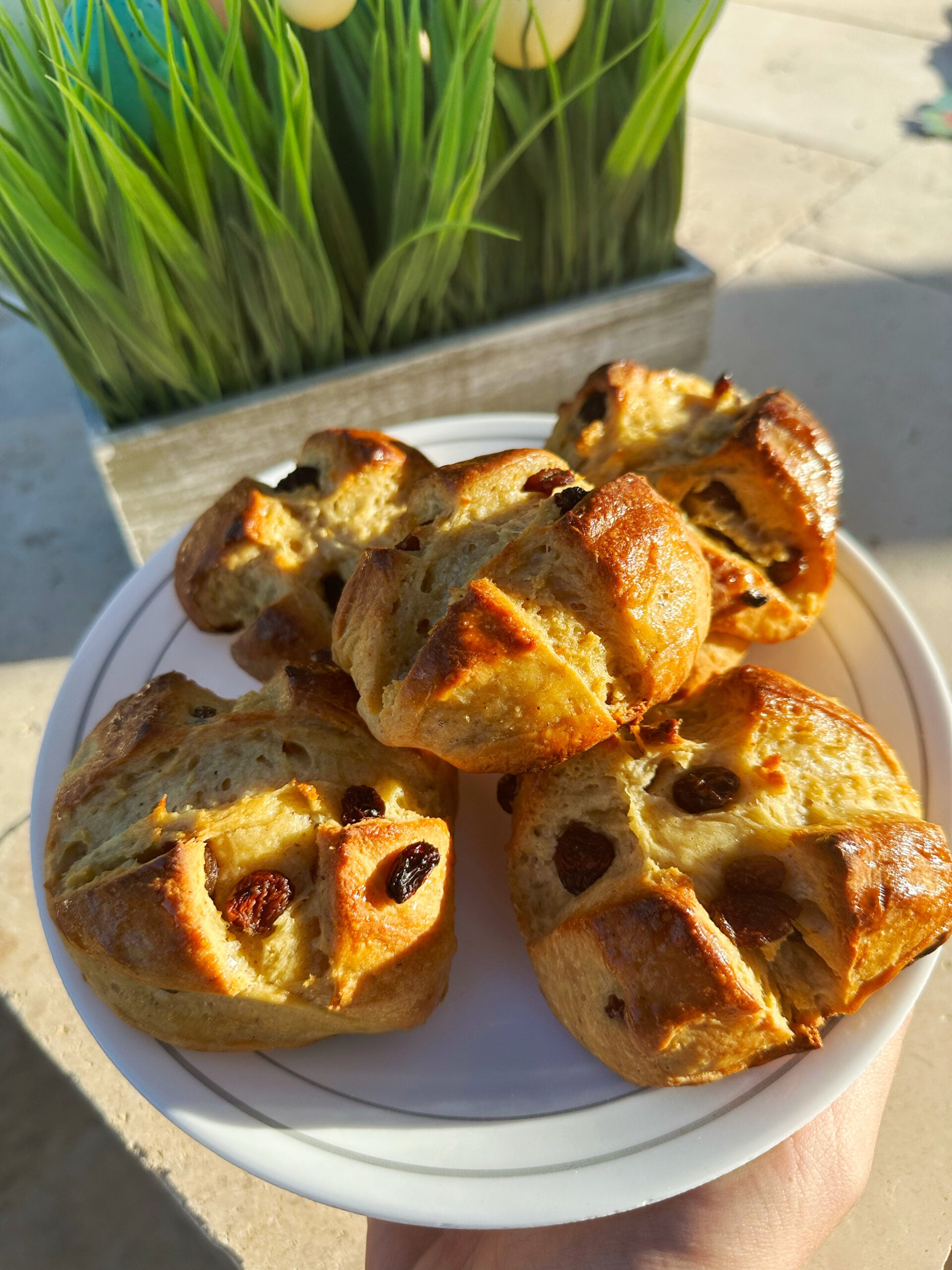
Medieval Hot Cross Buns
Ingredients
- 2 cups strong white bread flour or all-purpose bread flour
- 1 tsp instant yeast
- ½ tsp salt
- 3½ tbsp honey
- 1 egg
- ⅓ cup warm whole milk
- 3½ tbsp warm water
- 4 tbsp unsalted butter softened
- ½ cup currants
- ¾ tsp ground cardamom or half cardamom, half black pepper
- ½ tsp ground cinnamon
- ¼ tsp ground ginger
- ⅛ tsp ground cloves
- 1 tsp grains of paradise (optional), if using sub all other spices
Instructions
- Combine the flour, yeast, salt and all the ground spices in a large bowl and mix together. Add the honey, egg, warm milk and warm water and mix to a shaggy dough. Add the softened butter and knead for 8 to 10 minutes until smooth and elastic. The dough will be enriched and slightly tacky, which is correct.
- Fold in the currants and knead briefly to distribute them evenly through the dough. Place in a lightly oiled bowl, cover, and leave to rise for 1 to 1½ hours until doubled in size.
- Divide the dough into 6 equal pieces, roughly 90g each, and shape each piece into a tight round. Place on a lined baking tray with space between each bun. Cover and prove for a further 45 minutes to 1 hour until noticeably puffed.
- Using a sharp knife or a razor blade, cut a deep cross into the top of each bun, pressing firmly enough to divide the surface into four clear quarters. This is the medieval method and the defining visual difference from a modern hot cross bun. Do not pipe a cross.
- Bake at 400°F for 15 to 18 minutes until deep golden brown. Medieval ovens ran hotter and more aggressively than a modern domestic oven, so do not be nervous about colour. Check at 15 minutes and give them the full 18 if they look pale.
- Glaze immediately on coming out of the oven with warmed honey brushed generously over the top. Serve warm with butter.
Notes
- The honey glaze applied immediately out of the oven is not optional. It is what finishes the bun, seals the crust, and gives the surface its characteristic sticky shine. Use a good quality honey and be generous.
- Grains of paradise is the most period-accurate spice for this recipe and can be ordered online. Ground freshly, it has a warm, floral, peppery character that cardamom alone does not fully replicate. If you want the most authentic medieval flavour, it is worth seeking out.
- These buns are best eaten the day they are baked, warm from the oven with cold butter. They were designed to be given away on Good Friday and eaten that day. Brother Thomas Rocliffe knew what he was doing.