When most people think about ancient Roman food, they think about Apicius. The elaborate sauces. The stuffed dormice. The roasted flamingo. The garum on everything. They think about the feasts of the elite, the triclinium dining rooms of the wealthy, the extraordinary culinary excess that made Rome’s upper class famous across the ancient world.
Here is what they are forgetting. The Roman Empire was not built by people eating stuffed dormice. It was built by soldiers marching twenty miles a day in full armour, by slaves working agricultural land from dawn to dark, by commoners in urban tenements with no kitchen and no means of cooking anything elaborate even if they could afford it. And almost all of those people were eating some version of the same thing. A thick, simple porridge of grain cooked in water. Called puls.
Puls is not glamorous. It does not photograph as dramatically as a reconstructed Roman feast. But it is the most historically accurate thing I have made for this channel in terms of representing what the majority of Romans actually ate every day of their lives. And it is considerably better than it has any right to be.
What the Sources Actually Tell Us
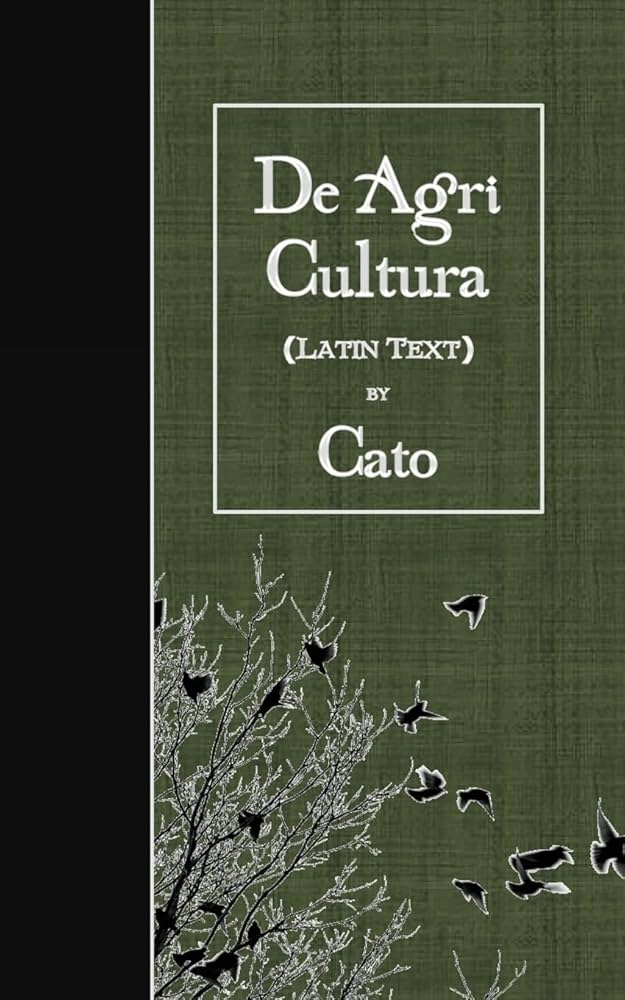
The recipe for puls is not buried in obscure manuscripts. It is right there in Cato the Elder’s De Agri Cultura, the same 2nd century BC agricultural manual that gave us the libum recipe. Cato documents puls as the foundational food of the Roman farm and the Roman soldier, a grain porridge made from emmer wheat, spelt or farro cooked down in water until thick. Pliny the Elder wrote in his Natural History:
“For more than three hundred years the Romans used no other food than puls.”
Apicius, whose cookbook De Re Coquinaria is the primary surviving document of Roman elite cuisine, references puls as a base preparation that could be enriched with additional ingredients like wine. The fact that Apicius bothers to document it at all is telling. By the time his cookbook was compiled in the 4th or 5th century AD, puls had been the foundational food of Roman civilisation for so long that it existed simultaneously as peasant staple and as a base for elite preparations depending entirely on what you added to it. The grain was the constant. Everything else was circumstance.
The Romans called themselves the pultiphagonists in their earliest period, the porridge eaters, a name that predated the more glamorous culinary culture of the later empire. Pliny the Elder noted that for more than three centuries, Romans ate nothing but puls. Whether or not that is strictly accurate, the cultural centrality of the dish to Roman identity is not in dispute.
Who Was Actually Eating This and When
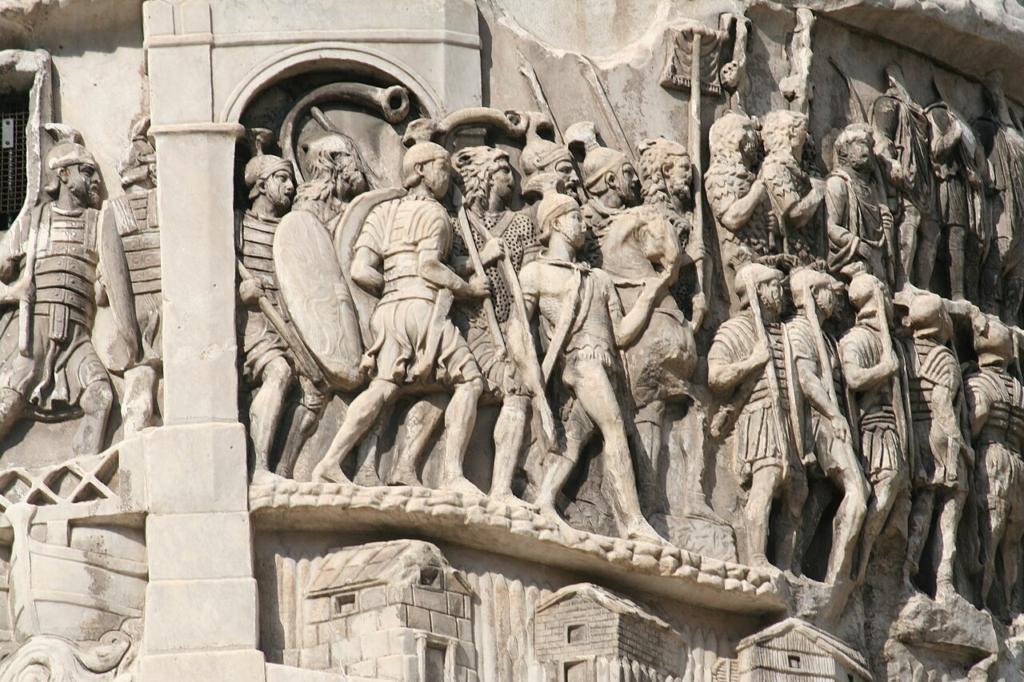
The Roman soldier’s daily ration, documented in military records and archaeological finds from legion camps across the empire, was built around grain. Each soldier received a grain allowance, typically around a kilogram per day, that was ground, cooked as porridge or baked as flatbread, and supplemented with whatever was available locally. Salt, olive oil, acetum, a sour wine vinegar diluted with water, and occasionally cheese or cured meat. That was the diet that marched from Britain to Mesopotamia.
Roman slaves and urban poor ate similarly. The Roman grain dole, the annona, distributed free or subsidised grain to the urban population of Rome from the late Republic onward. For most recipients this grain became puls or bread and nothing more elaborate. The elaborate cooking culture documented by Apicius was the exception, not the rule, and understanding that changes how you read the ancient culinary record entirely.
Puls was eaten in the morning as the first meal of the day and sometimes again in the evening. Romans typically ate two light meals and one larger meal per day, and the lighter meals were almost always bread or porridge.
My Version and My Honest Thoughts
I went the sweet route for this recipe because I wanted to show the version that most resembles how a Roman with a little more access to ingredients might have eaten it as a morning meal. Honey, dried dates, toasted walnuts, a pinch of cinnamon. It is warm, filling, naturally sweet and genuinely comforting in the way that all good porridge is. The grain has a nuttiness that oats do not and it holds up under the toppings without going soggy.
The savory version with olive oil, hard cheese and black pepper is arguably more historically accurate for a soldier or labourer’s meal and I think it would score higher. The sweet version is delicious but it sits comfortably alongside any modern grain bowl or porridge in a way that makes it feel less extraordinary than it tastes.
What strikes me most about making puls is the realisation that this exact dish, this specific combination of grain cooked in water with whatever you had available, fed the people who built the aqueducts, maintained the roads, defended the frontiers, and sustained one of the most consequential civilisations in human history for centuries. It deserves considerably more credit than it gets.
Rating: 7.5 / 10
The Recipe: Roman Puls
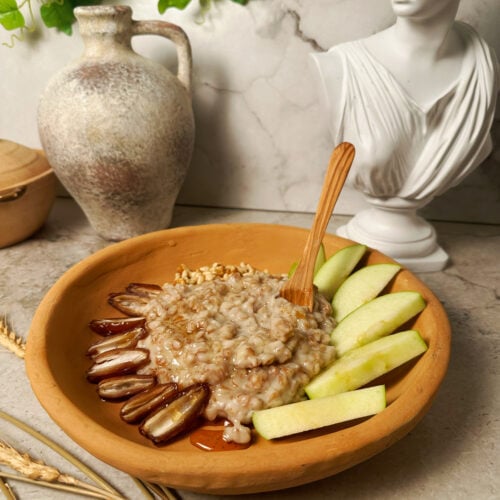
Ancient Roman Puls
Ingredients
- 1 cup wheat berries or farro or cracked or semi-pearled wheat for quicker cooking
- 2½ cups water
- 1 cup milk or milk alternative
- ½ tsp fine sea salt
- 1 tbsp olive oil optional
- Sweet toppings:
- Drizzle of honey
- Chopped dried figs dates, or fresh berries, or a combination
- Toasted walnuts or almonds crushed
- Pomegranate seeds
- Pinch of ground cinnamon
- Savory toppings:
- Roughly chopped fresh herbs such as parsley and celery leaves
- Shaved hard cheese such as Pecorino Romano
- Freshly ground black pepper
- Olive oil for drizzling
Instructions
- If using whole wheat berries or whole farro, rinse them well and soak overnight in cold water for faster cooking. Drain before using. Cracked or semi-pearled wheat requires no soaking.
- Combine the grain, water, milk and salt in a heavy-bottomed saucepan over medium heat. Bring to a gentle boil, stirring occasionally. Reduce the heat to a low simmer and cook, stirring regularly to prevent sticking, until the grain is completely tender and the mixture has thickened to a porridge consistency. Whole wheat berries will take 40 to 45 minutes. Semi-pearled farro will take around 25 minutes. Cracked wheat will take 15 to 20 minutes.
- If the porridge thickens too quickly before the grain is fully cooked, add a splash of water and continue cooking. The finished consistency should be thick and spoonable but not stiff. It will continue to thicken as it cools.
- Stir in the olive oil if using. Taste and adjust the salt.
- Serve immediately in bowls with either the sweet or savory toppings arranged on top. Both versions are historically grounded. Both are worth making.
Notes
- Farro is the most historically accurate grain for this recipe as it is a form of emmer wheat, one of the primary grains cultivated in ancient Italy. It is widely available in supermarkets and produces a slightly nuttier, more textured porridge than modern wheat.
- The savory version with olive oil, Pecorino and black pepper is the closer approximation of what a Roman soldier or labourer would have eaten. The sweet version with honey and dried fruit represents a more prosperous household’s approach to the same dish.
- Puls reheats well with a splash of water or milk stirred through. Roman soldiers on campaign would have eaten yesterday’s puls cold or reheated over a fire, which is a perfectly acceptable way to eat it and arguably more authentic than a fresh bowl.