The foundational grain porridge of ancient Rome, documented in Cato the Elder's De Agri Cultura, 2nd century BC, and referenced in Apicius, De Re Coquinaria, 4th to 5th century AD
Prep Time 5 minutesmins
Cook Time 45 minutesmins
Ingredients
1cupwheat berries or farroor cracked or semi-pearled wheat for quicker cooking
2½cupswater
1cupmilk or milk alternative
½tspfine sea salt
1tbspolive oiloptional
Sweet toppings:
Drizzle of honey
Chopped dried figsdates, or fresh berries, or a combination
Toasted walnuts or almondscrushed
Pomegranate seeds
Pinchof ground cinnamon
Savory toppings:
Roughly chopped fresh herbssuch as parsley and celery leaves
Shaved hard cheesesuch as Pecorino Romano
Freshly ground black pepper
Olive oil for drizzling
Instructions
If using whole wheat berries or whole farro, rinse them well and soak overnight in cold water for faster cooking. Drain before using. Cracked or semi-pearled wheat requires no soaking.
Combine the grain, water, milk and salt in a heavy-bottomed saucepan over medium heat. Bring to a gentle boil, stirring occasionally. Reduce the heat to a low simmer and cook, stirring regularly to prevent sticking, until the grain is completely tender and the mixture has thickened to a porridge consistency. Whole wheat berries will take 40 to 45 minutes. Semi-pearled farro will take around 25 minutes. Cracked wheat will take 15 to 20 minutes.
If the porridge thickens too quickly before the grain is fully cooked, add a splash of water and continue cooking. The finished consistency should be thick and spoonable but not stiff. It will continue to thicken as it cools.
Stir in the olive oil if using. Taste and adjust the salt.
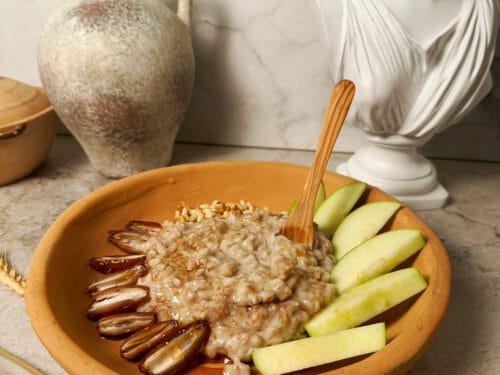
Serve immediately in bowls with either the sweet or savory toppings arranged on top. Both versions are historically grounded. Both are worth making.
Notes
Farro is the most historically accurate grain for this recipe as it is a form of emmer wheat, one of the primary grains cultivated in ancient Italy. It is widely available in supermarkets and produces a slightly nuttier, more textured porridge than modern wheat.
The savory version with olive oil, Pecorino and black pepper is the closer approximation of what a Roman soldier or labourer would have eaten. The sweet version with honey and dried fruit represents a more prosperous household's approach to the same dish.
Puls reheats well with a splash of water or milk stirred through. Roman soldiers on campaign would have eaten yesterday's puls cold or reheated over a fire, which is a perfectly acceptable way to eat it and arguably more authentic than a fresh bowl.