There are certain food and drink origin stories that sound too good to be true. A wounded Civil War veteran inventing Coca Cola while trying to cure his own morphine addiction. Two brothers in San Bernardino stripping back a 25-item menu to nine things and accidentally inventing fast food. And then there is this one. A kidney specialist at the University of Florida, approached by a football coach who wanted to know why his players never needed to use the bathroom during games, mixing salt, sugar and lemon juice in a laboratory in September 1965 and accidentally creating the most recognised sports drink in human history.
The original formula had six ingredients. It tasted, by most accounts, somewhere between medicinal and deeply unpleasant. The players who first drank it won their next game dramatically. A salesman heard about it, a company bought the rights, Michael Jordan endorsed it, and a university laboratory experiment worth effectively nothing became a product generating over two billion dollars in annual sales.
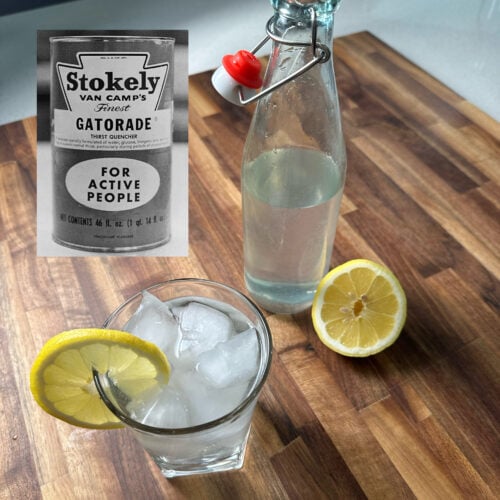
I made it. It tastes like a salty lemonade. For a hot day it is actually not bad at all. Here is the full story.
The Origin: A Kidney Doctor, a Football Coach, and a Very Specific Problem
In the summer of 1965, Dwayne Douglas, an assistant coach for the Florida Gators football team at the University of Florida in Gainesville, approached Dr Robert Cade of the university’s renal and electrolyte division with a question that had been bothering him for a while. His players were losing enormous amounts of weight during games in the Florida heat, sometimes as much as eighteen pounds in a single game, and yet none of them ever needed to use the restroom during or after playing. Where was all that weight going and what was it doing to them?
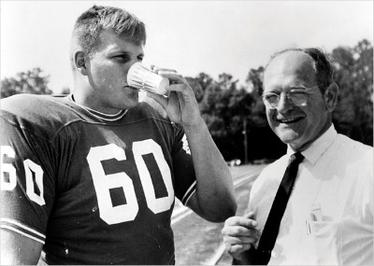
Cade, who directed the university’s kidney research program, understood immediately. The players were sweating so heavily that their bodies had no fluids left to produce urine. He assembled a research team including Dana Shires, Harry James Free and Alejandro de Quesada and began testing ten freshman Gator players in the brutal Florida summer heat. The results confirmed what Cade had suspected and then some. The players’ blood chemistry was significantly altered after games. Their electrolytes were depleted, their blood sugar was low, and their total blood volume was reduced to a degree that would impair both physical and cognitive performance. They were not just tired. They were physiologically compromised in ways that affected their ability to play.
Cade’s solution was straightforward in theory and unpleasant in execution. Replace what the body loses in sweat. The sweat contained sodium, potassium and chloride. The exertion depleted blood sugar. The solution therefore needed water, electrolytes and sugar in the right proportions to be absorbed quickly without upsetting the stomach. Cade and his team mixed their first batch in the laboratory. The players who tasted it immediately said it tasted like urine. This was considered a problem.
The saving intervention came from Cade’s wife Mary, who tasted the formula and suggested adding lemon juice. The resulting drink was still not pleasant by any conventional standard but it was drinkable, which was the minimum requirement. Cade called it Gatorade, after the Florida Gators, and began field testing it with the freshman team. The results were immediate and dramatic. The team that had been trailing badly at half time in their first test game came back strongly in the second half while their opponents, playing without the drink, wilted in the heat. Coach Ray Graves, who witnessed it, immediately requested enough for the full varsity team.
From the Laboratory to the Field: The First Season
The 1965 Florida Gators season became the first documented field test of a sports electrolyte drink in American athletic history. The results were compelling enough that word spread quickly through college football circles. The Gators finished the season significantly stronger than their opponents in the fourth quarter of games played in extreme heat, a pattern their coaches attributed directly to the drink. The following year the story reached a vice president at Indianapolis-based Stokely-Van Camp, a food manufacturing company, who contacted Cade and secured the commercial rights to the formula.
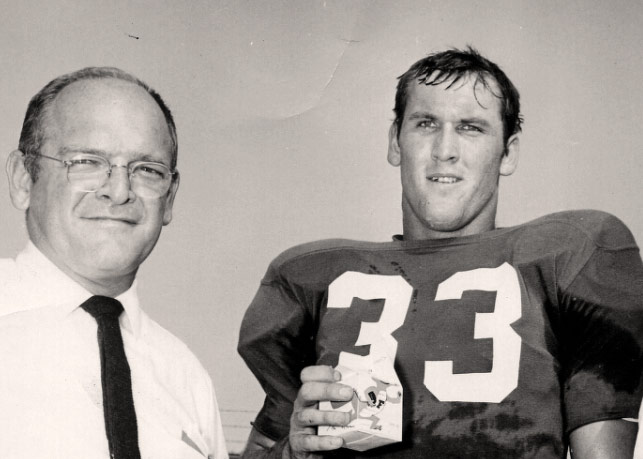
The deal Cade and his co-inventors made has become one of the cautionary tales of American sports business history. They sold the rights for a figure that, by any measure, significantly undervalued what they had created. The University of Florida subsequently sued for a share of the royalties, arguing that research conducted at the university belonged in part to the institution. The resulting settlement established what is now called the Gatorade Trust, which has paid the university hundreds of millions of dollars over the decades and funded an extraordinary range of research programs. The inventors received their share. Nobody got as much as they would have if they had understood in 1966 what they had actually made.
Stokely-Van Camp began marketing Gatorade nationally in 1967. The early marketing focused on athletic performance and heat management, the same angle Cade had developed. The drink sold steadily but without the explosive growth that would come later. The real inflection point was 1983 when Stokely-Van Camp was acquired by Quaker Oats, which had both the marketing budget and the distribution network to take Gatorade from a regional sports drink to a national brand. Quaker Oats signed Michael Jordan as a Gatorade spokesperson and built one of the most successful advertising campaigns in American sports marketing history around the slogan Be Like Mike. By the time Quaker Oats sold to PepsiCo in 2001 for thirteen billion dollars, Gatorade was generating over two billion dollars in annual revenue and had become so dominant in the sports drink category that it had effectively created the category around itself.
How the Formula Changed: From Laboratory to Lemon Lime
The original 1965 formula was not commercially viable as Cade had made it. It contained water, sodium chloride, potassium chloride, sugar, a phosphate component and lemon juice. It was clear, pale yellow and tasted recognisably medicinal. The first commercial versions added flavouring and colouring to make the drink more palatable, but retained the core electrolyte science. The lemon lime flavour introduced in the early commercial versions became the foundational Gatorade taste that most people associate with the brand.
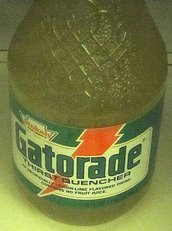
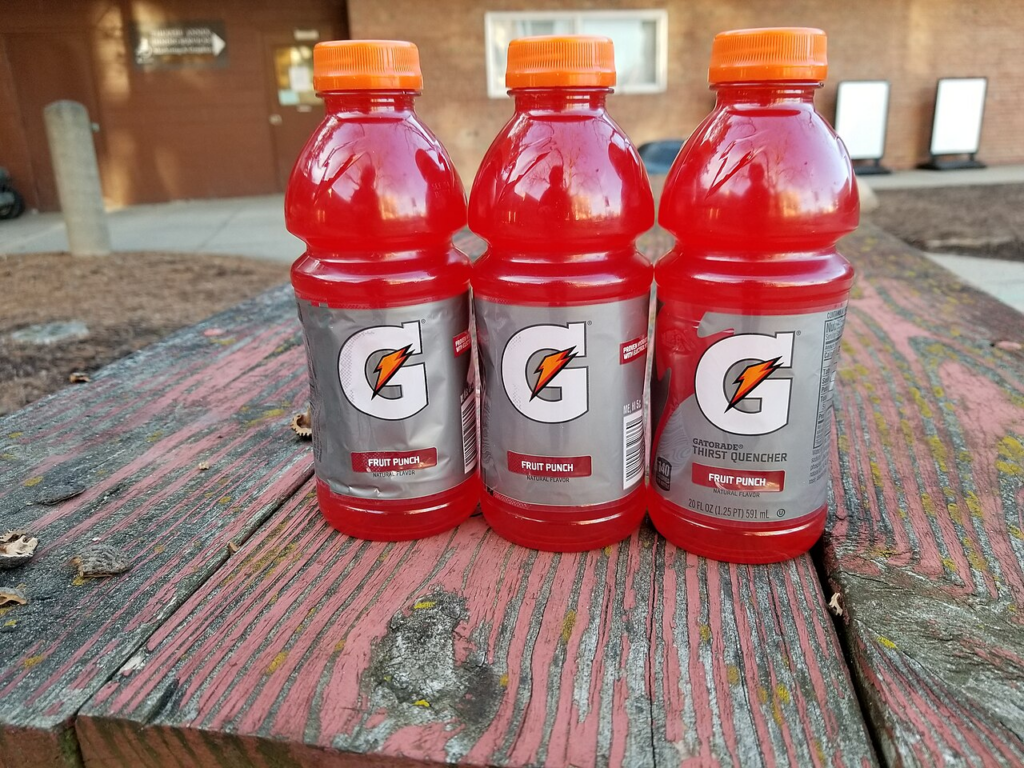
Over the following decades the formula was refined continuously. Sugar levels were adjusted. Additional electrolytes were incorporated. Flavour technology improved dramatically and the range expanded from the original lemon lime to dozens of options. The modern Gatorade formula contains water, sugar, dextrose, citric acid, natural flavour, sodium chloride, sodium citrate, monopotassium phosphate and modified food starch among other ingredients. It is significantly more complex than the original, considerably more palatable, and calibrated to modern consumer taste preferences rather than purely to athletic performance requirements.
The core electrolyte science has not changed. Sodium, potassium, sugar and water in ratios designed to promote rapid absorption and replace what is lost in sweat. Everything else is flavour, colour, texture and commercial refinement layered on top of a six-ingredient laboratory formula mixed in Gainesville, Florida in September 1965.
The Original vs The Modern: An Honest Comparison
The modern Gatorade is a significantly better drink than the original formula by any palatability measure. This is not a controversial statement. The original tastes like salty lemonade with a faint medicinal bitterness from the electrolyte components. It is not unpleasant but it is not enjoyable in the way that a modern flavoured sports drink is enjoyable. The flavour technology applied to the modern formula over six decades of development produces a drink that masks the saltiness almost completely while delivering the same electrolyte load.
What the original has that the modern version does not is simplicity. Six ingredients you can read and understand versus a modern label that requires a chemistry background to fully parse. The original is also arguably more honest about what it is. You can taste the salt. You know you are consuming something functional rather than something recreational. On a hot day after serious physical exertion that directness is not unpleasant. It tastes like what your body actually needs rather than like a beverage designed to be enjoyable regardless of physiological context.
My honest assessment after making and tasting the original formula is that it is genuinely functional in a way the modern version is also functional but more transparently so. It is a salty lemonade. After a long hot day of sweating in summer heat it would be an excellent thing to drink. As a recreational beverage on a normal day it scores considerably lower. The modern version beats it on taste by a significant margin. The original beats it on historical interest by an equally significant margin.
Rating: 6.8 / 10
The Recipe: Original Gatorade Formula
The Recipe: Original Gatorade Formula
Ingredients
- 4 cups water approximately 1 litre
- ¼ tsp salt standard sodium chloride, approximately 500mg sodium — this replaces the primary electrolyte lost in sweat
- ¼ tsp salt substitute potassium chloride, available in the salt section of most supermarkets under brands including NoSalt and Nu-Salt — this replaces the secondary electrolyte component
- 3 tbsp sugar — this maintains blood glucose and promotes electrolyte absorption
- ¼ tsp cream of tartar potassium bitartrate — the most accessible home substitute for the monopotassium phosphate in Cade’s original formula
- Juice of half a lemon freshly squeezed — the addition documented as suggested by Mary Cade, Robert’s wife, which made the formula drinkable
Instructions
- Combine the salt, salt substitute, sugar and cream of tartar in a large bowl or measuring jug. Add about half a cup of slightly warm water and whisk until all dry ingredients are completely dissolved and the liquid is clear with no visible crystals. The cream of tartar can be slightly stubborn. Keep whisking until the liquid is completely clear.
- Add the fresh lemon juice and stir to combine. Top up with the remaining cold water to reach approximately 4 cups or 1 litre total. Whisk once more to combine everything fully.
- Pour into your bottle using a funnel. The finished liquid should be clear and very pale yellow from the lemon juice.
- Serve cold. The drink is best consumed after physical exertion in heat, which is the exact context it was designed for and the context in which it makes the most sense.
Video
Notes
- Do not use regular table salt substitute without checking the label first. You want pure potassium chloride. Some salt substitutes blend potassium chloride with other ingredients. NoSalt and Nu-Salt are both pure potassium chloride and are widely available.
- The cream of tartar is an approximation of the phosphate component rather than an exact substitute. The original formula used monopotassium phosphate, which is available from homebrew suppliers and online if you want a more precise reconstruction. Cream of tartar is the most accessible alternative for a home kitchen.
- The drink should taste faintly salty, faintly sweet and faintly lemony simultaneously. If it tastes overwhelmingly of any one of those three things, adjust accordingly. The salt should be present but not dominant. If it tastes like salt water you have used too much. If it tastes like lemonade you have used too much sugar or lemon. The balance is the point.