
Go Back

The Recipe: Original Gatorade Formula

Print Recipe
Reconstructed from the documented ingredients of the 1965 University of Florida laboratory formula developed by Dr Robert Cade, Dana Shires, Harry James Free and Alejandro de Quesada. Primary sources: University of Florida research documentation; McGovern P, Penn Museum; UF Health, ufhealth.org; documented in multiple interviews with Dr Robert Cade prior to his death in 2007. The exact gram measurements of the original 1965 formula were never publicly released as they became commercially sensitive once Stokely-Van Camp acquired the rights. This reconstruction uses the documented physiological targets Cade described, the electrolyte ratios necessary to replace sweat losses and maintain blood sugar, as the basis for the quantities.
Prep Time 5 minutes

Ingredients

  • 4 cups water approximately 1 litre
  • ¼ tsp salt standard sodium chloride, approximately 500mg sodium — this replaces the primary electrolyte lost in sweat
  • ¼ tsp salt substitute potassium chloride, available in the salt section of most supermarkets under brands including NoSalt and Nu-Salt — this replaces the secondary electrolyte component
  • 3 tbsp sugar — this maintains blood glucose and promotes electrolyte absorption
  • ¼ tsp cream of tartar potassium bitartrate — the most accessible home substitute for the monopotassium phosphate in Cade's original formula
  • Juice of half a lemon freshly squeezed — the addition documented as suggested by Mary Cade, Robert's wife, which made the formula drinkable

Instructions

  • Combine the salt, salt substitute, sugar and cream of tartar in a large bowl or measuring jug. Add about half a cup of slightly warm water and whisk until all dry ingredients are completely dissolved and the liquid is clear with no visible crystals. The cream of tartar can be slightly stubborn. Keep whisking until the liquid is completely clear.
  • Add the fresh lemon juice and stir to combine. Top up with the remaining cold water to reach approximately 4 cups or 1 litre total. Whisk once more to combine everything fully.
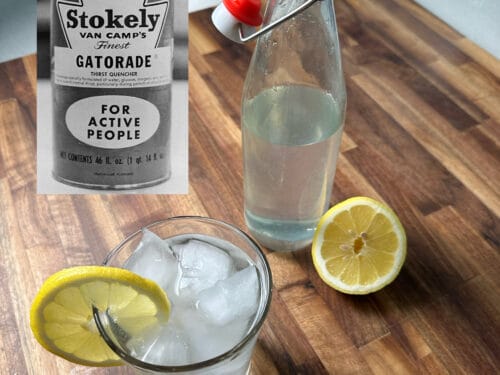
  • Pour into your bottle using a funnel. The finished liquid should be clear and very pale yellow from the lemon juice.
  • Serve cold. The drink is best consumed after physical exertion in heat, which is the exact context it was designed for and the context in which it makes the most sense.

Video

Notes

  • Do not use regular table salt substitute without checking the label first. You want pure potassium chloride. Some salt substitutes blend potassium chloride with other ingredients. NoSalt and Nu-Salt are both pure potassium chloride and are widely available.
 
  • The cream of tartar is an approximation of the phosphate component rather than an exact substitute. The original formula used monopotassium phosphate, which is available from homebrew suppliers and online if you want a more precise reconstruction. Cream of tartar is the most accessible alternative for a home kitchen.
 
  • The drink should taste faintly salty, faintly sweet and faintly lemony simultaneously. If it tastes overwhelmingly of any one of those three things, adjust accordingly. The salt should be present but not dominant. If it tastes like salt water you have used too much. If it tastes like lemonade you have used too much sugar or lemon. The balance is the point.