I am going to be straightforward with you. This is not a complicated recipe. It has five ingredients. It takes ten minutes to put together. It looks like you burned it and that is the entire point. And it is one of the most extraordinary things you will ever pull out of your oven.
I made this for my mom for Mother’s Day and if you are looking for something to make this weekend that will genuinely impress someone you love without requiring a culinary degree or a full Saturday of preparation, this is the one. The Basque Burnt Cheesecake from La Viña restaurant in San Sebastián, Spain. The dessert that went from a single bar in the Basque Country to the most talked about cheesecake in the world in about thirty years. You should make it too.
The Origin: One Chef, One Bar, One Accidental Masterpiece
Santiago Rivera created the Basque Burnt Cheesecake at La Viña bar on Calle 31 de Agosto in the old town of San Sebastián around 1990. The story of how it happened is the kind of origin story that sounds too good to be true and is apparently genuine. Rivera was experimenting with a traditional cheese tart and left it in a blisteringly hot oven longer than intended. When he pulled it out the top was deeply caramelised, almost black at the edges, and the centre was alarmingly liquid. Before throwing it away he tasted it. The contrast between the bitter caramelised exterior and the mild, custardy, almost molten interior was extraordinary. He put it on the menu.
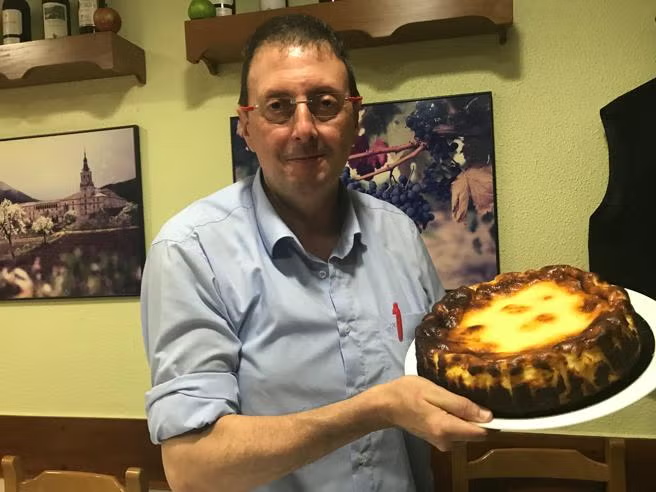
La Viña itself had been in the Rivera family since the 1950s. Santiago took over from his parents and decided the menu needed a dessert. What he created became so associated with the bar and the city that food tourists began making specific pilgrimages to San Sebastián for a single slice of cheesecake. The bar, which serves pintxos alongside the cheesecake, became famous internationally for the towers of freshly baked cheesecakes cooling on the counter visible from the street. People lined up to get in. Chefs including Dominique Ansel flew to San Sebastián specifically to taste and study it.
Rivera has always given the recipe away freely to anyone who wanted it. Food tour operators distributed printed copies to guests. He recorded a DVD of himself making it and gave copies to clients. He considered the openness part of the philosophy. The recipe is simple enough that sharing it changes nothing about why people come to La Viña. They come because he makes it better than anyone else does.
How It Went Viral: From a Bar in the Basque Country to Every Kitchen in the World
The Basque Burnt Cheesecake existed as a cult favourite among food travellers and serious eaters for roughly two decades before the internet found it. Food journalists visiting San Sebastián, already one of the most celebrated culinary destinations in the world for its pintxos culture and its concentration of Michelin starred restaurants, began writing about La Viña’s cheesecake in the early 2010s. The photographs were striking. A dramatically dark, almost black surface surrounding a pale, impossibly creamy interior. It looked wrong in a way that made you immediately want to eat it.
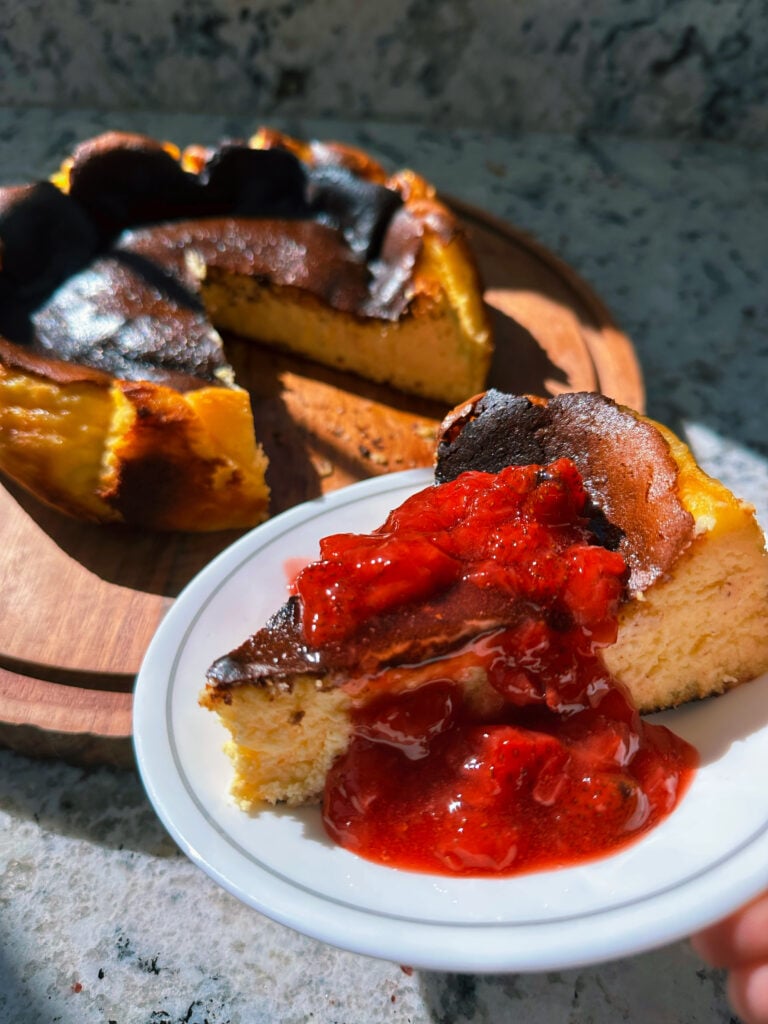
Instagram accelerated everything. The visual contrast of the burnt exterior and the custardy centre is exactly the kind of food photography that performs extraordinarily well on social media. By 2019 it was one of the most shared food photographs on Instagram globally and food media was calling it the dessert of the year. Home cooks across the world began attempting it. When TikTok arrived and short video cooking content exploded, the Basque Burnt Cheesecake went genuinely viral in a way that even its most enthusiastic early advocates had not anticipated. The five ingredient, ten minute preparation that produced such a dramatically beautiful result was exactly what short form cooking video was built for.
The extraordinary thing about the virality is that Rivera’s fundamental recipe has not changed. The cheesecake that is being made in home kitchens across the world right now is essentially the same cheesecake Rivera was making in his bar in the old town of San Sebastián in 1990. No major adaptations. No significant improvements. The original was already correct.
The Magic: Why Burnt is Better
The burnt exterior of the Basque cheesecake is not a mistake, a quirk or a stylistic affectation. It is a specific chemical process called the Maillard reaction, the same browning process that creates the crust on a good steak or the surface of a well-made piece of toast, taken deliberately further than conventional baking would allow. At the high temperature Rivera bakes his cheesecake, the sugars and proteins in the cream cheese and heavy cream caramelise on the surface, developing complex bitter, nutty, caramel notes that would be impossible to achieve at a lower temperature.
The interior tells a completely different story. Protected from the intense heat by the structure of the cheesecake itself, the centre remains at a temperature low enough to set the proteins partially but not completely. The result is a texture somewhere between a very soft crème brûlée and a warm panna cotta. When you cut into it cold from the fridge the next day, it is dense and creamy and holds its slice cleanly. When you taste it the contrast between the caramelised, slightly bitter exterior and the mild, sweet, almost custard-like interior is genuinely one of the more remarkable single-bite experiences in baking.
The wobble is the other element that requires trust. When you pull this cheesecake from the oven at 40 to 50 minutes it will wobble so dramatically that every instinct will tell you it is not done and needs more time. It does not need more time. The wobble is the point. The residual heat as it cools continues setting the interior and the overnight refrigeration completes the process. A cheesecake that looked liquid in the oven produces a perfect, clean slice from the fridge the next morning. Trust the wobble.
My Rating
The recipe is simple enough that almost anyone can make it successfully on their first attempt. The result is extraordinary enough that it will be the thing people remember from your table for weeks afterward. My mom loved it. It reminded both of us of a very refined, very sophisticated version of a lemon cheesecake without the lemon, if that makes sense. The cream cheese flavour is present but not dominant. The caramelised top provides a complexity that no standard cheesecake achieves. The texture is unlike anything else in the cheesecake category.
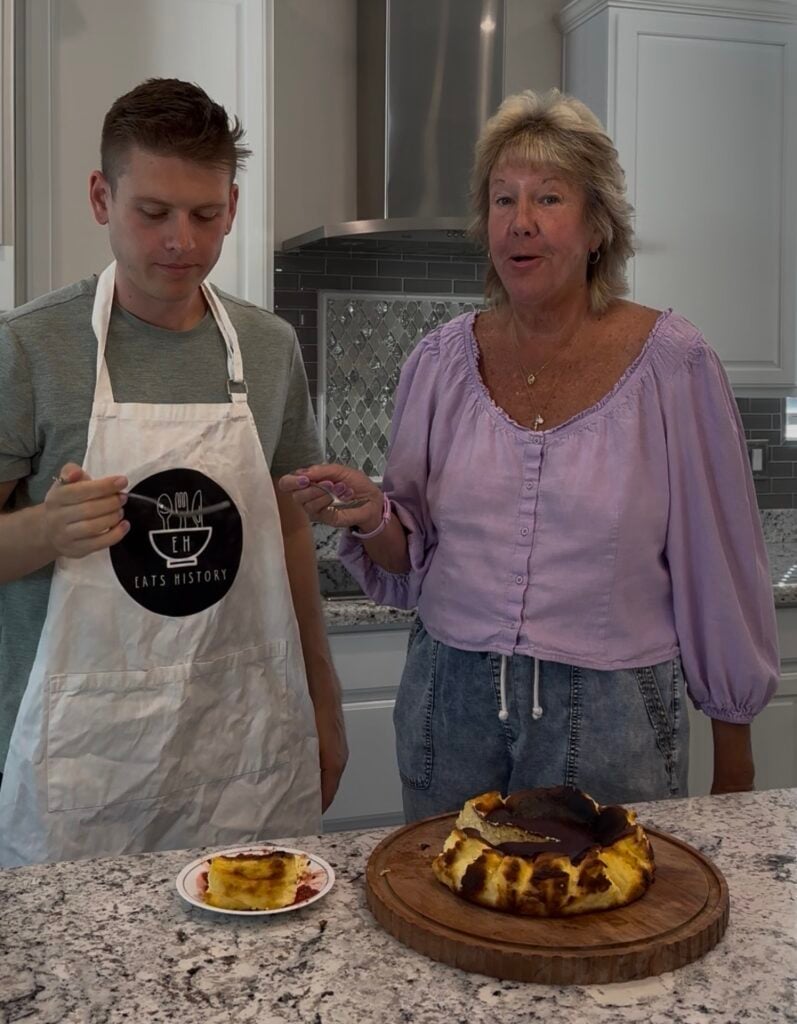
Make it the day before you want to serve it. The overnight refrigeration is not optional. The cheesecake that comes out of the fridge the next morning is a significantly better version of the cheesecake that came out of the oven the night before and the difference is noticeable.
If you are making this for Mother’s Day, start it the evening before. Ten minutes of work the night before, pull it from the oven before bed, refrigerate overnight, bring it to the table the next day. That is the entire process.
Rating: 9.3 / 10
The Recipe: La Viña Original Basque Burnt Cheesecake
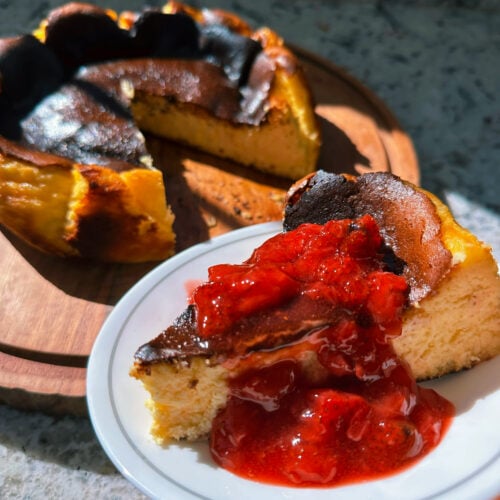
Basque Burnt Cheesecake
Ingredients
- 2.2 lbs full fat cream cheese room temperature — four standard 8oz Philadelphia blocks is exactly right. Mascarpone produces a milder, more authentic result closer to the original Spanish San Millan cheese if you can find it
- 2 cups sugar
- 5 large eggs room temperature
- 2 cups heavy cream
- Nothing else. No flour. No salt. No vanilla. No crust. Five ingredients and that is the complete recipe
Instructions
Prepare the pan
- Preheat your oven to 410°F. Line a 10-inch springform pan with two overlapping sheets of parchment paper pressed into the pan with at least 2 inches rising above the rim. Do not grease it. The crumpled, irregular parchment is not just functional. It is the authentic La Viña aesthetic and produces the characteristic rippled edges of the finished cheesecake.
Make the batter
- Combine the cream cheese and sugar in a large bowl and mix until completely smooth with absolutely no lumps remaining. If your cream cheese is cold this will be difficult and the result will be grainy. Room temperature is essential and non-negotiable.
- Add the eggs one at a time, mixing well after each one before adding the next. Pour in the heavy cream and mix until fully combined and the batter is completely smooth and pourable. It will be very liquid, much more so than a standard cheesecake batter. This is correct and expected. Do not be alarmed.
Bake
- Pour the batter into the lined pan. Place on the upper third rack of the oven. Bake for 40 to 50 minutes until the top is deeply caramelised, genuinely dark brown to nearly black at the edges and across much of the surface. The centre should wobble dramatically when you move the pan. The wobble should concern you slightly. Pull it at that point. Do not wait for the centre to look set. It will not look set. That is correct.
Cool and refrigerate
- Remove from the oven and allow to cool completely at room temperature for at least one hour. The cheesecake will sink and deflate as it cools. This is correct and expected. Once fully cooled, refrigerate overnight. Do not attempt to serve it the same day it is baked. The texture the following morning after a full night of refrigeration is the intended result and is completely different from the warm version.
Serve
- Run a thin knife around the inside edge of the springform pan before releasing the latch. Peel back the parchment at the table for the reveal. Serve in wedges directly from the parchment lined base. A small glass of Pedro Ximénez sherry alongside is the authentic La Viña accompaniment and is worth doing if you can find it.
Notes
- Room temperature ingredients are the single most important factor in this recipe. Cold cream cheese will not combine smoothly regardless of how long you mix it and the resulting batter will be uneven and the final texture will be affected throughout. Take the cream cheese and eggs out of the fridge at least two hours before you start.
- Do not add flour. Multiple versions of this recipe online add flour or cornstarch for stability. These produce a denser, cakier result that loses the custard-like centre that defines the original. The authentic La Viña recipe contains no flour and the instability of the flourless batter is what produces the extraordinary texture.
- The burnt top is not optional and cannot be avoided. Do not pull the cheesecake early because the surface looks overdone. The deeply caramelised, almost black exterior is the entire point of the recipe, and the bitter-sweet contrast with the mild interior is what makes this extraordinary rather than merely good.