
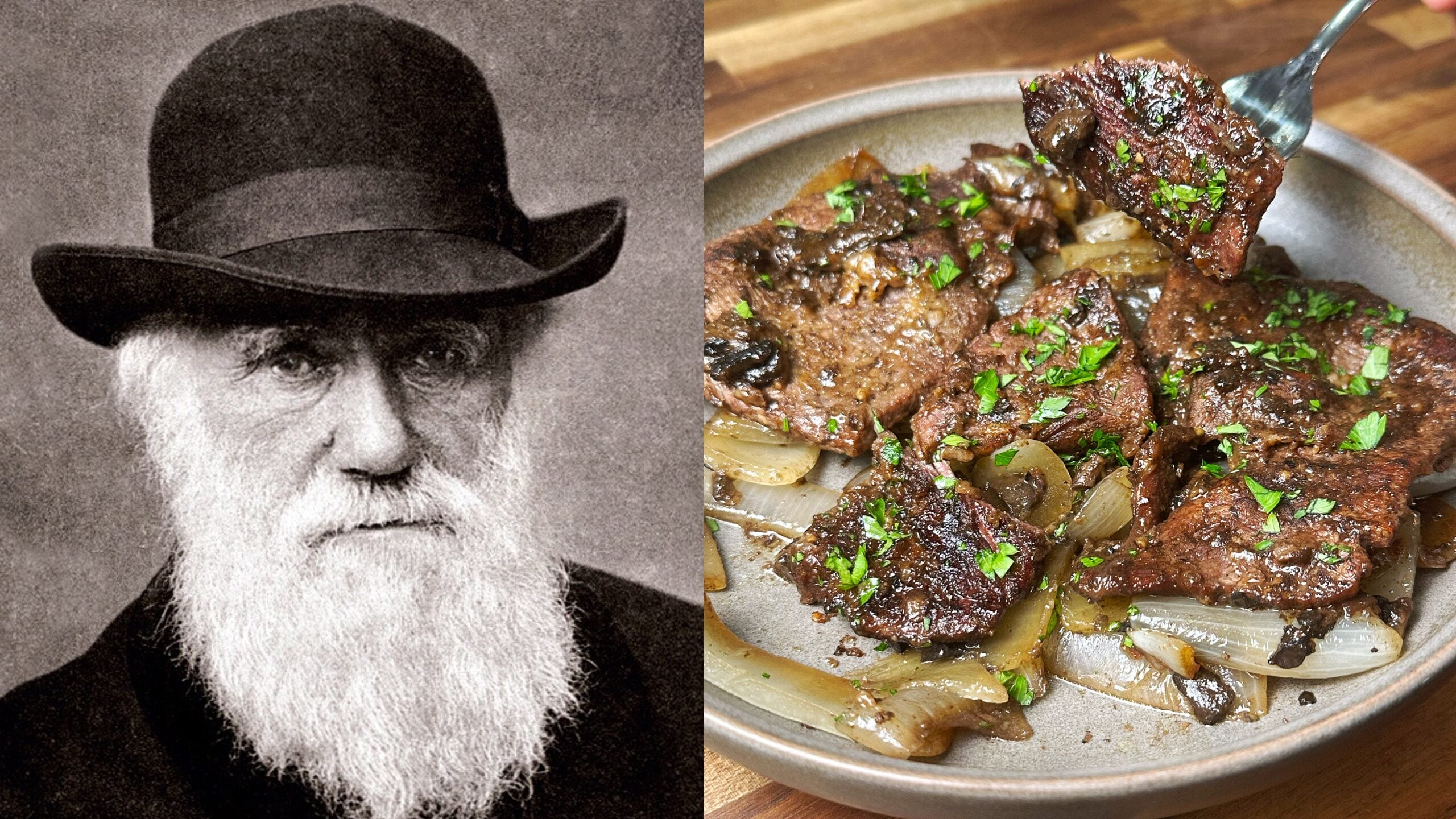
There are two versions of Charles Darwin’s relationship with food and they are both completely true. The first version is Darwin the adventurer, the young naturalist aboard the HMS Beagle who ate his way systematically through the animal kingdom across five years and four continents with the curiosity and appetite of a man who genuinely could not encounter a living creature without wondering what it tasted like. The second version is Darwin at home, at Down House in Kent, eating the modest, comforting Victorian food his wife Emma made for him, managing a digestive system that had been causing him trouble since the Beagle voyage and would torment him for the rest of his life.
The beef collops I made this week come from the second Darwin. Emma Darwin’s recipe book, begun May 16 1839, held at Cambridge University Library and digitised by the Complete Work of Charles Darwin Online, contains 55 recipes for the food that actually sustained the man who changed our understanding of life on earth. Braised beef with onions, soy sauce and pickled walnuts, cooked slowly until tender and served very hot. Modest, deeply savoury, completely delicious. It is an 8.8 out of 10 and one of the more unexpected pleasures this channel has produced.
But before we get to the stew, we need to talk about the hawk. And the bittern. And the puma. And the half-eaten rhea that became a species.
The Glutton Club: Cambridge, 1828
Charles Darwin arrived at Christ’s College Cambridge in January 1828 at the age of 18, having failed to complete his medical degree at Edinburgh. His father sent him to Cambridge to study for the clergy. Darwin spent most of his time collecting beetles and eating unusual animals.
Next week
I cook these before I write them. Some of it never makes the post.
The failures, the source documents, the version that actually tasted good. That part goes out by email, and next week’s is already on the stove.
 Written and cooked by Donnie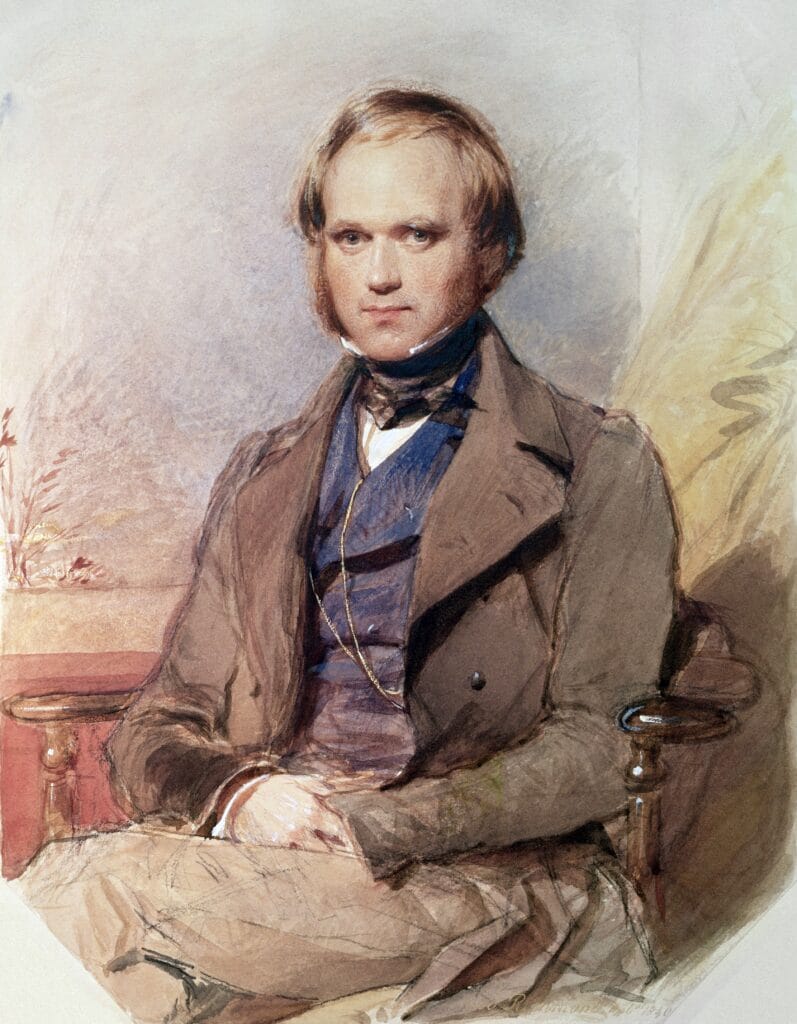
The Glutton Club was his idea. A small group of Cambridge undergraduates who met weekly with a single stated purpose: to consume birds and beasts which were before unknown to human palate. Darwin was its president and most enthusiastic member. The club worked through a series of creatures that fell outside the conventional scope of the Cambridge dining hall, driven entirely by the question of what they tasted like.
Darwin documented the club in his autobiography, written in 1876. He described it with characteristic precision and a certain dry amusement at his own youthful enthusiasm. The hawk was consumed and recorded. The bittern was consumed and recorded. Then came the brown owl. Darwin wrote that the flavour was indescribably bad and that the Glutton Club, faced with the owl, simply could not continue. The club dissolved on that meal. The man who would spend the next five decades arguing for the interconnectedness of all living things began his scientific career by trying to eat as many of them as possible.
What is remarkable about the Glutton Club in retrospect is not the eating itself but what it reveals about Darwin’s fundamental orientation toward the natural world. He did not observe animals from a distance. He handled them, dissected them, caught them, and in the case of the Glutton Club, ate them. The tactile intimacy with other species that characterised his scientific method began at a dining table in Cambridge with a group of undergraduates and a brown owl that defeated them all.
The Beagle Years: Eating Across the Animal Kingdom
When Darwin boarded the HMS Beagle in December 1831 for what was planned as a two-year survey voyage and became a five-year circumnavigation, he brought his Cambridge appetite with him. The journals he kept during the voyage are one of the great documents of 19th century science. They are also, read carefully, one of the great documents of 19th century eating.
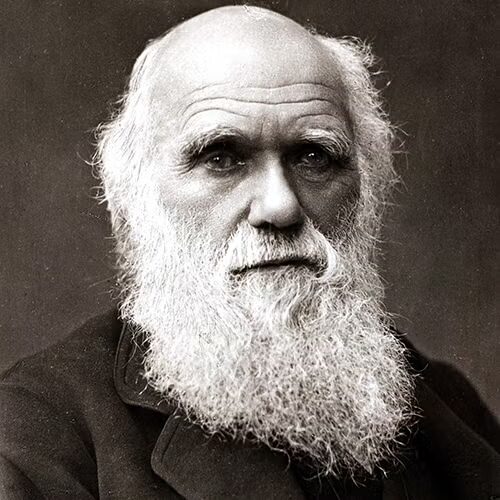
Darwin ate iguana on the Galapagos Islands and noted the white flesh was not very good. He ate puma in Argentina and described it in a letter home as remarkably like veal, very white and good. He ate armadillo, comparing its flavour to duck. He ate giant Galapagos tortoises, reporting that the young tortoises made excellent soup and the breastplate roasted over a fire was very good, while noting more critically that otherwise the meat was to my taste indifferent. He was not a man who gave unearned compliments, including to his food.
The most celebrated incident of Darwin’s eating life happened in December 1833 at Port Desire in Patagonia. He had been searching for months for a smaller species of rhea that he suspected was scientifically distinct from the common rhea. On Christmas Day the crew shot a bird for dinner and began cooking it. Darwin sat down and ate. Halfway through the meal he looked at what remained on his plate and realised with a jolt that he had been eating the very bird he had been looking for. He wrote in his journal: I had almost finished it before it occurred to me that it might be the very species I had been looking for.
He leapt up and rescued what he could. The head, neck, legs, one wing and larger feathers were salvaged from the remains of the Christmas dinner and packaged for London. The ornithologist John Gould formally described the species from those remains in 1837. It was named Rhea darwinii. The type specimen, the physical example used to define the species for science, is a partially eaten Christmas meal.
The best thing Darwin ever tasted, by his own unequivocal account in his letters home, was a large South American rodent encountered in Uruguay. He wrote: I think it is the best meat I ever tasted. He did not name the species definitively. Food historians believe it was most likely an agouti. The man who ate puma, iguana, tortoise, owl and half a newly discovered species of rhea decided the finest thing he ever put in his mouth was a large South American rodent.
How Eating Everything Shaped How He Thought About Everything
It would be reductive to argue that Darwin’s dietary adventurousness directly caused his scientific insights. But it would also be obtuse to ignore the relationship between the two. Darwin’s willingness to eat animals rather than simply observe them was part of a broader orientation toward the natural world that set him apart from many of his contemporaries. He did not study nature from behind glass. He was embedded in it, physically, tactilely and, when the opportunity arose, gastronomically.
The Beagle voyage gave him access to specimens in a way that no purely observational approach could have matched. He handled the tortoises that would later anchor his thinking about adaptation and geographic isolation. He rode them. He ate their soup. He knew their weight and their smell and their flavour in a way that a scientist who merely observed them could not have. The intimacy was the point.
His later work also shows a consistent interest in the relationship between organisms and their environments that mirrors the logic of his eating. Every animal he consumed became data of a kind, evidence of what lived where, what it ate, how it moved, how it tasted. The Glutton Club was not science. But the habits of mind it expressed, the refusal to hold the natural world at a comfortable distance, the insistence on direct engagement over passive observation, are continuous with the habits of mind that produced On the Origin of Species in 1859.
There is also the more prosaic point that Darwin’s digestive system, whatever it was that caused his decades of nausea, vomiting and stomach pain, may have begun with the Beagle voyage. Some historians have suggested tropical parasites contracted during the years of eating unusual things in unusual places as a possible contributing factor to the chronic illness that dogged the rest of his life. The man who ate everything possibly paid for it in the end with a stomach that could not reliably eat anything. It is an irony Darwin himself might have appreciated.
Down House and Emma’s Kitchen: The Stew That Sustained a Revolution
Darwin returned to England in October 1836, married his cousin Emma Wedgwood in January 1839, and settled eventually at Down House in the village of Downe in Kent, where he would live and work for the rest of his life. The exotic eating was largely over. What replaced it was the modest, regular, deeply English food of a Victorian country household managed by a capable and caring wife who was deeply concerned about her husband’s health and equally concerned about good cooking.
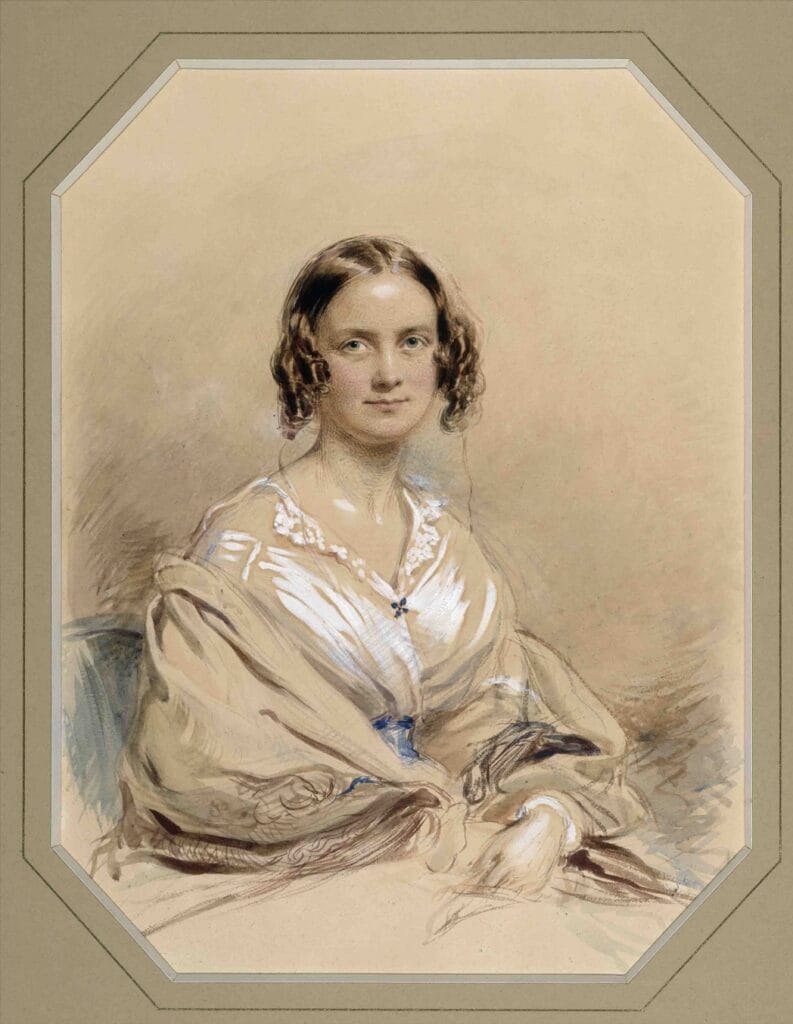
Emma Darwin’s recipe book, begun the same year as their marriage, is the primary document of what the Darwin household actually ate. It contains 55 recipes ranging from arrowroot pudding prescribed for Darwin’s chronic stomach complaints to beef collops, potato rolls, syllabub and carrot pudding. The book is held at Cambridge University Library under reference CUL-DAR214 and has been digitised in full by The Complete Work of Charles Darwin Online at darwin-online.org.uk where anyone can read the original pages in Emma’s own handwriting.
One recipe in the book is written in Charles Darwin’s own hand. It is a recipe for boiling rice. The man who ate puma, iguana, armadillo, giant tortoise, a partially consumed new species of rhea and the best rodent in South America left exactly one recipe for the historical record. It is for boiling rice. Darwin’s contribution to 150 years of food history is a recipe for boiling rice. This is either deeply funny or deeply revealing about the division of labour at Down House, and possibly both.
The beef collops recipe is more characteristic of Emma’s cooking: practical, well-constructed, built from good ingredients and sound technique with the occasional surprising detail. The soy sauce is the detail that stops most modern cooks cold. Victorian England had been importing soy sauce through East India Company trade routes since the 17th century and it appeared regularly in 19th century British recipes as a flavouring agent for sauces and gravies. Its presence in Emma’s recipe book is surprising only if you assume the Victorians ate exclusively what is now considered Victorian food. In reality, Emma Darwin’s kitchen in 1839 was more globally connected than most modern cooks would expect.
The beef collops were served at the dinner held at Christ’s College Cambridge in 2009 to commemorate the 200th anniversary of Darwin’s birth, attended by Sir David Attenborough among the Master and Fellows of the college. That the recipe chosen to honour Darwin at his own Cambridge college on the occasion of his bicentennial was the beef collops from Emma’s 1839 recipe book is the clearest possible signal of what this dish means in the Darwin story. It is not the food of the Beagle. It is the food of the home that made the Beagle’s science possible.
My Rating and Honest Assessment
I came into this recipe slightly uncertain about the pickled walnuts. I had never eaten them before and the combination of pickled walnut, soy sauce and beef gravy sounded like it was trying to do too many things at once. I was wrong. The pickled walnuts add a vinegary bite that cuts through the richness of the braised beef in exactly the right way, and the mace gives the whole dish a warmth and faint floral note that you would not get from pepper alone. The soy sauce disappears entirely as a distinct flavour and becomes simply depth, which is exactly what a good umami addition should do.
The dish is best served with bread for the sauce or with boiled potatoes alongside. The sauce is genuinely the point. Glossy, dark, deeply savoury with the sliced walnuts visible throughout and the onions completely melted in. This is what good Victorian braised beef should taste like and it is considerably more interesting than the standard version.
A dish that Darwin almost certainly ate at this table dozens of times. A dish served to Sir David Attenborough at a Cambridge dinner in his honour. An 8.8 out of 10 without reservation.
Rating: 8.8 / 10
The Recipe: Emma Darwin’s Beef Collops
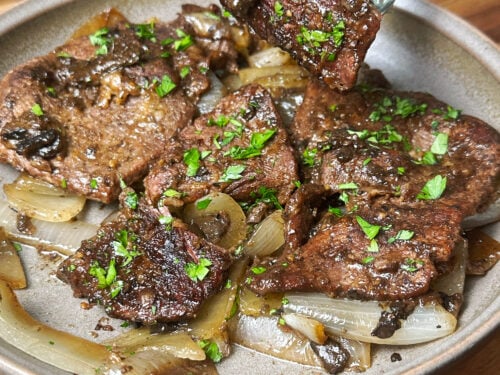
Emma Darwin’s Beef Collops

Don’t lose this one.
I’ll email it to you so it’s waiting when you’re ready to cook.
Ingredients
Instructions
Notes
- The garlic note for the historically curious: Darwin was not a man whose stomach tolerated strong food well in his later years. Emma’s recipes reflect this. The beef collops are warmly spiced with mace rather than aggressively seasoned, and the pickled walnut adds acidity without heat.
- Mace is not optional. Do not substitute nutmeg. They come from the same plant but mace is warmer, more floral and less sharp. The original recipe specifies it and the difference in the finished dish is noticeable.
- Pickled walnuts are worth sourcing properly. They are available on Amazon, at specialty British food importers, and at some larger supermarkets in the international foods section. The Opies brand is the most widely available and is made to a traditional recipe. Their flavour, deeply savoury, slightly tannic and acidic with a texture somewhere between a very ripe olive and a mushroom, is unlike anything in the standard American pantry and is the single ingredient that makes this dish interesting rather than merely good.

Please list your reference materials?