
Go Back

Emma Darwin's Beef Collops

Print Recipe
From Emma Darwin's recipe book, Down House, begun May 16 1839. Primary source: CUL-DAR214, Cambridge University Library, transcribed and published by The Complete Work of Charles Darwin Online, darwin-online.org.uk. This is the dish served at the dinner commemorating the 200th anniversary of Charles Darwin's birth at Christ's College Cambridge in 2009, attended by Sir David Attenborough.
Prep Time 15 minutes
Cook Time 45 minutes

Ingredients

  • lbs beef rump or rib cut into slices approximately 1cm thick and flattened slightly with a mallet or rolling pin
  • Salt and black pepper
  • ½ tsp ground mace — the original recipe specifies mace specifically and it matters. Mace is the outer casing of nutmeg and produces a warmer more floral note than nutmeg alone
  • Plain flour for dusting
  • 2 tbsp unsalted butter
  • 1 cup good beef stock or beef gravy — homemade is better here. The sauce reduces considerably and a good stock makes the difference
  • 2 large onions peeled, boiled whole for 10 minutes, then sliced — the original recipe specifies to boil the onions before slicing, which softens their sharpness considerably and is not optional
  • 2 tbsp soy sauce — documented in the original. Victorian England had access to soy sauce through East India Company trade routes and it appears in multiple 19th century British recipes
  • 3 to 4 pickled walnuts sliced — available in British food sections of specialty shops, online, or from Opies brand which is still made to a Victorian recipe. If genuinely unavailable, a tablespoon of Worcestershire sauce can substitute but the flavour is different and less interesting

Instructions

Prepare the onions first

  • Bring a pot of water to the boil and add the whole onions. Boil for 10 minutes. Remove and allow to cool slightly, then slice. Emma's original note specifies this step and it is worth following. The par-boiled onions melt into the sauce more completely than raw sliced onions would.

Season and flour the beef

  • Lay the beef slices on a board and season both sides with salt, black pepper and ground mace. Dust each side lightly with flour, patting off any excess. The flour creates the fond in the pan and thickens the sauce later.

Fry the collops

  • Heat the butter in a heavy frying pan over medium-high heat until it is bubbling but not browned. The original recipe is specific on this point: boiling but not browned. Add the beef slices and fry on each side until lightly browned, about 2 minutes per side. You are not cooking them through at this stage. Remove the beef from the pan and transfer to a separate stew pan or heavy casserole. Leave behind as much of the remaining butter in the frying pan as possible. The original recipe specifies this: take them out without any of the butter that is left.

Build the sauce

  • To the stew pan with the beef, add the beef stock, the par-boiled sliced onions, the soy sauce and the sliced pickled walnuts. Bring to a gentle simmer over low heat. Cover and cook gently for 25 to 30 minutes, stirring occasionally, until the beef is completely tender and the sauce has thickened to a coating consistency. If the sauce is too thin, remove the lid for the final 10 minutes. If it is too thick, add a small splash of stock.

Serve

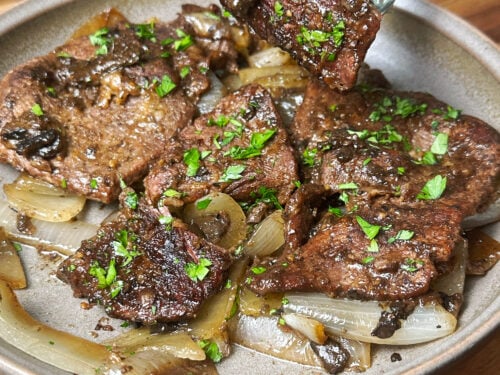
  • Emma's original instruction is simply: this dish requires to be served up very hot. Serve immediately directly from the stew pan onto warm plates. The sauce should be glossy, dark and deeply savoury with the pickled walnuts visible throughout. Serve with bread for the sauce or with boiled potatoes alongside.

Notes

  • The garlic note for the historically curious: Darwin was not a man whose stomach tolerated strong food well in his later years. Emma's recipes reflect this. The beef collops are warmly spiced with mace rather than aggressively seasoned, and the pickled walnut adds acidity without heat.
 
  • Mace is not optional. Do not substitute nutmeg. They come from the same plant but mace is warmer, more floral and less sharp. The original recipe specifies it and the difference in the finished dish is noticeable.
 
  • Pickled walnuts are worth sourcing properly. They are available on Amazon, at specialty British food importers, and at some larger supermarkets in the international foods section. The Opies brand is the most widely available and is made to a traditional recipe. Their flavour, deeply savoury, slightly tannic and acidic with a texture somewhere between a very ripe olive and a mushroom, is unlike anything in the standard American pantry and is the single ingredient that makes this dish interesting rather than merely good.