In the flicker of a medieval hearth, few dishes were as familiar as pease pottage. This humble stew of peas, grains, and vegetables simmered slowly for hours, feeding England’s working class through bitter winters and long harvests. It was not a feast but a foundation, built from what could be grown, stored, or begged from the manor’s fields.
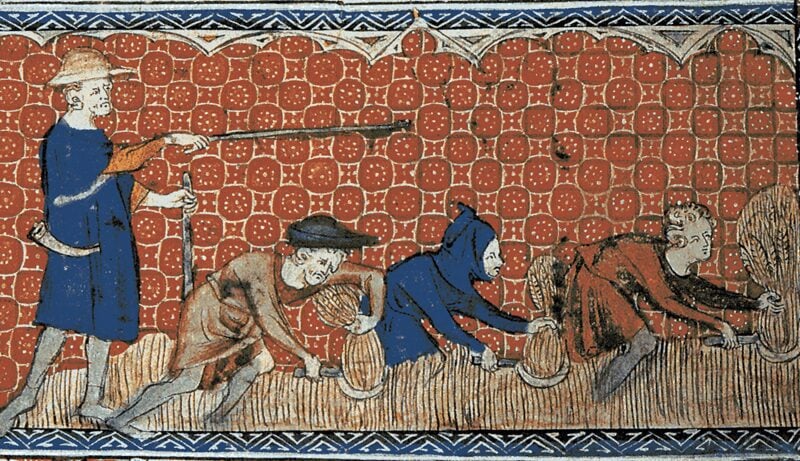
To the medieval peasant, food was not about choice but survival. Pease pottage was one of the few dishes that could stretch through seasons of scarcity, feeding whole families on a single pot. It thickened with time, transformed by the day’s additions, and was often left simmering while other labor filled the hours. When the church bells marked the end of daylight, peasants gathered around the same pot, breaking bread into the stew that had sustained them for centuries.
The Food of the Fields
Most of what we know about medieval peasant food comes not from cookbooks, but from the ledgers and inventories of estates that ruled their lives. The Cuxham Manor Accounts from the 1320s, along with the Winchester Pipe Rolls and William Langland’s Piers Plowman, describe in careful detail the grains, peas, onions, and ale issued to laborers. These were the ingredients of daily life, used to create pottage, bread, and small ale: the trinity of the medieval table.
Next week
I cook these before I write them. Some of it never makes the post.
The failures, the source documents, the version that actually tasted good. That part goes out by email, and next week’s is already on the stove.
 Written and cooked by Donnie
In these records, peas and beans appear constantly. They were cheap, durable, and rich in protein, making them the backbone of the diet for those who could not afford regular meat. Archaeological excavations at Wharram Percy, a deserted medieval village in Yorkshire, confirm these findings. Fragments of charred legumes and barley grains found in hearths reveal that pottage was not just recorded—it was lived. The evidence shows that pottage was cooked in iron cauldrons suspended over open fires, simmering slowly throughout the day as workers came and went from the fields.
The ingredients changed with the seasons. In summer, fresh herbs, leeks, or greens were added for flavor. In winter, dried peas, oats, and a few roots carried the weight of survival. For the medieval poor, the pot never stopped. It was replenished, reused, and reimagined, creating a continuous meal that never truly ended.
From the Manor to the Hearth
Manorial life defined what peasants ate and how much. Rents and labor obligations often required farmers to surrender a portion of their harvest, leaving them with only what remained. Manorial records reveal that peasants received rations of pease, barley, and ale in exchange for their work, especially during harvest or Lent when food was lean. This system ensured that even the lowest worker had the ingredients for pottage, though never in abundance.
The Church played its own role in shaping diets. Monastic account rolls from St. Edmund’s Abbey and Durham Priory show that lay brothers and servants ate similarly humble meals—thick vegetable and pea stews, flavored with salt, herbs, or a trace of fat. These monastic kitchens preserved a style of eating that blurred the line between sacred simplicity and necessity. Pottage, in its many forms, became a symbol of both endurance and faith.
Cooking itself was a communal act. In small cottages, a single iron pot might serve an entire family. There were no recipes written down, only habits passed from one generation to the next. Everything edible went into the pot: peas, leeks, turnips, cabbage, and the occasional scrap of bread. It was slow cooking long before the phrase existed, built on patience rather than luxury.
A Dish of Necessity and Ingenuity
The genius of pease pottage lies in its economy. It wasted nothing and nourished everything. Stale bread became a thickener, bones added flavor, and greens brought color to the otherwise brown monotony of grain and peas. Salt was precious, often reserved for curing meat, but a handful of fresh herbs or a splash of ale added depth when seasoning was scarce.
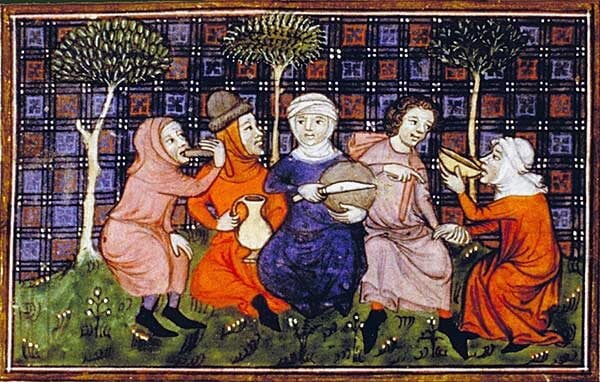
This way of cooking reflected the rhythms of medieval life. Food was not a daily choice, but a seasonal rhythm dictated by harvests and hardship. When the summer fields were rich, pottage grew more varied and vibrant. When winter came, it grew sparse and gray. Yet in both seasons, it bound families together, a meal that carried memory and warmth even when the world outside was cold.
The endurance of pottage speaks to the creativity of those who made it. It required no written knowledge, only instinct. A woman tending a hearth in 1340 might have known her craft as intimately as a royal chef in London, even if her ingredients were humbler. Her skill lay in turning necessity into nourishment, the true mark of human resilience.
Reconstructing the Medieval Bowl
To recreate pease pottage today is to glimpse the diet of medieval England’s majority. This version draws directly from multiple historical inspirations. The Cuxham Manor provisioning rolls (c. 1320s) list peas, onions, and ale among the standard worker rations. The agricultural inventories published in H. S. Bennett’s The English Manor, c. 1200–1500 confirm their regular presence in peasant stores. References to “pease sope” appear in the 15th-century Boke of Nurture, while archaeological data from Wharram Percy and Eketorp show how legumes and grains were often cooked together.
This reconstruction captures the essence of the original: a thick, hearty mixture of peas, roots, and grains cooked low and slow until everything melds into a porridge-like stew. It is both filling and humble, a dish built to sustain rather than impress. It may lack the spices and richness of noble tables, but it carries the authenticity of the millions who lived by it.
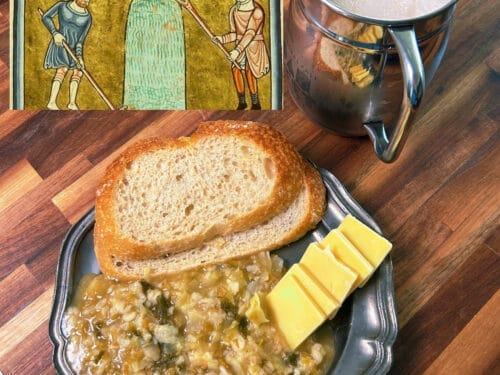
When served in an earthen bowl beside coarse barley bread and a mug of small ale, pease pottage feels alive again. It is a taste of endurance, community, and quiet dignity. It reminds us that the story of food is not just told by kings and courtiers, but by the laborers who fed the world.
Medieval Pease Pottage (c. 14th century, England)
Reconstructed from manorial provisioning records and agrarian inventories
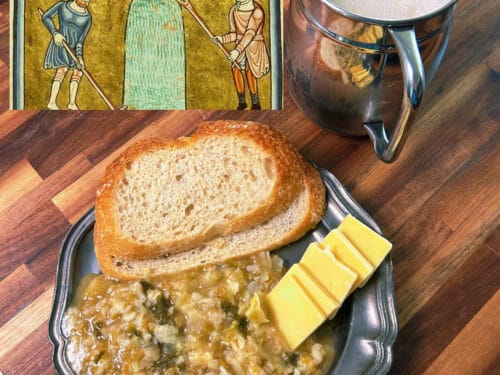
Medieval Pease Pottage (c. 14th century, England)

Don’t lose this one.
I’ll email it to you so it’s waiting when you’re ready to cook.
Ingredients
Instructions
Notes
- Historical accuracy: Based on the Cuxham Manor Accounts (1320s), Winchester Pipe Rolls, and finds from Wharram Percy, this recipe represents what a working English peasant would have eaten in the 14th century.
- Ingredient authenticity: Field peas, barley, and cabbage were the most common ingredients of the era. Root vegetables like carrots or parsnips would have appeared in later variations as they became more widespread in England.
- Serving tradition: Pottage was eaten throughout the day as it thickened on the hearth. For a full experience, serve with coarse barley bread, a slice of hard cheese, and a mug of small ale or cider.