There are few dishes in the world that capture the heart of a culture and nation as completely as Khinkali does for Georgia.
If you’re enjoying my recipes, all of my e-cookbooks are currently 40% Off!

This humble mountain dumpling isn’t just a meal. It is a reflection of the Georgian spirit, of survival and hospitality, of people who lived close to the land and passed their traditions through touch, taste, and memory.
Origins in the Highlands
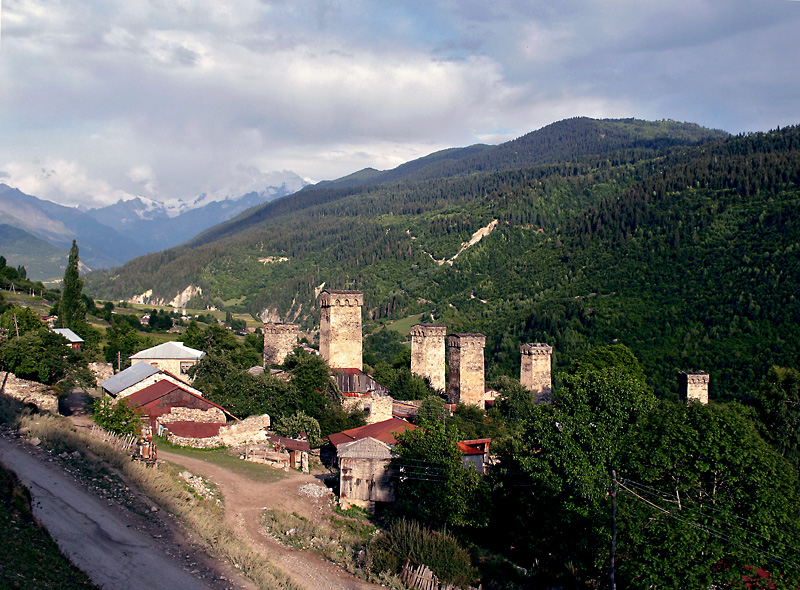
Khinkali was born in the rugged mountain regions of Tusheti, Pshavi, and Mtiuleti, areas where the air is thin, the winters are long, and every ingredient mattered. These highland shepherds and villagers lived a life of simplicity, shaped by the rhythms of the earth and the constant movement of livestock. They needed food that was filling, portable, and easy to cook over a fire in the open. The solution was a pocket of dough filled with minced meat and broth — a meal that could travel and feed a family.
The beauty of khinkali lies in its practicality. The top knot, called kudi, acted as a handle so it could be eaten by hand without plates or spoons. Once finished, the knot was discarded, leaving behind a little pile that showed how many you had eaten. Even in that simple act, there was community, humor, and pride. Over generations, what started as a traveler’s necessity evolved into a centerpiece of Georgian gatherings, served with the same joy and respect that mountain families gave to their guests.
The Mongol Connection
Many food historians trace khinkali’s roots to the Mongol invasions of the 13th century. When the Mongols swept across Eurasia, they brought not only warfare but also their food traditions, including early forms of dumplings. Dishes like manti in Central Asia and baozi in China shared the same foundation — dough filled with meat, sealed, and cooked in steam or boiling water. As Mongol influence reached the Caucasus, Georgians adopted and transformed the idea into their own version, shaped by their climate, resources, and culture.
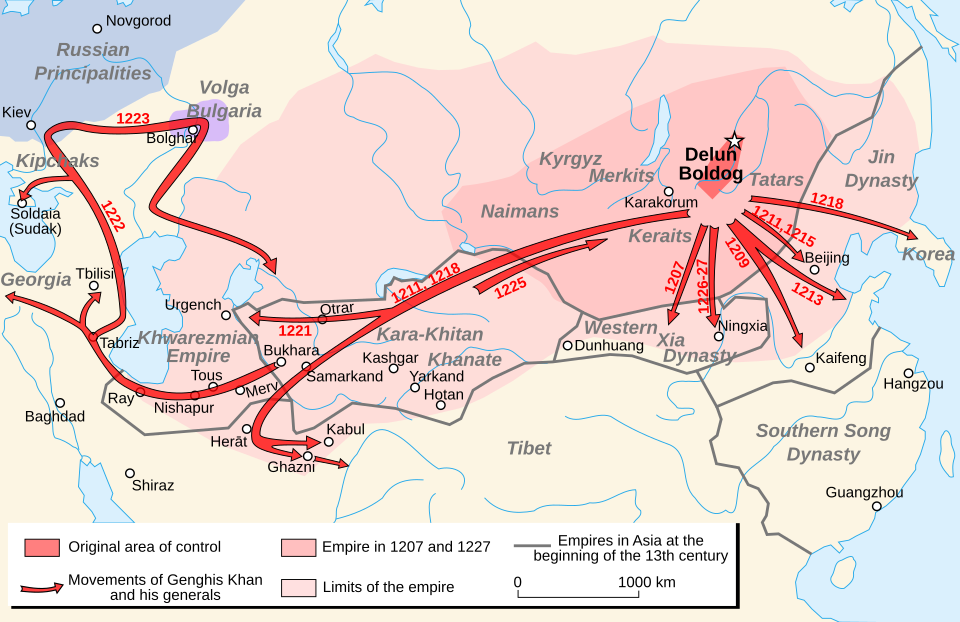
Instead of horse or yak meat used on the steppes, Georgian cooks used lamb, beef, or later, pork. They seasoned the filling with garlic, onions, black pepper, and sometimes cumin, infusing it with the bold, earthy flavors that define the region’s cuisine. Over time, khinkali lost any foreign association and became wholly Georgian, proof of how a culture can absorb outside influences and turn them into something entirely new.
Khinkali Through the Centuries
By the 16th and 17th centuries, khinkali had made its way from isolated mountain villages to the cities and estates of the Georgian lowlands. Records from noble households and monasteries mention “stuffed doughs with meats and spices,” showing that what began as a highland survival food had reached the tables of the elite. Regional variations soon developed. In the mountains, cooks preferred strong flavors and lamb, while in the valleys, pork and beef became more common.
Khinkali also became a central dish at the Georgian supra, the traditional feast that serves as both celebration and ceremony. At a supra, food is shared in abundance, and every dish carries meaning. When khinkali appears, it is eaten with laughter and competition. Guests see who can eat the most, carefully holding each dumpling by the top, taking a small bite, sipping the hot broth inside, and finishing the rest without spilling a drop. To waste the broth is considered poor form — it’s a small ritual that turns eating into performance, one that brings people together just as it did centuries ago.
A Living Tradition
Today, khinkali remains a cornerstone of Georgian cuisine. Whether you’re sitting in a family home in the mountains or at a bustling restaurant in Tbilisi, you will find it served with pride. Specialized khinkali taverns, known as sakhinkle, serve them by the dozens, often with little else on the menu. The dumplings come out steaming, dusted with black pepper, and ready to be eaten by hand.
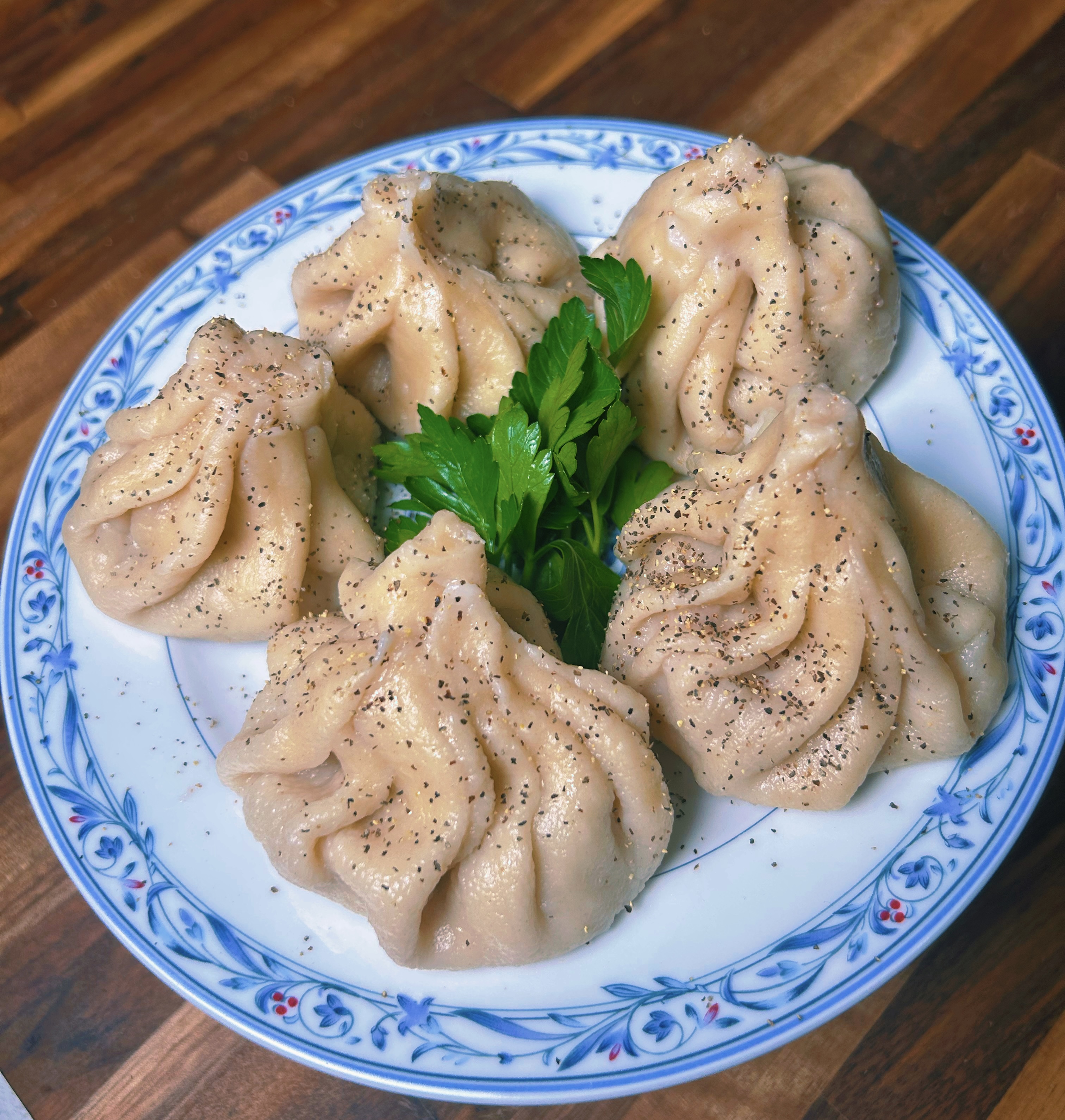
The dish continues to evolve. The Mtiuluri version from the mountains uses lamb and garlic, maintaining the older, spicier flavor. The Kalakuri version from the cities mixes pork and beef, adding a touch of herbs like parsley or cilantro for freshness. Some cooks experiment with fillings like mushrooms, cheese, or potatoes, especially during fasting seasons. Yet the essence never changes. The dough must be soft but sturdy. The filling must be juicy and full of broth. And each dumpling should have about eighteen pleats, a sign of skill and respect for tradition.
Eats History Rating
When I recreated khinkali for Eats History, it quickly became one of my favorite dishes I’ve ever made. The first bite is unlike any other dumpling. The soft dough gives way to a burst of savory broth infused with pepper, garlic, and meat. It’s both rich and clean, hearty but balanced. The filling of spiced beef and pork creates a deep flavor, while the dough absorbs just enough of the juices to give each bite a smooth, comforting texture.
Eating it the traditional way — holding it by the knot and sipping the broth before finishing the rest — made me feel connected to the shepherds, travelers, and families who have eaten this same meal for centuries. It’s food that tells a story of survival, adaptation, and craftsmanship. I gave it a 9.4 out of 10, not only for taste but for what it represents: a dish that has stood the test of time without losing its soul.
Georgian Khinkali Recipe:
Georgian Khinkali
Ingredients
For the Dough:
- 3 cups 375 g all-purpose flour
- 1 cup 240 ml warm water
- 1 tsp salt
- Optional: 1 tsp oil for elasticity
For the Filling:
- ½ lb 225 g ground beef
- ½ lb 225 g ground lamb (or pork if preferred)
- 1 half onion finely minced
- 3 cloves garlic minced
- ½ tsp freshly ground black pepper
- 1 tsp salt or to taste
- 1 tsp ground cumin optional but common in some regions
- ½ cup 120 ml cold water or broth
- 1 tbsp finely chopped parsley or cilantro optional
Instructions
Make the Dough
- In a large bowl, combine the flour and salt. Gradually pour in the warm water, stirring until a dough forms. Knead until smooth and elastic, about 8 to 10 minutes. Cover with a towel and let rest for 30 minutes.
Prepare the Filling
- In a separate bowl, mix the minced meats, onion, garlic, salt, pepper, and cumin. Slowly stir in the cold water or broth until the mixture is soft and juicy. When pressed with a spoon, it should almost slosh — that’s how you know the dumplings will have their signature broth inside.
Shape the Dumplings
- Divide the dough into two pieces and roll each one into a thin sheet, about one-eighth of an inch thick. Cut out circles about four inches wide. Place a spoonful of filling in the center of each circle. Gather the edges together and pleat them by hand, twisting slightly until sealed into a small pouch with a top knot.
Boil the Khinkali
- Bring a large pot of salted water to a boil. Add the dumplings in small batches and stir gently so they don’t stick. Once they float, cook for another five to seven minutes until the dough is firm and puffed. Remove with a slotted spoon and drain briefly.
Serve the Traditional Way
- Place the khinkali on a large platter and dust with freshly ground black pepper. Serve immediately. To eat properly, hold the dumpling by the knot, take a small bite, sip the hot broth inside, and then enjoy the rest. The knot is traditionally left on the plate as a little badge of honor.
Notes
- Keep the filling juicy: The secret to the broth inside khinkali is a wet filling. Don’t skip adding cold water or broth to the meat mixture — that liquid transforms into flavorful soup once the dumplings cook.
- Seal with care: A proper khinkali should have 15–20 pleats at the top and a tight seal to hold in the broth. Practice your folds slowly at first, focusing on even thickness and a well-twisted top knot.
- Eat it the traditional way: Hold the dumpling by the top, take a small bite, sip the hot broth inside, and then finish the rest. Leave the knot behind — it’s a Georgian custom that also keeps count of how many you’ve eaten.