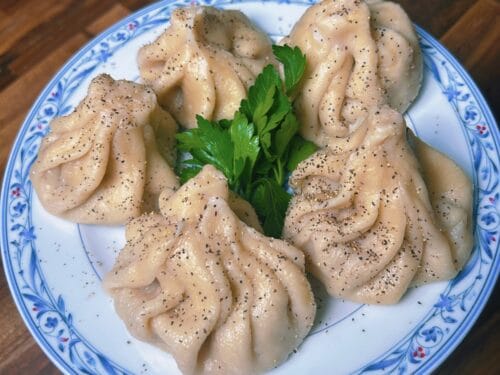

Khinkali is Georgia’s most iconic dish — a delicate yet hearty dumpling born in the country’s mountain regions. Traditionally filled with a mixture of beef and lamb (or pork), seasoned with garlic, black pepper, and sometimes cumin, khinkali is unique for the savory broth that forms inside as it cooks. Each dumpling is sealed with careful pleats and eaten by hand, with diners sipping the hot broth before finishing the rest. It’s a dish that represents Georgia’s mountain heritage, combining practicality, flavor, and craftsmanship into one unforgettable bite.
Prep Time 45 minutesmins
Cook Time 20 minutesmins
Ingredients
For the Dough:
3cups375 g all-purpose flour
1cup240 ml warm water
1tspsalt
Optional: 1 tsp oilfor elasticity
For the Filling:
½lb225 g ground beef
½lb225 g ground lamb (or pork if preferred)
1half onionfinely minced
3clovesgarlicminced
½tspfreshly ground black pepper
1tspsaltor to taste
1tspground cuminoptional but common in some regions
½cup120 ml cold water or broth
1tbspfinely chopped parsley or cilantrooptional
Instructions
Make the Dough
In a large bowl, combine the flour and salt. Gradually pour in the warm water, stirring until a dough forms. Knead until smooth and elastic, about 8 to 10 minutes. Cover with a towel and let rest for 30 minutes.
Prepare the Filling
In a separate bowl, mix the minced meats, onion, garlic, salt, pepper, and cumin. Slowly stir in the cold water or broth until the mixture is soft and juicy. When pressed with a spoon, it should almost slosh — that’s how you know the dumplings will have their signature broth inside.
Shape the Dumplings
Divide the dough into two pieces and roll each one into a thin sheet, about one-eighth of an inch thick. Cut out circles about four inches wide. Place a spoonful of filling in the center of each circle. Gather the edges together and pleat them by hand, twisting slightly until sealed into a small pouch with a top knot.
Boil the Khinkali
Bring a large pot of salted water to a boil. Add the dumplings in small batches and stir gently so they don’t stick. Once they float, cook for another five to seven minutes until the dough is firm and puffed. Remove with a slotted spoon and drain briefly.
Serve the Traditional Way
Place the khinkali on a large platter and dust with freshly ground black pepper. Serve immediately. To eat properly, hold the dumpling by the knot, take a small bite, sip the hot broth inside, and then enjoy the rest. The knot is traditionally left on the plate as a little badge of honor.
Notes
Keep the filling juicy: The secret to the broth inside khinkali is a wet filling. Don’t skip adding cold water or broth to the meat mixture — that liquid transforms into flavorful soup once the dumplings cook.
Seal with care: A proper khinkali should have 15–20 pleats at the top and a tight seal to hold in the broth. Practice your folds slowly at first, focusing on even thickness and a well-twisted top knot.
Eat it the traditional way: Hold the dumpling by the top, take a small bite, sip the hot broth inside, and then finish the rest. Leave the knot behind — it’s a Georgian custom that also keeps count of how many you’ve eaten.