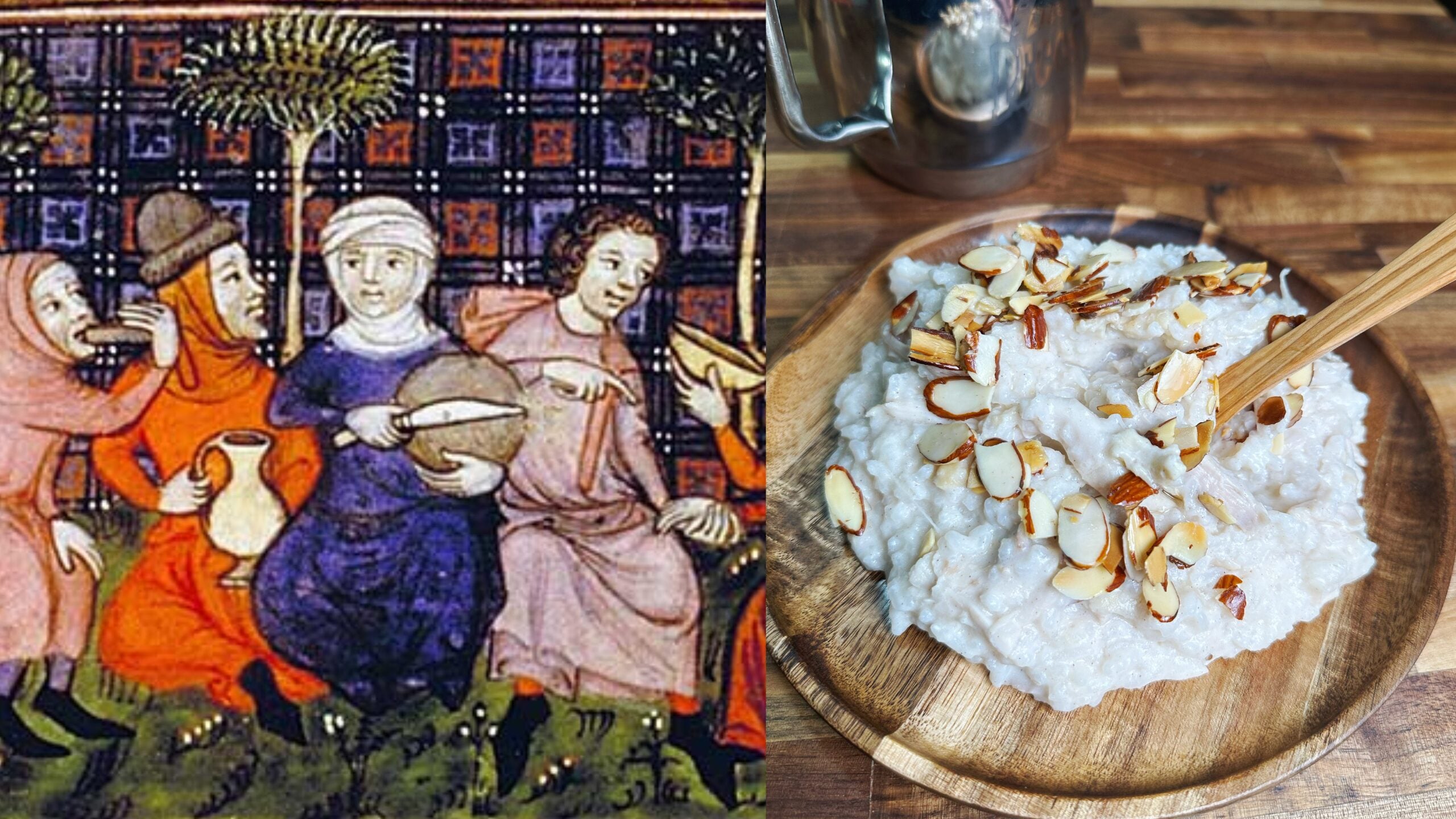
There is a category of historical recipe that is genuinely difficult to approach with enthusiasm. It is not that it sounds bad exactly. It is that it sounds beige. A pale, thick porridge of broken-down rice cooked in almond milk with shredded chicken stirred through and almonds scattered on top. The name itself, blancmange, means white food in Old French. They were not being subtle about it. The entire selling point of this dish was that it was white.
If you’re enjoying my recipes, check out my e-cookbooks at Eats History Shop!
And yet blancmange was one of the most important and most consistently made dishes in medieval European cooking for nearly four centuries. It appeared in the earliest English cookbooks, in French court recipes, in Italian culinary manuscripts, and across the Islamic world from which the European tradition almost certainly borrowed it. It was cooked for kings and served at feasts. It was prescribed as medicine for the sick. It was considered refined and desirable, a dish that demonstrated sophistication rather than apologising for its plainness.
I made it. Here is what happened.
Next week
I cook these before I write them. Some of it never makes the post.
The failures, the source documents, the version that actually tasted good. That part goes out by email, and next week’s is already on the stove.
 Written and cooked by Donnie
The Source: The Forme of Cury, 1390
The recipe I am working from comes from the Forme of Cury, the oldest cookbook written in English, compiled around 1390 by the master cooks of King Richard II of England. The title means the method of cooking in Middle English, and the manuscript is one of the most important primary sources in medieval British food history. It contains nearly 200 recipes covering everything from roasted meats to elaborate subtleties and covers the full range of what was served at the royal court in late 14th century England.
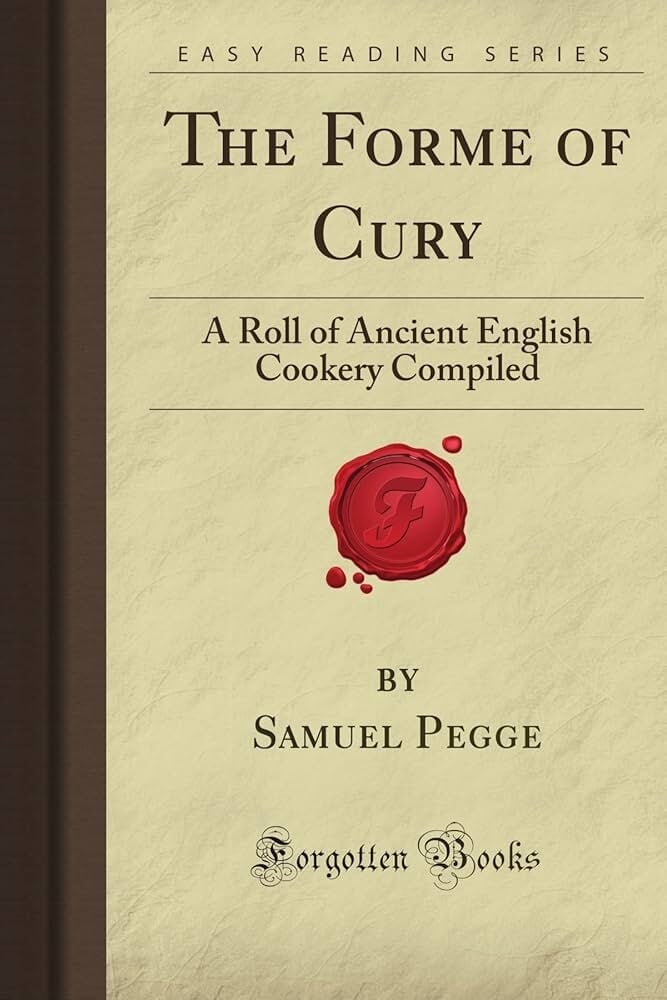
The original recipe text reads as follows, in the Middle English of the manuscript:
For to make blomanger. Nym rys and lese hem and washe hem clene, and do þereto god almande mylke and seþ hem tyl þey al tobrest. And þan lat hem kele. And nym þe lyre of þe hennyn or of capouns and grynd hem small. Kest þereto wite grese and boyle it. Nym blanchyd almandys and safroun and set hem aboue in þe dysche and serue yt forþe.
Which translates as: Take rice and pick them over and wash them clean, and add to them good almond milk and boil them until they completely burst apart. Then let them cool. Take the flesh of hens or capons and grind it small. Add to it white grease and boil it. Take blanched almonds and saffron and place them on top in the dish and serve it forth.
The instruction that the rice should be cooked until it completely bursts apart is one of the most important details in the recipe. This is not a rice dish in any sense we would recognise. The rice is cooked past the point of recognisability into a thick, starchy, almost porridge-like base. The goal is a smooth, pale, homogenous mass into which the shredded chicken disappears almost entirely. The visual effect, white on white, garnished with the pale almonds, was deliberate and considered beautiful by medieval standards.
Where It Came From: A Very Long Journey
Blancmange did not originate in England or even in France, though both nations claimed it enthusiastically. The dish traces its roots to the medieval Islamic culinary tradition, which produced sophisticated and highly developed cooking in the caliphates of the early medieval period. A dish of rice cooked in almond milk with chicken, sweetened with sugar and perfumed with spices, appears in 10th and 11th century Arabic cookbooks predating any European version by centuries. The Arabic tradition also used the dish medicinally, recommending it for the sick and the recovering because of its easy digestibility, its mild flavour, and its nourishing qualities.
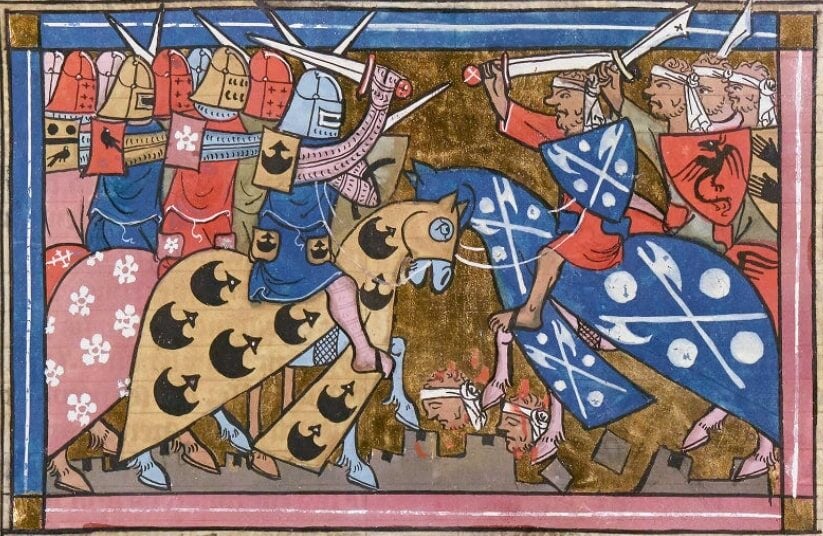
The dish travelled into European cooking through two main routes. The first was through Sicily and southern Italy, where Norman and Arab cultures had been interacting since the 11th century and where Arabic culinary traditions had substantial influence on the developing Italian and subsequently French court kitchens. The second was through the Crusades, which brought European knights and their cooks into direct contact with the sophisticated food culture of the Islamic Middle East. Either way, by the 13th century blancmange was appearing in French and English culinary manuscripts and by the 14th century it was established as one of the prestige dishes of medieval European court cooking.
The name itself is Old French, blanc meaning white and manger meaning to eat. The English adopted both the dish and the French name wholesale, as they did with much of court cooking culture during the medieval period, when French was the language of the English aristocracy and French culinary fashion set the standard for what elegant food looked like.
Who Ate It and Why: Medicine, Prestige, and the Colour White
Medieval blancmange was not a dish for everyone. In its most elaborate form, made with capon rather than ordinary hen, almond milk rather than cow’s milk, sugar and expensive spices, it was unambiguously a dish of the wealthy. Almonds were imported. Sugar was a luxury. Saffron was extraordinarily expensive. Capon, a castrated rooster raised specifically for the table and producing exceptionally tender meat, was not a peasant ingredient. The dish signalled financial means and culinary refinement simultaneously.
It was also, counterintuitively, prescribed as food for the sick. Medieval medicine operated on the theory of humours, the idea that health depended on the balance of four bodily fluids: blood, phlegm, black bile and yellow bile. Foods were classified as hot, cold, wet or dry, and medical treatment often involved adjusting the diet to restore humoral balance. Blancmange was considered a particularly appropriate food for the sick and the recovering because its white colour corresponded to a perceived mildness, its almond milk base was considered gentle on the stomach, and its texture was soft enough for those too weak to chew. Medieval physicians including the 14th century English doctor John of Gaddesden, whose Rosa Medicinae we have covered on this channel before, recommended dishes of this type for convalescents.
The whiteness of the dish was itself a mark of prestige in medieval food culture. White food was associated with purity, refinement, and the upper classes. The opposite was true of dark, heavily spiced, strongly flavoured food, which was considered more appropriate for the lower orders. A table loaded with pale, delicate, white preparations demonstrated that the host had the means and the knowledge to produce sophisticated cuisine. Blancmange, pure white, mild, smooth, decorated with pale almonds and golden saffron, sat at the peak of this aesthetic.
The Modern Cousin: How White Food Became a Wobbly Dessert
The blancmange most people encounter today is almost unrecognisable as the descendant of the medieval dish. The modern version is a sweet, milk-based, gelatine-set dessert, pale and wobbly, typically flavoured with vanilla or almond, served cold from a mould in a shape that wobbles dramatically when you carry it to the table. It contains no chicken. It contains no rice in most versions. It is entirely a dessert rather than a main course.
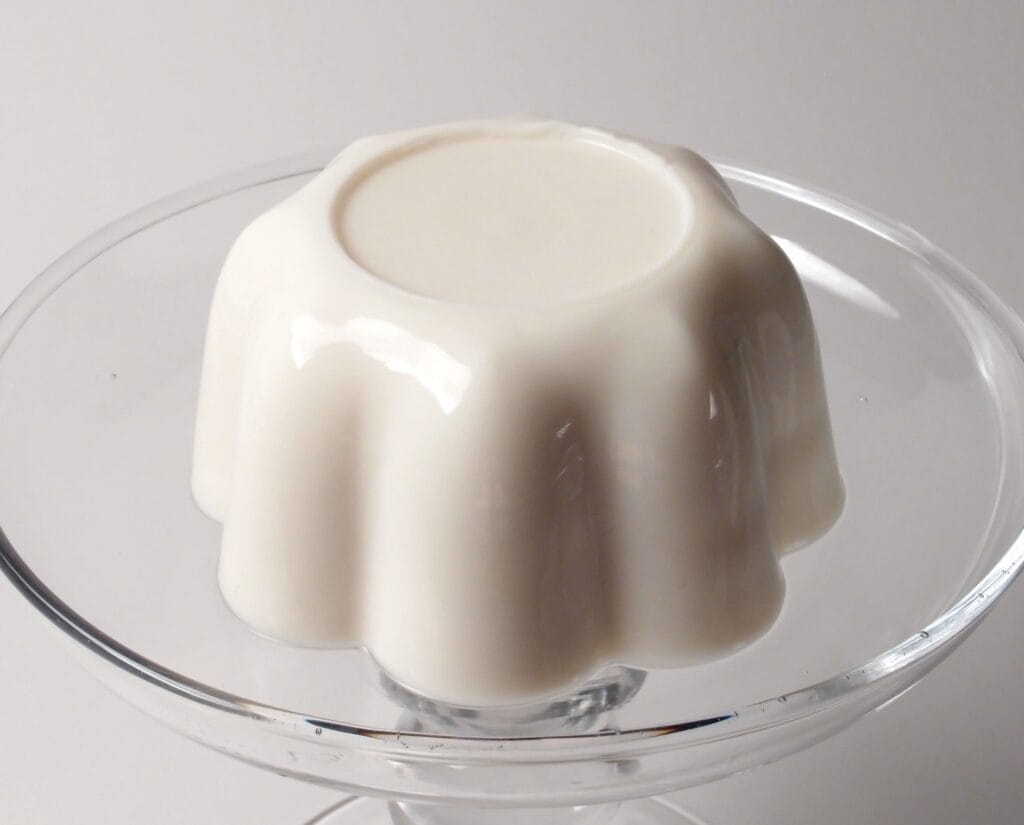
The transformation happened gradually over several centuries. By the 15th and 16th centuries, versions of blancmange were appearing that reduced or omitted the chicken and increased the sweetener. By the 17th century the sweet version was becoming dominant in fashionable cooking. By the 18th century the savoury chicken version had largely disappeared from mainstream English cookbooks and blancmange had become primarily a dessert preparation. The introduction of commercial gelatine and later cornstarch in the 19th century allowed blancmange to be set into elaborate moulded shapes, which became fashionable in the Victorian era and produced the shivering white dessert dome that the word now conjures.
The word is the same. The dish is completely different. The only things that connect them are the pale colour, the almond flavour in many versions, and the name. This is one of the more dramatic transformations in the history of a single dish and it happened so gradually that at no point did anyone announce the change.
My Rating and Honest Assessment
I will be straightforward. Medieval blancmange is not a dish I enjoyed very much, and I think being honest about that is more useful than pretending otherwise. The texture is thick and porridge-like in a way that does not have an obvious modern equivalent to compare it against favourably. The flavour is mild to the point of blandness despite the spices, which get somewhat lost in the almond milk base. The shredded chicken disappearing into a white rice porridge is texturally unusual and takes some getting used to.
Would I make this on a regular Tuesday night? No.
It is a four out of ten, and I think the honest assessment is that it has not aged as well as some medieval recipes. The Mughal samosas aged beautifully. The blancmange tastes very much past its prime.
Rating: 4.2 / 10
The Recipe: Medieval Blancmange
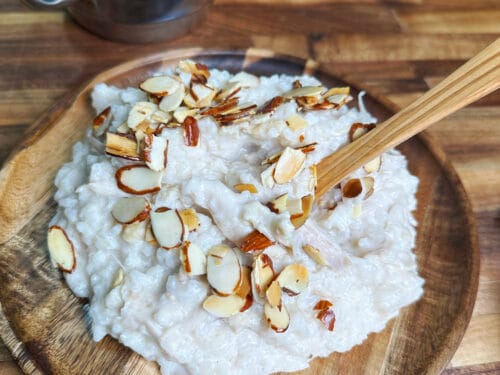
Medieval Blancmange

Don’t lose this one.
I’ll email it to you so it’s waiting when you’re ready to cook.
Ingredients
Instructions
Notes
- The rosewater is historically accurate and adds a floral note that medieval cooks would have recognised as a signature of refined cuisine. It is optional but worth including for the authentic flavour profile.
- Lard is the historically correct fat for this recipe. White grease in the Forme of Cury refers to rendered lard, which was the standard cooking fat of the medieval English kitchen. You can substitute butter but the flavour will be different.
- The dish should be white or very pale throughout. If your almond milk is heavily coloured or your spices are turning it brown, you have used too much. The visual whiteness was the point.