Medieval gingerbread is nothing like the gingerbread most of us know today. There are no cookies, no molasses, and no baking. Instead, medieval “gyngerbrede” is a dense, spiced honey confection made from boiled honey, breadcrumbs, saffron, cinnamon, and pepper.
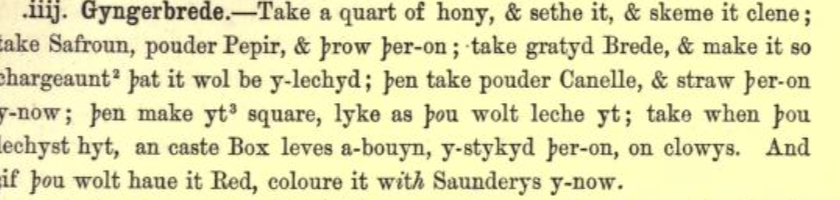
The earliest surviving English version comes from the fifteenth century household manuscript Harleian MS 279, preserved today through Two Fifteenth Century Cookbooks (1888). It is a sweet that speaks directly to medieval tastes, medieval aesthetics, and medieval ideas of luxury.
In this post, we will explore the history behind this fascinating dish, its place in medieval celebrations, how it differs from modern gingerbread, and why it remains one of the most unique treats you can recreate today. At the end, you will find my adapted modern recipe based on the original Middle English text.

The Origins of Gingerbread
The recipe for “Gyngerbrede” appears in Harleian MS 279 as a confection made from boiled honey thickened with grated bread until firm enough to slice. The text instructs the cook to season it with saffron, powdered pepper, and cinnamon, then color it red with sandalwood if desired. This was a luxury sweet created in wealthy medieval kitchens where honey, spices, and imported ingredients were signs of status.
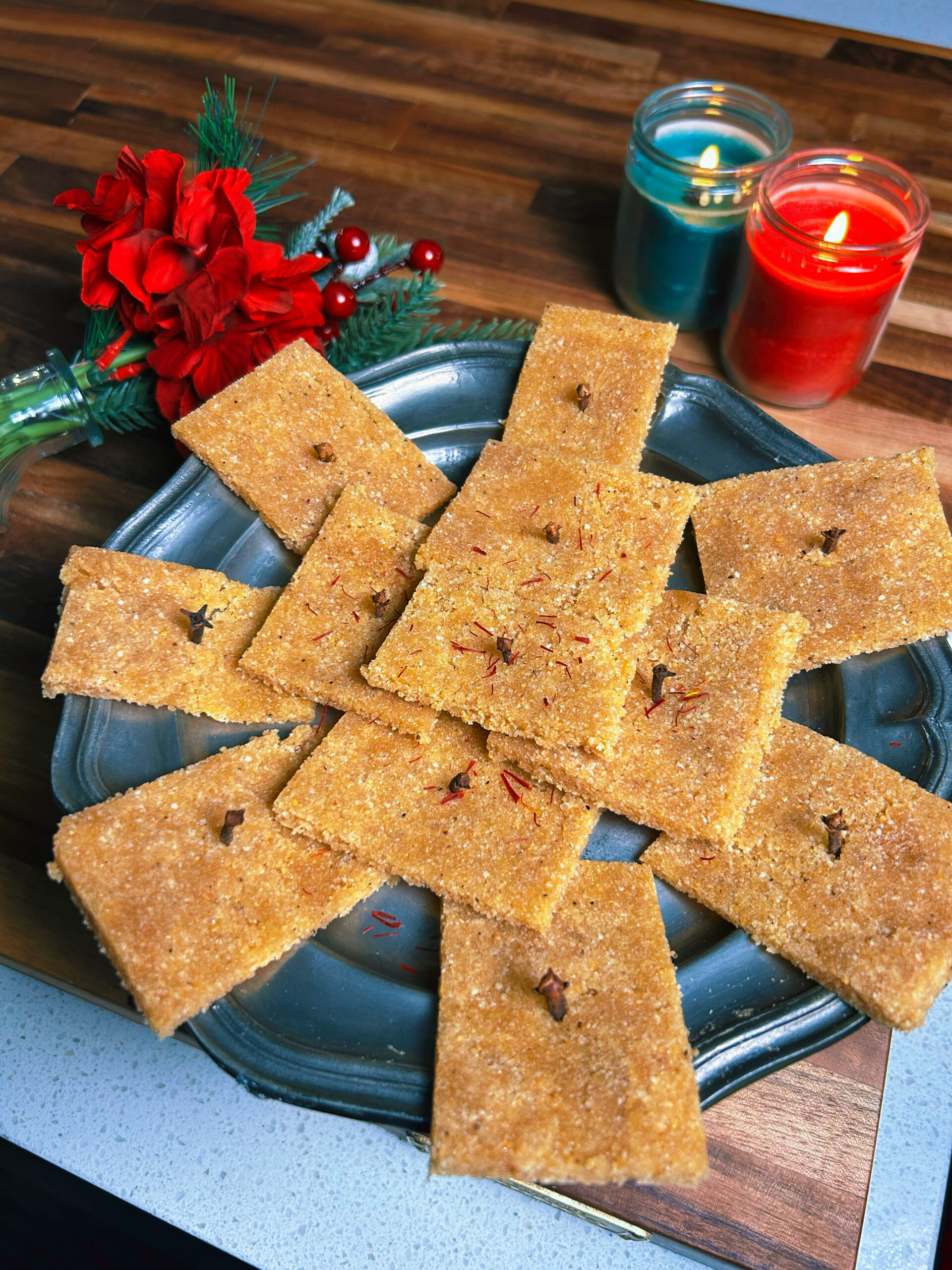
Because honey was expensive and saffron was one of the priciest spices in the medieval world, this dish was reserved primarily for feast days, Christmas tables, noble households, and guild celebrations. Gingerbread like this was often cut into small squares or diamonds and decorated with cloves or box leaves for festive presentation.
Who Ate Medieval Gyngerbrede?
Gingerbread of this style would have been enjoyed by nobles, merchants, and wealthy urban households. Honey was still the principal sweetener in the late medieval period, but its finest varieties were costly. Spices like pepper and cinnamon moved through long trade networks controlled by Venetian and Arab merchants. And the optional sandalwood coloring, called saunderys, was a prized ingredient used to create vivid red foods that symbolized wealth and celebration.

Because of these ingredients, medieval gingerbread was not an everyday treat. It was a confection of luxury that appeared during holidays, winter feasts, weddings, and celebrations where presentation and opulence mattered. It reflected medieval values of hospitality, status, and sensory pleasure.
How Medieval Gingerbread Differs from the Modern Version
Modern gingerbread is built on flour, molasses, strong ginger, and warm spices, usually baked into cookies or soft cakes. Medieval gingerbread is completely different in structure, flavor, and intent.
- It is not baked.
Medieval gingerbread is a cooked honey candy thickened with breadcrumbs. - It barely contains ginger.
Cinnamon and pepper dominate the flavor profile, while ginger is only a minor component. - It is chewy and candy like.
The texture is closer to halva or soft fudge than a cookie. - It was meant for slicing and displaying.
Medieval sweets were often pressed into shapes and set out on boards during feasts.
Despite these differences, the medieval version is deeply satisfying. It tastes ancient in the best way: warm, honey rich, spicy, and comforting.
The Role of Spices and Medieval Culinary Aesthetics
Spices in the Middle Ages were valued for both flavor and symbolism. Pepper and cinnamon were believed to warm the body, balance the humors, and promote good digestion. Honey was thought to strengthen the heart and improve vitality. Brightly colored food was celebrated, and red dishes were especially desirable in noble households.
That is why the original manuscript suggests coloring the gingerbread with sandalwood powder, an expensive dye used for both cooking and medicine. While sandalwood is nearly impossible to source today, the intent was to create a visually striking dish that announced wealth and refinement. If you want to mimic the original color, a drop or two of natural red food dye is the modern solution.
A Medieval Sweet Brought to the Modern Kitchen
When I recreated this fifteenth century gingerbread using the manuscript as my guide, I was surprised at how enjoyable it was. The honey gives it depth, the cinnamon adds warmth, the pepper gives it a subtle kick, and the texture comes together like a rustic candy. It is one of the simplest medieval recipes to make, and one of the most unique.
This dish earns a rating of 8.8 out of 10 from me. It is historic, delicious, and incredibly fun to serve.
Medieval Gingerbread Recipe (Gyngerbrede)
Medieval Ginger Bread Recipe
Ingredients
- 1.5 cup breadcrumbs
- 1 cup honey the medieval quart is larger, but this ratio works perfectly
- ¾ teaspoon cinnamon
- ¼ teaspoon black pepper
- ¼ teaspoon ginger
Optional historical touches:
- A pinch of saffron for color and flavor
- Sandalwood powder saunderys, if you want the authentic reddish tint
- Whole cloves for sticking into the top
Instructions
Prepare the honey base
- Place the honey in a pot and bring it just to a boil.
- Reduce to a low simmer for 5–10 minutes.
- Skim off any foam
Add cinnamon, ginger, and black pepper
- If using, add a few strands of saffron for golden color
- This step mirrors the medieval process exactly — they always boiled the honey first.
Add the breadcrumbs
- Add breadcrumbs one cup at a time, stirring constantly.
- You want the mixture to become very thick, almost like dough — the manuscript says:
- “make it so chargeaunt that it will be y-leched”
- Meaning: thick enough to slice cleanly.
- If it is too soft, add more breadcrumbs.
Knead the dough
- Turn out onto a wooden board (historically accurate).
- Knead lightly until smooth.
- It will feel like warm, sticky clay.
Shape it
- Divide into equal square pieces.
- Press or roll each piece into a rectangle.
- Cut into 1-inch squares or diamonds — exactly how medieval cooks served it.
Decorate (historical option)
- Dust with cinnamon + sandalwood powder (optional).
- Stick a clove into each square.
- Decorate with box leaves if desired.
- This decoration step is straight from the medieval instruction.