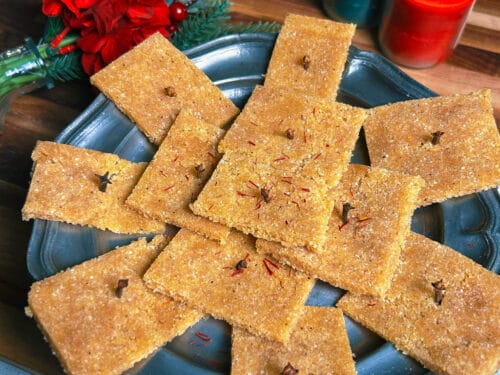

Medieval gingerbread is a fifteenth century honey confection that tastes nothing like modern gingerbread cookies. Made by boiling honey with warm spices and thickening it with breadcrumbs, this dense, chewy sweet was once served at noble feasts, holiday tables, and winter banquets across medieval Europe. The flavor is rich with cinnamon, pepper, and ginger, while the texture resembles spiced candy or soft halva. It slices beautifully, holds its shape, and feels unmistakably ancient. This recipe follows the original instructions from Harleian MS 279, giving you a dessert that is simple to make yet deeply connected to the flavors, traditions, and aesthetics of the Middle Ages.
Prep Time 10 minutesmins
Cook Time 15 minutesmins
Ingredients
1.5cupbreadcrumbs
1cuphoneythe medieval quart is larger, but this ratio works perfectly
¾teaspooncinnamon
¼teaspoonblack pepper
¼teaspoonginger
Optional historical touches:
A pinch of saffron for color and flavor
Sandalwood powdersaunderys, if you want the authentic reddish tint
Whole cloves for sticking into the top
Instructions
Prepare the honey base
Place the honey in a pot and bring it just to a boil.
Reduce to a low simmer for 5–10 minutes.
Skim off any foam
Add cinnamon, ginger, and black pepper
If using, add a few strands of saffron for golden color
This step mirrors the medieval process exactly — they always boiled the honey first.
Add the breadcrumbs
Add breadcrumbs one cup at a time, stirring constantly.
You want the mixture to become very thick, almost like dough — the manuscript says:
“make it so chargeaunt that it will be y-leched”
Meaning: thick enough to slice cleanly.
If it is too soft, add more breadcrumbs.
Knead the dough
Turn out onto a wooden board (historically accurate).
Knead lightly until smooth.
It will feel like warm, sticky clay.
Shape it
Divide into equal square pieces.
Press or roll each piece into a rectangle.
Cut into 1-inch squares or diamonds — exactly how medieval cooks served it.
Decorate (historical option)
Dust with cinnamon + sandalwood powder (optional).
Stick a clove into each square.
Decorate with box leaves if desired.
This decoration step is straight from the medieval instruction.
Video
Notes
1. Control the texture with breadcrumbs. Medieval gingerbread should be firm enough to slice cleanly. If the mixture is still soft, add more breadcrumbs until it becomes thick and dough like.2. Use warm, low heat once the breadcrumbs are added. If the honey gets too hot after thickening, the mixture can harden or crystallize. Gentle heat keeps it smooth and workable.3. Decoration is part of the history. Cloves, colored powder, and small leaf garnishes were not just for looks. They signaled wealth and festivity. Adding a single clove to each piece brings you closest to the medieval presentation.