There is a version of Nostradamus that most people know. The 16th century French mystic who wrote cryptic four-line verses predicting the French Revolution, the rise of Napoleon, the Second World War and various other catastrophes in terms vague enough to be applied retrospectively to almost anything that has ever happened. The man in the pointed hat gazing at the stars, prophesying doom.
Then there is the other Nostradamus, the one food history was built to find. A trained apothecary who spent years travelling France making remedies, fighting plague and compounding medicines. A man who was expelled from medical school when the faculty discovered he had previously worked as a tradesman, which was considered beneath the dignity of a physician. A man who in 1555, the same year he published Les Prophéties and began his career as history’s most famous predictor, also published a book on cosmetics and jam. A book that included, alongside recipes for preserved cherries and quince jelly fit for a king, a love potion requiring the blood of seven male sparrows, mandrake apples and the eyelets of an octopus’s arms preserved in honey.
I made the pears. Not the love potion. Here is why and here is how.
The Man: Who Was Nostradamus Before the Prophecies
Michel de Nostredame was born in December 1503 in Saint-Rémy-de-Provence in southern France. He entered the University of Avignon at fourteen for a classical education but was forced to leave within a year when an outbreak of plague closed the university. This departure, which could have derailed his education entirely, instead gave him something considerably more practical. He spent the next several years travelling the French countryside researching herbal remedies, working as an apothecary, and developing the pharmaceutical knowledge that would define the first half of his professional life.

He eventually enrolled at the University of Montpellier to study medicine, but the university discovered that he had previously worked as an apothecary, a tradesman’s occupation that the medical faculty considered incompatible with the dignity of a physician. The expulsion document signed by procurator Guillaume Rondelet still exists in the faculty library. Nostradamus was removed from the programme. He returned later under circumstances historians continue to debate, received his degree, and built a reputation as a plague physician and healer across Provence and beyond.
The pharmaceutical training never left him. When he eventually compiled his writings in the early 1550s, his first major publication was not Les Prophéties but the Traité des fardemens et confitures, the Treatise on Cosmetics and Jams, first published in 1555 with a prologue dated 1552. It is clearly the work of an apothecary, covering cosmetics, medicines, plague remedies and preserves, the latter based largely on sugar, which was at the time controlled by the apothecaries’ guilds and considered a pharmaceutical substance rather than merely a food ingredient. Nostradamus was not moonlighting as a cook. He was operating in the exact intersection of pharmacy and food that defined the apothecary’s world in 16th century France.
The Book: Treatise on Cosmetics and Jams
The Traité des fardemens et confitures is one of the more extraordinary documents in culinary history and it is almost entirely unknown outside specialist circles. Its contents tell you more about the relationship between food, medicine and magic in 16th century France than any straightforwardly historical account could.
The structure of the book reflects the peculiar coherence of the apothecary’s world. Part one is the cosmetics manual, covering perfumed waters, aromatic powders for teeth, hair treatments and skin preparations. Nestled within it is Nostradamus’s famous plague remedy, a powder combining rose petals, cloves, aloe and lignum aloes that he credited with saving lives during the plague outbreaks he had treated across Provence. The plague remedy and the face powder sit in the same section without apology because in Nostradamus’s understanding both were pharmaceutical preparations drawing on the same knowledge base.
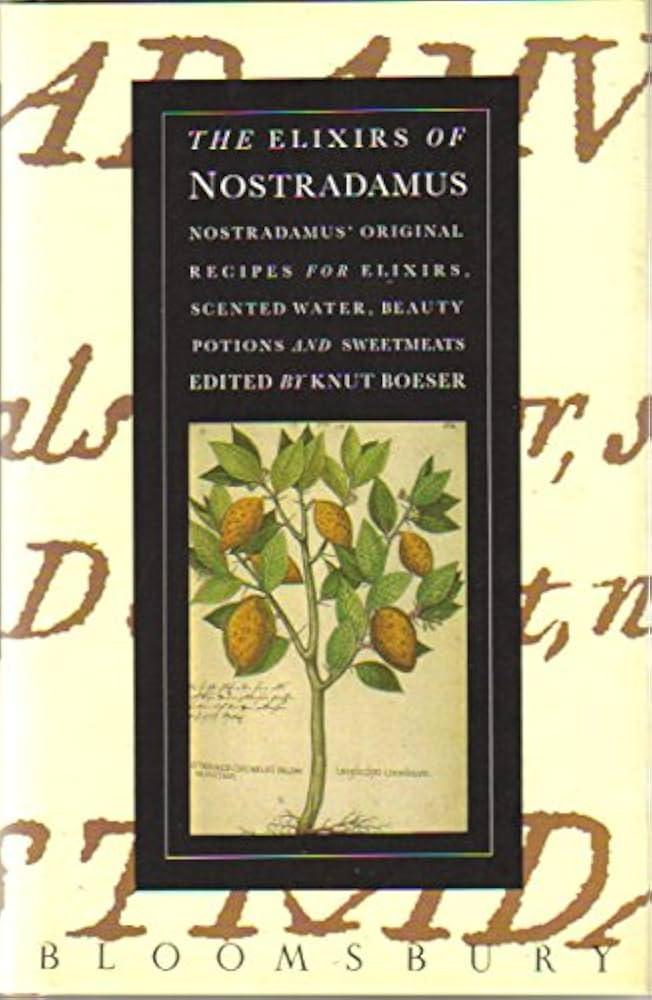
Part two is the cookbook, and it is here that the document becomes genuinely extraordinary from a food history perspective. The recipes include candied orange peel using sugar or honey, a cherry jam or preserve using heart cherries, a quince jelly of superb beauty, goodness, flavour and excellence fit to set before a King, and various other sugar-based preparations that read as standard confectionery by any modern standard. These are genuinely good recipes from a man who clearly knew what he was doing in the kitchen.
And then there is Chapter XVIII of the 1556 edition: To truly make the lovers’ sexual potion which the ancients used for love-making. This is what Sky History, drawing on the original text, describes as the Love Jam. The ingredients, documented from the original: the blood of seven male sparrows, mandrake apples and the eyelets from the arms of an octopus, all preserved and prepared in honey. Nostradamus wrote of it that its powers were remarkable enough that he felt compelled to document them despite the extraordinary nature of the ingredients.
I will not be making the love potion. The sparrow procurement alone presented logistical challenges that the Eats History production budget cannot currently accommodate. Also the octopus arm eyelets. Also the mandrake. But the preserved pears from the same tradition of apothecary preserving are accessible, documented and genuinely excellent.
Sugar as Medicine: Why This Recipe Was Considered Healthcare
To understand Nostradamus’s preserved pears as he understood them, it is necessary to understand the status of sugar in 16th century France, because it was not what it is today.
Sugar in 1555 was not a pantry staple. It was a luxury commodity of extraordinary value, imported from Portuguese and Spanish colonial sugar-producing territories and sold by weight at prices that put it entirely out of reach for most of the population. Only princes could afford it was not a figure of speech. It was a literal assessment of who could buy refined white sugar in sufficient quantities to preserve fruit. The recipe specifies fine sugar, the whitest available, because the degree of refining was itself a marker of quality and cost. A darker, less refined sugar was cheaper and available to more people. The whitest, most refined sugar was the most expensive and the most prestigious.
More significantly for Nostradamus’s purposes, sugar was regulated and sold by apothecaries. The apothecaries’ guilds controlled the sale of sugar across much of France because sugar was classified as a medicinal substance. According to the Oxford Companion to Sugar and Sweets, sugar was understood in this period as warming the body, balancing the humors, and as an effective laxative, making it a pharmaceutical ingredient with specific therapeutic applications as understood within the humoral medicine framework of the time.
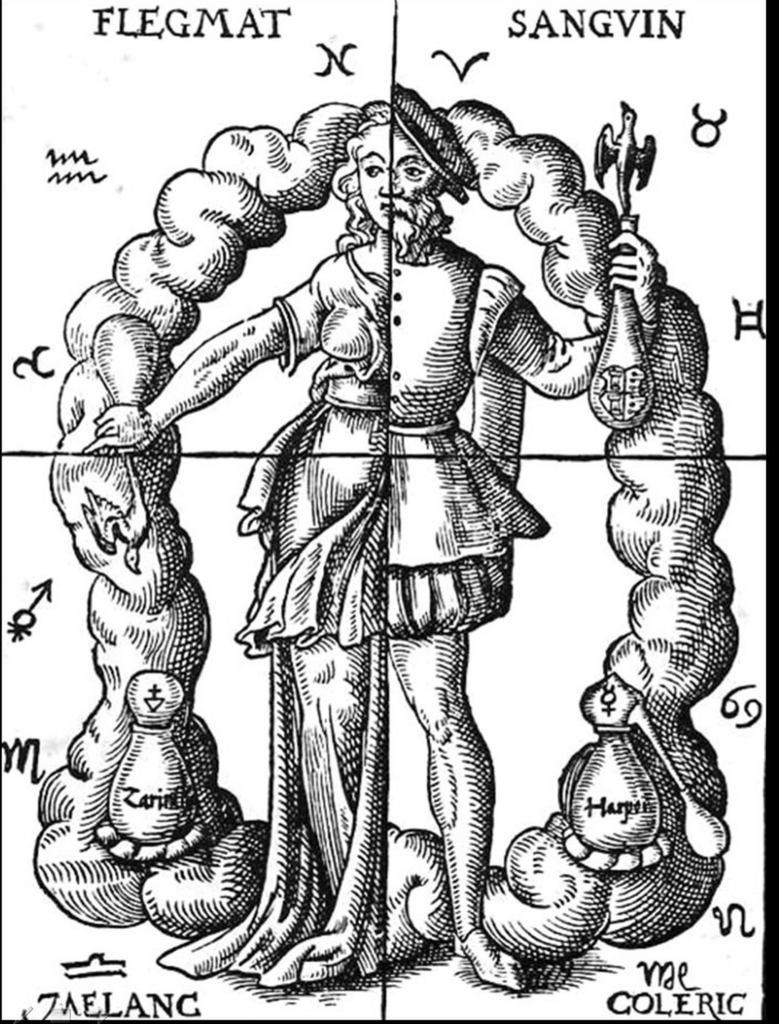
When Nostradamus made his preserved pears with fine white sugar, cinnamon, cloves and lemon, he was not making dessert. He was making a pharmaceutical preparation. The fruit preserved in sugar syrup was understood to deliver the medicinal properties of the sugar and the spices in a form that was both palatable and preservable. The cinnamon was warming. The cloves were antibacterial and digestive. The lemon provided acidity that balanced the humoral properties of the sweet preparation. The pears themselves were considered gentle, nourishing and appropriate for delicate constitutions. The finished preserve was a medicine that happened to taste extraordinary, which in the apothecary’s tradition was considered the ideal outcome.
This is why the sugar-preserved fruit section of the Traité follows naturally from the cosmetics and plague remedies. Nostradamus was not departing from his pharmaceutical practice when he made jam. He was extending it into a domain where the apothecary’s guild had commercial and professional authority.
My Rating
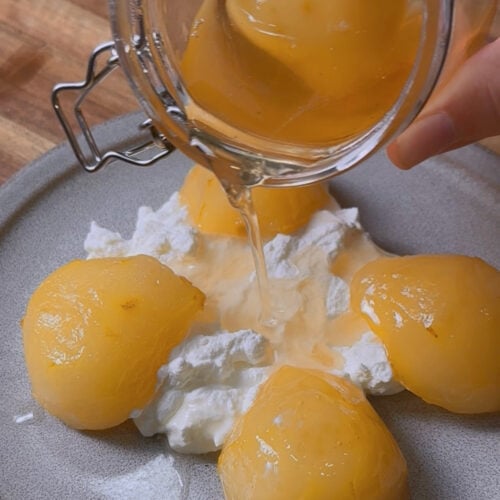
I served mine with whipped cream, which Nostradamus did not document and which I suspect would have appalled him on pharmaceutical grounds while delighting him on every other. The combination is extraordinary.
The pears, poached in the spiced sugar syrup and left to absorb the cinnamon and clove flavour over several days, develop a depth and complexity that fresh poached pears do not have. The syrup penetrates the fruit completely. The cinnamon is warm and present without being aggressive. The cloves contribute a subtle, almost medicinal note that is more interesting than it sounds. The rosewater, if you add it, turns the whole preparation into something that clearly belongs to a different culinary tradition from the one most of us cook in, something older, more perfumed, more deliberately constructed around flavour as an expression of knowledge rather than simply pleasure.
The whipped cream, which I added because it was there and because I am not a 16th century apothecary with a professional obligation to medicinal integrity, was the right decision. The cold cream against the spiced preserved pear is one of the better things I have eaten for this channel recently.
Rating: 8.4 / 10
The Recipe: Nostradamus’s Poached Pears
Nostradamus’s Poached Pears
Ingredients
- 4 firm ripe pears — Bosc or Conference variety. Nostradamus was in Provence, where small, firm, aromatic pears grew abundantly. Avoid soft varieties that will collapse in the syrup
- 400 g white sugar — in 1555 this was refined cane sugar the most expensive ingredient in the recipe and the reason only princes could afford it. Use the whitest sugar you can find, not golden or raw cane, to approximate what Nostradamus called fine sugar
- 400 ml water
- 1 small piece of cinnamon bark — cinnamon was the standard apothecary spice for preserved fruits in 16th century France documented in period French preserve recipes and consistent with Nostradamus’s apothecary background
- 3 cloves — documented alongside cinnamon in contemporaneous French confiture recipes of the same period
- Peel of half a lemon removed in strips — lemon was widely available in Provence and used in apothecary preserves to prevent browning and add acidity
- Optional: 1 tablespoon rosewater to finish — rosewater appears throughout Nostradamus’s documented recipes and was the signature flavouring of the 16th century French apothecary kitchen
- To serve not historically documented but strongly recommended:
- Whipped cream
Instructions
Step 1 — Clarify the syrup
- This is the key step that separates an apothecary’s preserve from a household jam, and it is documented in Nostradamus’s cherry recipe as his established technique. Combine the sugar and water in a wide saucepan over medium heat. Stir until the sugar completely dissolves. Bring to a gentle simmer. Add the cinnamon bark, cloves and lemon peel strips. Simmer for 5 minutes until the syrup is fragrant and faintly golden. Skim off any foam that rises. Nostradamus’s documented cherry method specifically emphasises clarity and beauty of the finished preserve. A clear, clean syrup was a mark of apothecary skill and pharmaceutical precision.
Step 2 — Prepare the pears
- Peel the pears carefully, keeping them whole or halving them lengthways. Halving makes for more elegant presentation in the jar and allows the syrup to penetrate more fully. If halving, remove the core with a small spoon or melon baller. Keep the stems on whole pears if possible as they were considered decorative in period presentations. Drop each prepared pear immediately into a bowl of cold water with a squeeze of lemon to prevent browning while you work.
Step 3 — Poach
- Lower the pears gently into the barely simmering spiced syrup. The syrup should just cover them. If it does not, add a little more water. Poach over a gentle, steady simmer for 15 to 25 minutes depending on size and ripeness. Test with a thin knife or skewer at the thickest point. It should pass through with very slight resistance. The pears must be tender throughout but still holding their shape completely. A collapsed pear is a failed preserve. Remove carefully with a slotted spoon and set aside.
Step 4 — Reduce and clarify the syrup
- Remove the cinnamon, cloves and lemon peel from the syrup. Return it to medium-high heat and reduce by roughly one third until it thickens slightly and coats the back of a spoon. This concentration step is consistent with Nostradamus’s documented cherry method, where reduction is used to intensify flavour and improve preservation. Skim any remaining foam. If using rosewater, add it off the heat now and stir through gently.
Step 5 — Jar and set
- Place the poached pear halves carefully into a sterilised glass jar. Pour the hot reduced syrup over them until they are completely submerged. Seal while hot. The pears will keep for several weeks refrigerated and the flavour deepens considerably over two to three days as the spiced syrup penetrates fully into the fruit. They are better on day three than on day one.
To serve
- Serve the preserved pears cold from the jar with a generous spoonful of the spiced syrup over the top and a large amount of whipped cream alongside. The cold cream against the warm spiced pear syrup is the combination that takes this from an interesting historical curiosity to something genuinely worth making repeatedly. Nostradamus did not document this serving suggestion. He was probably right not to. I am doing it anyway.
Video
Notes
- The whitest, most refined sugar you can find is worth using here. The pharmaceutical significance of white sugar in the 16th century aside, the flavour of refined white sugar in a spiced syrup is cleaner and more neutral than raw or golden sugar, which would add a molasses note that competes with the cinnamon and clove. This is the rare recipe where supermarket white granulated sugar is the historically correct choice.
- The rosewater is optional but worth trying. Add only a tablespoon off the heat after reducing the syrup. More than that and the rosewater becomes dominant. The correct amount should be barely detectable as rosewater and simply add a faint floral note that is immediately and unmistakably period-appropriate.
- Firm pears are essential. Soft pears will collapse completely in the syrup and produce a pleasant compote rather than the structured, elegant preserved fruit the recipe intends. Test your pears before starting. They should resist gentle pressure firmly. If they yield easily they are already too ripe.