
Go Back

Nostradamus's Poached Pears

Print Recipe
Adapted from Nostradamus, Traité des fardemens et confitures (Treatise on Cosmetics and Jams), first published 1555, Prologue dated 1552
The pear preserve recipe is reconstructed from the documented techniques in Nostradamus's cherry and quince recipes, Chapter VIII and Chapter XV of the Traité, using ingredients consistent with 16th century Provençal apothecary practice and contemporaneous French confiture recipes of the period. Primary sources: Nostradamus, Traité des fardemens et confitures, 1555; Atlas Obscura, Nostradamus the Jelly Maker, drawing on the original text; The Elixirs of Nostradamus, Moyer Bell, 1996, English translation of the German translation of the original
Prep Time 20 minutes
Cook Time 40 minutes

Ingredients

  • 4 firm ripe pears — Bosc or Conference variety. Nostradamus was in Provence, where small, firm, aromatic pears grew abundantly. Avoid soft varieties that will collapse in the syrup
  • 400 g white sugar — in 1555 this was refined cane sugar the most expensive ingredient in the recipe and the reason only princes could afford it. Use the whitest sugar you can find, not golden or raw cane, to approximate what Nostradamus called fine sugar
  • 400 ml water
  • 1 small piece of cinnamon bark — cinnamon was the standard apothecary spice for preserved fruits in 16th century France documented in period French preserve recipes and consistent with Nostradamus's apothecary background
  • 3 cloves — documented alongside cinnamon in contemporaneous French confiture recipes of the same period
  • Peel of half a lemon removed in strips — lemon was widely available in Provence and used in apothecary preserves to prevent browning and add acidity
  • Optional: 1 tablespoon rosewater to finish — rosewater appears throughout Nostradamus's documented recipes and was the signature flavouring of the 16th century French apothecary kitchen
  • To serve not historically documented but strongly recommended:
  • Whipped cream

Instructions

Step 1 — Clarify the syrup

  • This is the key step that separates an apothecary's preserve from a household jam, and it is documented in Nostradamus's cherry recipe as his established technique. Combine the sugar and water in a wide saucepan over medium heat. Stir until the sugar completely dissolves. Bring to a gentle simmer. Add the cinnamon bark, cloves and lemon peel strips. Simmer for 5 minutes until the syrup is fragrant and faintly golden. Skim off any foam that rises. Nostradamus's documented cherry method specifically emphasises clarity and beauty of the finished preserve. A clear, clean syrup was a mark of apothecary skill and pharmaceutical precision.

Step 2 — Prepare the pears

  • Peel the pears carefully, keeping them whole or halving them lengthways. Halving makes for more elegant presentation in the jar and allows the syrup to penetrate more fully. If halving, remove the core with a small spoon or melon baller. Keep the stems on whole pears if possible as they were considered decorative in period presentations. Drop each prepared pear immediately into a bowl of cold water with a squeeze of lemon to prevent browning while you work.

Step 3 — Poach

  • Lower the pears gently into the barely simmering spiced syrup. The syrup should just cover them. If it does not, add a little more water. Poach over a gentle, steady simmer for 15 to 25 minutes depending on size and ripeness. Test with a thin knife or skewer at the thickest point. It should pass through with very slight resistance. The pears must be tender throughout but still holding their shape completely. A collapsed pear is a failed preserve. Remove carefully with a slotted spoon and set aside.

Step 4 — Reduce and clarify the syrup

  • Remove the cinnamon, cloves and lemon peel from the syrup. Return it to medium-high heat and reduce by roughly one third until it thickens slightly and coats the back of a spoon. This concentration step is consistent with Nostradamus's documented cherry method, where reduction is used to intensify flavour and improve preservation. Skim any remaining foam. If using rosewater, add it off the heat now and stir through gently.

Step 5 — Jar and set

  • Place the poached pear halves carefully into a sterilised glass jar. Pour the hot reduced syrup over them until they are completely submerged. Seal while hot. The pears will keep for several weeks refrigerated and the flavour deepens considerably over two to three days as the spiced syrup penetrates fully into the fruit. They are better on day three than on day one.

To serve

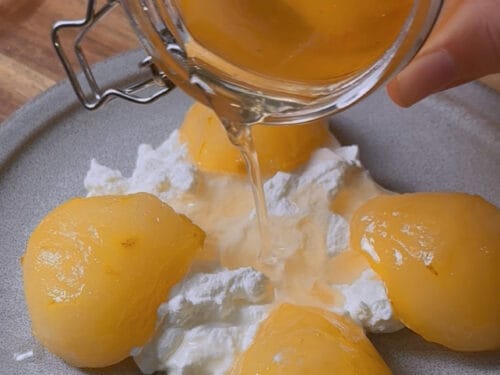
  • Serve the preserved pears cold from the jar with a generous spoonful of the spiced syrup over the top and a large amount of whipped cream alongside. The cold cream against the warm spiced pear syrup is the combination that takes this from an interesting historical curiosity to something genuinely worth making repeatedly. Nostradamus did not document this serving suggestion. He was probably right not to. I am doing it anyway.

Video

Notes

  • The whitest, most refined sugar you can find is worth using here. The pharmaceutical significance of white sugar in the 16th century aside, the flavour of refined white sugar in a spiced syrup is cleaner and more neutral than raw or golden sugar, which would add a molasses note that competes with the cinnamon and clove. This is the rare recipe where supermarket white granulated sugar is the historically correct choice.
 
  • The rosewater is optional but worth trying. Add only a tablespoon off the heat after reducing the syrup. More than that and the rosewater becomes dominant. The correct amount should be barely detectable as rosewater and simply add a faint floral note that is immediately and unmistakably period-appropriate.
 
  • Firm pears are essential. Soft pears will collapse completely in the syrup and produce a pleasant compote rather than the structured, elegant preserved fruit the recipe intends. Test your pears before starting. They should resist gentle pressure firmly. If they yield easily they are already too ripe.