The earliest American “pumpkin pie” may not have had a crust at all.
Pumpkin pie feels timeless on a Thanksgiving table, but the dessert we know today is the product of centuries of culinary evolution. Long before canned purée and flaky pastry crusts, early settlers in New England learned to cook pumpkins in ways that were simple, practical, and deeply influenced by Native American food traditions.
If you’re enjoying my recipes, check out Eats History shop for my latest e-cookbooks, now 40% Off!
One of the earliest and most fascinating forms was not a pie in the modern sense, but a custard baked directly inside a hollowed pumpkin. Food historians point to descriptions that fit this method, and while no surviving Pilgrim recipe writes it exactly, the practice appears repeatedly in later accounts of early colonial cooking.
The Colonial Ingredients
This idea makes sense when you consider the ingredients. English colonists in the seventeenth century struggled with limited wheat, scarce butter, and inconsistent access to baking equipment. Pumpkins, on the other hand, were abundant. Native peoples had cultivated them for generations, and colonists quickly adapted them into stews, breads, and desserts. John Josselyn’s New-Englands Rarities Discovered (1672) offers one of the first English descriptions of New World pumpkin dishes, noting how settlers stewed pumpkin with fat and spice. These rough methods show a kitchen experimenting with what the land offered. A hollowed pumpkin filled with dairy and sweetener fits right into that experimental frontier cooking.
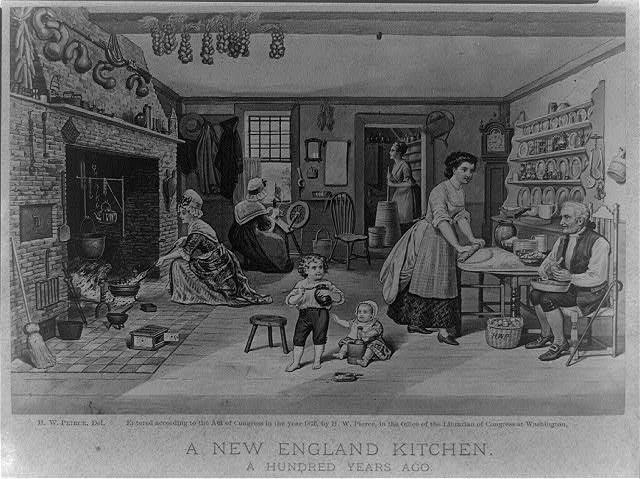
Later interpretations from colonial food historians describe settlers slicing the top off a pumpkin, scooping it out, filling it with milk, honey, and spice, and baking it in the embers of a hearth. The result was a soft, custard like interior surrounded by sweet roasted pumpkin flesh. It was not pumpkin pie as we know it, but it was certainly a step on the way. By 1796, Amelia Simmons published American Cookery, the first American cookbook, and her “pompkin pudding” baked in a crust looks unmistakably like a pumpkin pie. Between these two worlds sits the whole pumpkin custard, a transitional dish that bridges rustic colonial improvisation with the refined custards that would shape American dessert culture.
This entire lineage makes the whole-pumpkin custard one of the most authentic historical desserts you can recreate today. It respects the limitations of the earliest Thanksgiving tables while delivering a flavor that is rich, familiar, and deeply seasonal. When baked, the pumpkin becomes both bowl and ingredient. Its flesh softens, sweetens, and blends into the custard, creating a texture that feels half pie, half pudding. It is rustic, elegant, and ancient all at once. It reminds you that American food history is not defined by recipes alone, but by the people and landscapes that shaped how those recipes developed.
Colonial Pumpkin Cookery and the Origins of American Pie
Pumpkins saved lives in the early colonies. They provided calories when the harvest failed, offered versatility in the kitchen, and could be stored through the winter. Native Americans roasted them, dried them, turned them into bread, and incorporated them into mixed dishes. Colonists adopted these methods and soon expanded them with European dairy and baking traditions. By the mid 1600s, pumpkin became so central to New England survival that early poems and diaries joked about eating it daily. This dependence gave rise to a wide range of dishes, from savory stews to sweetened puddings.
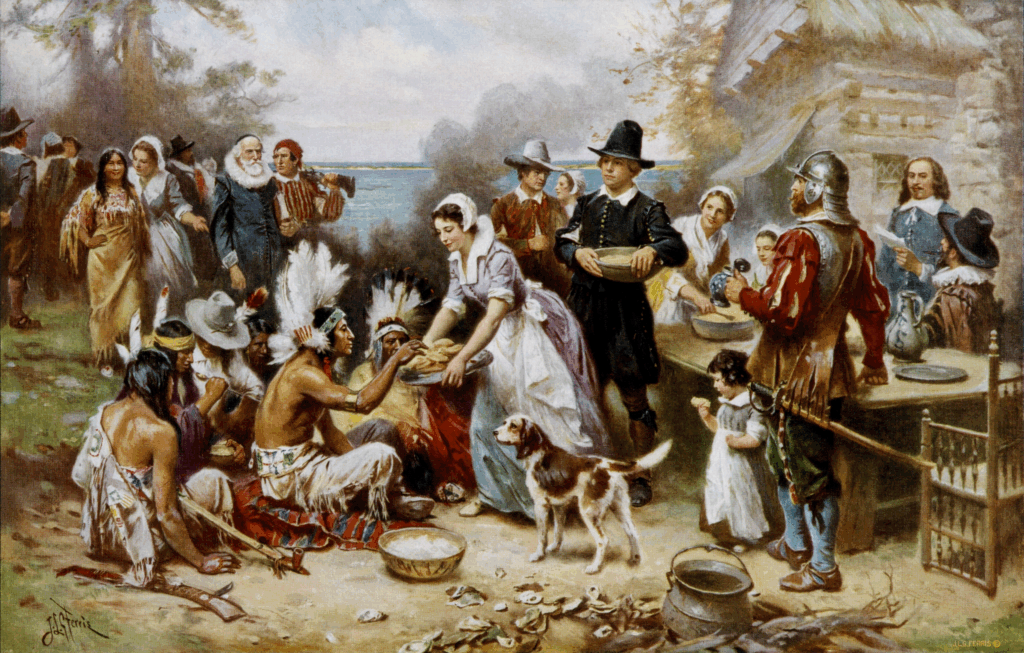
Historians agree that the earliest colonist “pumpkin pies” were not pies at all. They were more like baked pumpkin puddings. Some were simply stewed pumpkin mashed with butter, milk, and spices. Others were baked inside pumpkins themselves, a method later echoed in museum kitchens and historical reenactments. Although the Pilgrims left very few culinary records, the technique aligns perfectly with what they had on hand. Pumpkins served as both cooking vessel and ingredient. A custard could be poured into the cavity and roasted with no need for costly flour or a proper pie tin.
This method persisted long enough to influence later cookbooks. When Amelia Simmons published American Cookery in 1796, her pumpkin puddings used stewed pumpkin blended with eggs, cream, and warm spices, baked in a crust. That recipe marks the turning point from pumpkin-as-container to pumpkin-as-filling. But the flavor profile and technique originated earlier, shaped by the ingredient availability of the seventeenth century. The hollowed pumpkin custard therefore stands as a living window into how early Americans transformed a native vegetable into a symbolic dessert.
Compared to the pumpkin pies we serve today, the whole pumpkin version is far more rustic. It has no crust, no canned purée, and no thick layer of spice. Instead, it showcases the pumpkin itself. Each pumpkin bakes differently depending on size and moisture content, and the custard merges with the roasted interior in an unpredictable, deeply satisfying way. It tastes both old fashioned and luxurious, like a dish that evolved naturally from survival cooking into celebration.
A Modern Take on a Colonial Classic
The custard baked inside a sugar pumpkin is both historical and elevated. It respects the structure of early colonial Pumpkin cooking while using a smoother, richer custard base than seventeenth century cooks would have had. Heavy cream replaces thin milk. Granulated sugar stands in for honey or molasses. Vanilla extract adds depth. And the final touch, a brûléed sugar lid, transforms it into a colonial inspired crème brûlée.
The process remains delightfully simple. A small pumpkin is hollowed out, its walls cleaned and dried, and the custard mixture is poured inside. The pumpkin bakes until its flesh is tender and the custard is set. When sliced into wedges, each piece contains both roasted pumpkin and velvety custard. It is history you can taste in every bite.
Recipe: Colonial Style Custard Baked in a Pumpkin

Colonial Style Custard Baked in a Pumpkin
Ingredients
- 1 small sugar pumpkin top removed and seeds removed
- 2 cups heavy cream
- 1 cup sugar
- 2 whole eggs
- 4 egg yolks
- 1 teaspoon vanilla extract
- pinch of salt
- Optional: sugar for brûlée topping
Instructions
- Preheat oven to 400°F.
- Cut the top off the pumpkin, scrape out the seeds, and pat the interior dry.
- In a bowl, whisk the cream, sugar, eggs, egg yolks, vanilla, and salt until smooth.
- Place the pumpkin on a baking sheet and pour the custard mixture inside.
- Bake at 400°F for 30 minutes, then lower to 375°F and bake another 30 minutes.
- Continue baking until the custard edges are set and the center has a gentle jiggle.
- Cool at least 30 minutes.
- For a crème brûlée finish, sprinkle sugar on top and broil or torch until caramelized.
- Serve warm or let cool in refrigerator.
Video
Notes
- Pumpkins vary in moisture. Some sugar pumpkins are more watery than others, so your custard may take longer to set. Bake until the center has a soft jiggle rather than relying on strict time.
- Brûlée top is optional but powerful. Caramelizing a thin layer of sugar adds texture and elevates the dish, balancing the natural softness of the pumpkin.
- Let it cool before slicing. The custard continues to firm as it cools, and cutting too early can cause the interior to spill instead of slice cleanly.