Go Back

Colonial Style Custard Baked in a Pumpkin

Print Recipe
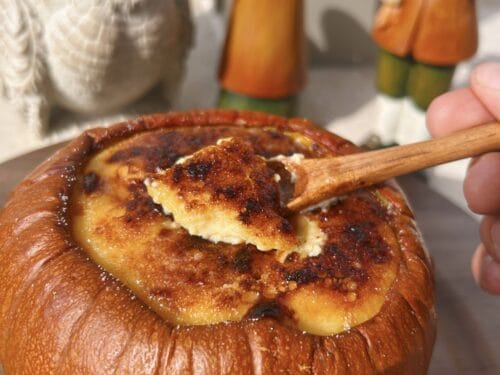
This colonial style custard baked inside a whole sugar pumpkin is one of the earliest forms of “pumpkin pie” in North America. Instead of a crust, the pumpkin itself becomes both the baking dish and part of the dessert. As the custard cooks, the pumpkin softens and sweetens, blending with the creamy interior to create a rustic, pudding like texture that feels ancient and comforting. The result is a dessert that bridges Native American agriculture, early colonial improvisation, and the later evolution of American pumpkin pie. It is rich, seasonal, and incredibly simple to make, with a flavor that feels both historic and luxurious.
Prep Time 10 minutes
Cook Time 1 hour 20 minutes
Resting Time 30 minutes

Ingredients

  • 1 small sugar pumpkin top removed and seeds removed
  • 2 cups heavy cream
  • 1 cup sugar
  • 2 whole eggs
  • 4 egg yolks
  • 1 teaspoon vanilla extract
  • pinch of salt
  • Optional: sugar for brûlée topping

Instructions

  • Preheat oven to 400°F.
  • Cut the top off the pumpkin, scrape out the seeds, and pat the interior dry.
  • In a bowl, whisk the cream, sugar, eggs, egg yolks, vanilla, and salt until smooth.
  • Place the pumpkin on a baking sheet and pour the custard mixture inside.
  • Bake at 400°F for 30 minutes, then lower to 375°F and bake another 30 minutes.
  • Continue baking until the custard edges are set and the center has a gentle jiggle.
  • Cool at least 30 minutes.
  • For a crème brûlée finish, sprinkle sugar on top and broil or torch until caramelized.
  • Serve warm or let cool in refrigerator.
Video

Notes

  • Pumpkins vary in moisture. Some sugar pumpkins are more watery than others, so your custard may take longer to set. Bake until the center has a soft jiggle rather than relying on strict time.
 
  • Brûlée top is optional but powerful. Caramelizing a thin layer of sugar adds texture and elevates the dish, balancing the natural softness of the pumpkin.
 
  • Let it cool before slicing. The custard continues to firm as it cools, and cutting too early can cause the interior to spill instead of slice cleanly.