In the glittering courts of Baghdad during the height of the Abbasid Caliphate, food was as much a reflection of intellect and beauty as poetry or philosophy. Among the golden sweets that emerged from those royal kitchens, few captured the imagination like Luqmat al-Qāḍī, or “the Judge’s Bites.” These delicate, honey-soaked fritters symbolized indulgence, refinement, and the pursuit of balance; between sweetness and restraint, between worldly pleasure and divine gratitude.
Today, Luqmat al-Qāḍī lives on throughout the Middle East under many modern names: lokma in Turkey, awameh in the Levant, and luqaimat in the Gulf. Its origins, however, trace directly back to the Abbasid Golden Age, when Baghdad was the heart of the civilized world and its cooks were revered as artists of taste and texture.
If you’re enjoying my recipes, check out my e-cookbooks at Eats History Shop, now 40% Off!
The Taste of an Empire
At its height in the 9th and 10th centuries, the Abbasid Caliphate stretched from North Africa to Central Asia. Its capital, Baghdad, was the center of a vast network of trade that brought sugar from Persia, honey from Arabia, spices from India, and rosewater from Damascus. Within this melting pot, the art of cookery flourished like never before.

Luqmat al-Qāḍī first appeared in Kitāb al-Ṭabīkh by Ibn Sayyār al-Baghdādī, one of the earliest Arabic cookbooks, and again in the works of al-Warrāq, a 9th-century culinary historian. These texts preserve recipes that blended Persian technique, Byzantine sweets, and Arab traditions of hospitality. The fritters were described as being fried in sesame or rendered sheep tail fat (liyya), then drenched in honey and perfumed with rosewater or musk.
In an age when dessert was both luxury and metaphor, Luqmat al-Qāḍī stood out as a symbol of refinement. The name itself was playful—why should the pious and disciplined qāḍī, or judge, be tempted by something so indulgent? It was a culinary jest, suggesting that even the wisest man could succumb to the seduction of sweetness.
The Abbasid Court and the Cult of Flavor
The Abbasids saw food as an extension of philosophy. Dishes were crafted to balance the four humors—hot, cold, moist, and dry—and were designed to harmonize the body and soul. The kitchens of Baghdad were laboratories of sensory perfection, where chefs experimented with yeast, sugar syrups, and aromatic oils.
Luqmat al-Qāḍī perfectly embodied that ideal. The dough was light, made with khameer (a natural yeast starter), and fried until golden. The texture balanced crispness and tenderness, while the syrup, infused with rosewater and saffron, carried floral notes that lifted the sweetness into something almost spiritual. When presented in bowls after great banquets, these bites reflected the Abbasid ideal of generosity and the joy of shared abundance.
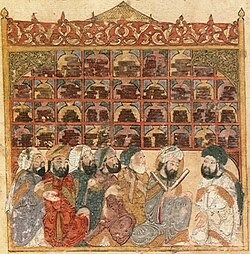
Honey, the main sweetener, carried symbolic meaning. It represented purity, wisdom, and divine reward. In the Qur’an, honey is described as a healing substance, and its use in Luqmat al-Qāḍī linked pleasure to virtue. Each bite, crisp and golden, was a reminder that luxury could still honor faith and intellect.
From Baghdad to the World
As the Abbasid Caliphate’s influence spread, so did its cuisine. Cooks, traders, and scholars carried recipes across the empire’s far-flung provinces. In Persia, Luqmat al-Qāḍī evolved into bamieh, shaped like fingers and glazed with syrup. In Ottoman Turkey, it became lokma, served at weddings, festivals, and religious gatherings. The dish reached Spain through Al-Andalus, where its concept influenced early European fritters.
By the time of the Ottoman Empire, the recipe was so beloved that sultans distributed lokma to the poor as acts of charity. Even today in the Gulf and North Africa, luqaimat are prepared during Ramadan and shared at sunset, continuing the same spirit of generosity that defined their origin. Through every variation, the heart of the dish remains unchanged—small bites of dough, fried and soaked in syrup, symbolizing joy and togetherness.
The Enduring Sweetness of Rose and Honey
What makes Luqmat al-Qāḍī eternal is its simplicity. Its ingredients of flour, water, yeast, oil, and honey are among the oldest in human history. The addition of rosewater and saffron elevated it to courtly perfection, transforming common sustenance into divine pleasure.
For the Abbasids, perfume and food were intertwined. The scent of rosewater drifting through the kitchens of Baghdad mirrored the fragrance of their gardens. Saffron, imported from Khorasan, lent the syrup a golden hue that echoed the color of their palaces at sunset. The final touch of pistachios, inspired by Persian confectionery, adds a modern nod to that same refinement, giving each bite a touch of color and texture worthy of a caliph’s table.
Over a thousand years later, the dish continues to unite the Islamic world through flavor and memory. To taste Luqmat al-Qāḍī is to taste a history of poetry, power, and pleasure all bound into one small, golden sphere.
Luqmat al-Qāḍī (Judge’s Bites) Recipe:
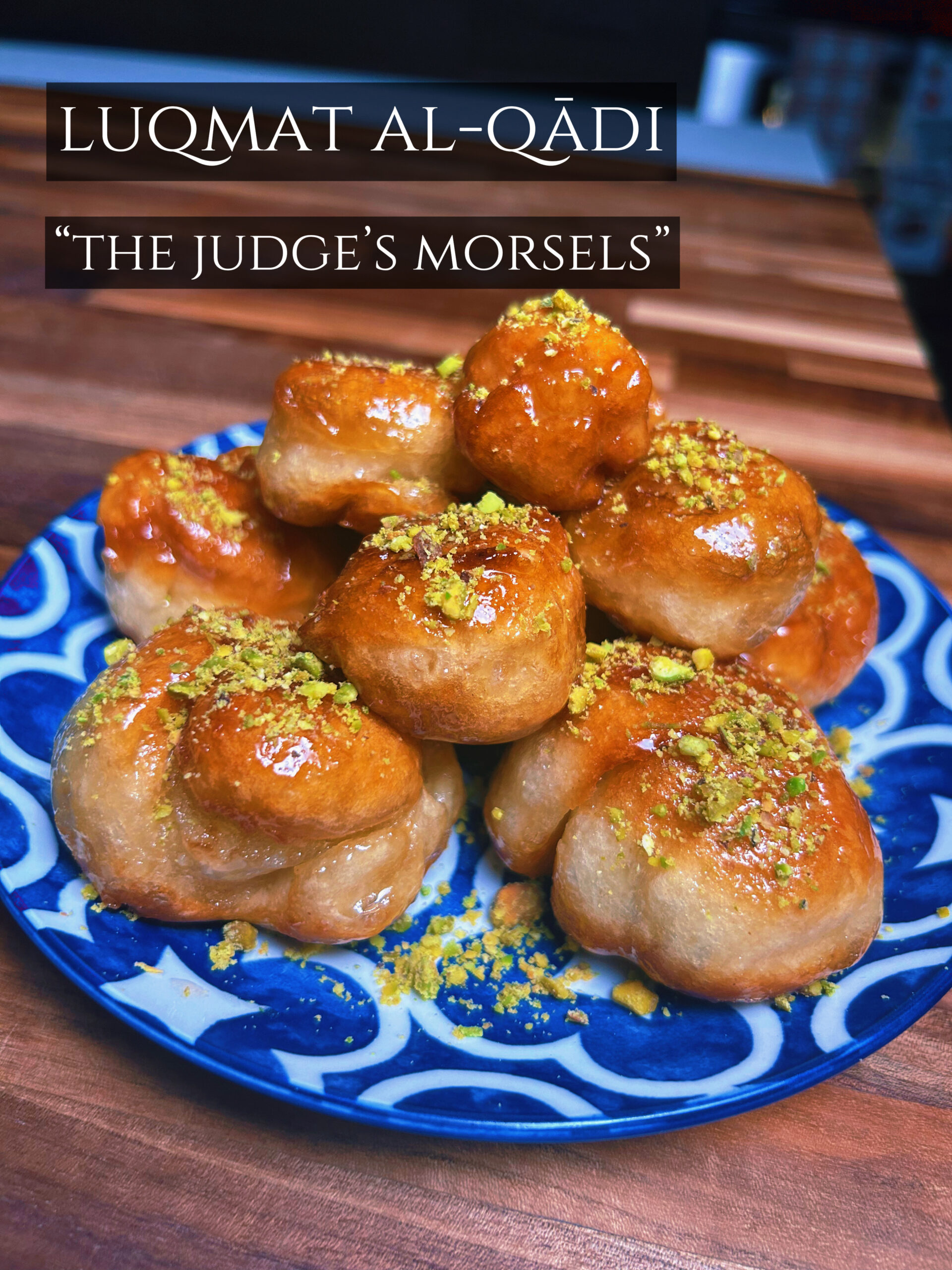
Luqmat al-Qāḍī (Judge’s Bites) – Abbasid Style
Ingredients
Dough
- 2 cups finely ground wheat flour
- Pinch of salt
- ½ tsp ground coriander or anise seed optional, authentic flavorings
- 1 tsp natural yeast starter (active rising can be used as a subsitute) old dough fermented or wild yeast
- ~1½ cups warm water enough for a soft, sticky dough
- Sesame oil olive oil, or rendered tail fat (liyya) for frying
Honey Syrup
- ½ cup honey
- ¼ cup water
- 1 tsp rosewater or orange blossom water if available
- Pinch of saffron optional, luxury addition in Abbasid kitchens
Topping
- 2 tbsp finely crushed pistachios modern garnish inspired by Persian tradition
Instructions
Prepare the dough:
- In a bowl, mix the flour, salt, and coriander or anise seed. Stir in the yeast starter and gradually add the warm water until a thick, sticky dough forms. Cover and let rest in a warm place for 1–2 hours until lightly risen and airy.
Make the syrup:
- In a small pot, combine the honey and water. Warm gently until blended, then add rosewater and saffron. Let the syrup cool slightly while the fritters fry.
Fry the bites:
- Heat 2 inches of oil or fat in a deep pan over medium heat. Using a spoon or wet fingers, drop small portions of dough into the hot oil. Fry until golden and puffed, turning occasionally for even color. Remove and drain briefly on a clean cloth or paper.
Coat in syrup:
- While still warm, dip the fried dough balls into the honey syrup until evenly coated. Allow excess syrup to drip off before placing them on a serving plate.
Garnish and serve:
- Sprinkle with crushed pistachios. Serve warm, with a cup of mint tea or strong Arabic coffee.
Video
Notes
- Historical context: Adapted from Kitāb al-Ṭabīkh by Ibn Sayyār al-Baghdādī and al-Warrāq’s Book of Dishes, both foundational Abbasid culinary texts.
- Authenticity: Frying in sesame or tail fat is historically accurate, though olive oil or neutral oil provides a clean modern flavor.
- Serving tradition: For a true historical finish, serve these fritters alongside honeyed nuts, dates, and a warm pot of spiced coffee or tea.