
Go Back

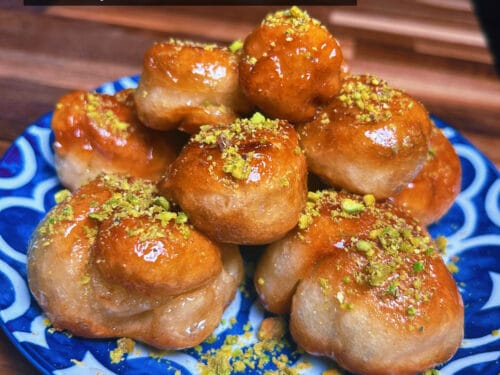
Luqmat al-Qāḍī (Judge’s Bites) – Abbasid Style

Print Recipe
Luqmat al-Qāḍī—the “Judge’s Bites”—is one of the oldest recorded desserts in the Islamic world. Born in the Abbasid kitchens of Baghdad, it represents both culinary mastery and cultural sophistication. Crisp on the outside, soft within, and perfumed with honey and rosewater, each bite is a fragment of the empire’s golden past.
Prep Time 1 hour
Cook Time 10 minutes

Ingredients

Dough

  • 2 cups finely ground wheat flour
  • Pinch of salt
  • ½ tsp ground coriander or anise seed optional, authentic flavorings
  • 1 tsp natural yeast starter (active rising can be used as a subsitute) old dough fermented or wild yeast
  • ~1½ cups warm water enough for a soft, sticky dough
  • Sesame oil olive oil, or rendered tail fat (liyya) for frying

Honey Syrup

  • ½ cup honey
  • ¼ cup water
  • 1 tsp rosewater or orange blossom water if available
  • Pinch of saffron optional, luxury addition in Abbasid kitchens

Topping

  • 2 tbsp finely crushed pistachios modern garnish inspired by Persian tradition

Instructions

Prepare the dough:

  • In a bowl, mix the flour, salt, and coriander or anise seed. Stir in the yeast starter and gradually add the warm water until a thick, sticky dough forms. Cover and let rest in a warm place for 1–2 hours until lightly risen and airy.

Make the syrup:

  • In a small pot, combine the honey and water. Warm gently until blended, then add rosewater and saffron. Let the syrup cool slightly while the fritters fry.

Fry the bites:

  • Heat 2 inches of oil or fat in a deep pan over medium heat. Using a spoon or wet fingers, drop small portions of dough into the hot oil. Fry until golden and puffed, turning occasionally for even color. Remove and drain briefly on a clean cloth or paper.

Coat in syrup:

  • While still warm, dip the fried dough balls into the honey syrup until evenly coated. Allow excess syrup to drip off before placing them on a serving plate.

Garnish and serve:

  • Sprinkle with crushed pistachios. Serve warm, with a cup of mint tea or strong Arabic coffee.

Video

Notes

  • Historical context: Adapted from Kitāb al-Ṭabīkh by Ibn Sayyār al-Baghdādī and al-Warrāq’s Book of Dishes, both foundational Abbasid culinary texts.
 
  • Authenticity: Frying in sesame or tail fat is historically accurate, though olive oil or neutral oil provides a clean modern flavor.
 
  • Serving tradition: For a true historical finish, serve these fritters alongside honeyed nuts, dates, and a warm pot of spiced coffee or tea.