There is a specific category of historical figure that makes you genuinely grateful to have been born in a different century. The Viking berserker sits at the top of that list for me.
Not because they were particularly large or particularly well-armed, although they were both of those things. Because of what they did in battle. The howling. The shield biting. The removal of armour mid-fight. The apparent inability to feel pain or fear or the basic human instinct for self-preservation, that stops most people from walking directly into a line of swords.
If you’re enjoying my content, pick up an E-Cookbook at the Eats History Shop!
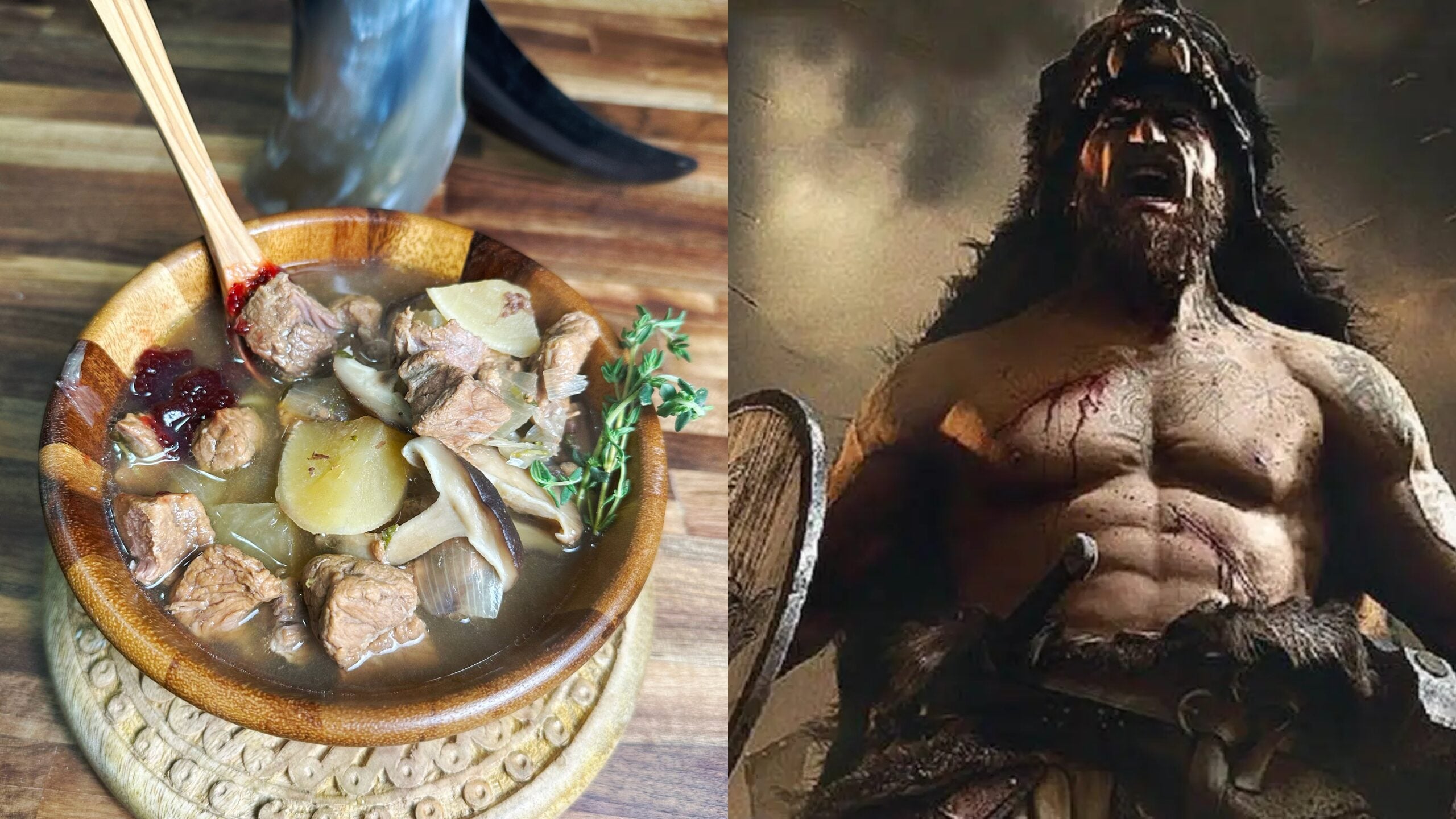
I made them a stew. It is a 5.2 out of 10. Something tells me they were not particularly focused on the food.
Next week
I cook these before I write them. Some of it never makes the post.
The failures, the source documents, the version that actually tasted good. That part goes out by email, and next week’s is already on the stove.
 Written and cooked by Donnie
Who Were the Berserkers?
The word berserker comes from the Old Norse bjórnserkr, meaning bear shirt, a reference to the animal pelts these warriors wore into battle as an act of deliberate ritual identification with the bear spirit. They appear in multiple saga accounts and in the historical record with enough consistency across independent sources that their existence is not seriously disputed by historians. What remains disputed is almost everything else about them.
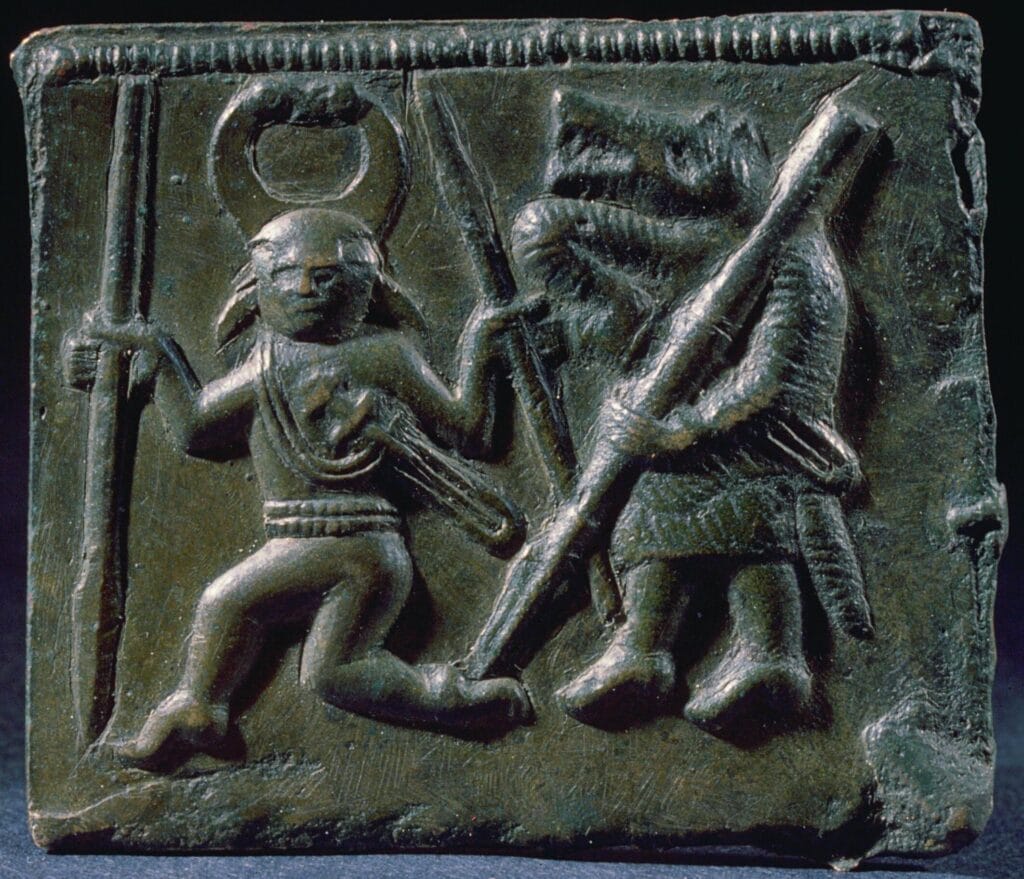
Snorri Sturluson, the 13th century Icelandic historian and one of the most important sources for Norse mythology and history, documented the berserkers in the Ynglinga Saga with a description that has never been fully explained. He wrote that Odin’s warriors went without armour and were mad like dogs or wolves. They bit their shields. They had the strength of bears or bulls. They killed men but neither fire nor iron could harm them. When the fit came on them they howled like animals and the state could not be controlled or stopped once it began.
This description is not unique to Sturluson. Accounts of berserker behaviour appear across multiple independent saga sources with a consistency that suggests the authors were drawing on a shared understanding of something real rather than inventing a convenient literary device. The symptoms described are always the same: shivering and chattering of teeth in the moments before the state began, followed by a heating of the body, a trance-like dissociation from normal consciousness, extraordinary physical endurance, apparent insensitivity to wounds that should have been disabling or fatal, complete inability to distinguish between friend and enemy, the removal of armour and clothing during combat, and a prolonged aftermath of exhaustion and physical weakness lasting one to several days after the episode ended.
The berserkers were not ordinary soldiers. They appear in the sagas as an elite and somewhat separate class of warrior, typically found at the front of a battle line, as bodyguards for kings and chieftains, or operating alone. They were simultaneously revered and feared within Norse society. A chieftain who could field berserkers had a significant military advantage. A berserker who turned on his own side, which the accounts make clear was a genuine risk given their inability to distinguish friend from foe, was a catastrophic problem. Several sagas describe berserkers being killed by their own commanders after an episode went wrong.
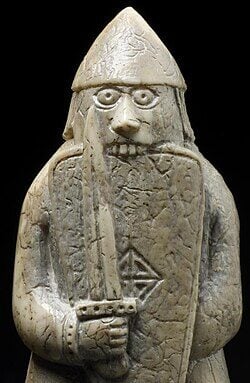
The 9th century Norwegian king Harald Fairhair is documented as having a corps of berserkers as his personal bodyguard. The chronicler Thietmar of Merseburg, writing around 1000 AD, described Danish warriors at the Battle of Bravellir fighting in a state that matches the saga descriptions precisely. These are not purely mythological accounts. There was something real happening to these men before and during battle, and historians and pharmacologists have been arguing about what it was for two centuries.
The Mushroom Theory and Why It Is Probably Wrong
The popular explanation for the berserker state, the one that appears in documentaries and popular histories and most internet searches on the topic, is fly agaric mushroom, Amanita muscaria. The vivid red and white mushroom that appears in every fairy tale illustration and every Mario game. The theory is visually compelling, culturally resonant, and according to the current academic consensus, probably incorrect.
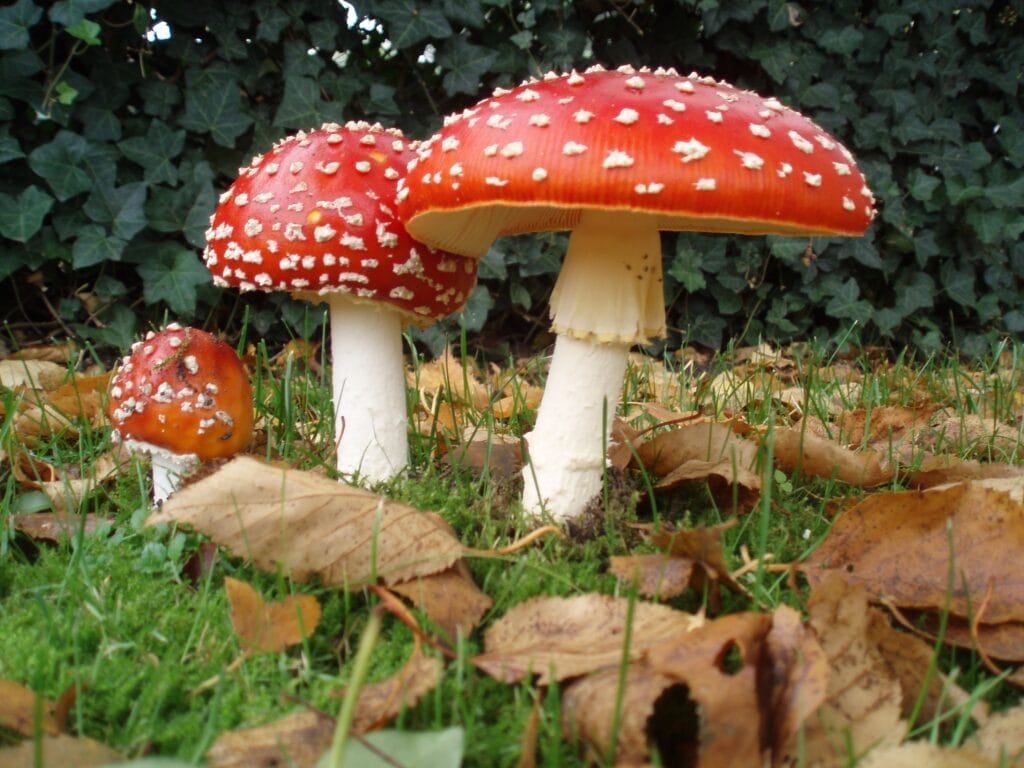
The fly agaric theory has genuine supporting evidence. Dried Amanita muscaria specimens have been found in Viking burial sites in Sweden and Norway. The mushroom is native to Scandinavia and would have been abundant and familiar to Norse people. It produces psychoactive effects through compounds called muscimol and ibotenic acid that are well documented. And the image of a berserker eating a red and white mushroom and going into a trance-like rage is a narrative that is almost impossible to resist.
The problem is the pharmacology. When you compare the documented effects of fly agaric intoxication against the specific symptom profile described in the sagas, the match is poor. Fly agaric typically produces sedation, vivid hallucinations, confusion, and a dream-like state. It does not typically produce the specific combination of rage, pain suppression, extreme physical endurance, inability to recognise faces, and multi-day physical aftermath that the saga accounts consistently describe. A soldier sedated and hallucinating is not a soldier who can fight for hours, sustain multiple sword wounds, and remain standing.
The current academic consensus, laid out most rigorously in a 2019 peer-reviewed paper by Karim Fatur published in the Journal of Ethnopharmacology under the title Sagas of the Solanaceae, points to a different candidate entirely: henbane, botanical name Hyoscyamus niger. Henbane is a psychoactive plant in the nightshade family that was documented across Scandinavian archaeological sites during the Viking Age. A woman’s grave excavated in Denmark dating to approximately 980 AD contained a pouch of henbane seeds alongside grave goods indicating she was a shaman or priestess. Henbane seeds have been found at multiple other Norse sites. The plant was sufficiently well known in medieval Europe that authorities specifically banned its addition to beer in 1507, which tells you something about how widely its effects were understood and sought.
More importantly, the symptom profile of henbane intoxication matches the saga accounts with a precision that fly agaric simply cannot match. Henbane’s anticholinergic tropane alkaloids produce a specific constellation of effects including inability to recognise faces, which directly explains the berserker inability to distinguish friend from foe. Removal of clothing due to perceived overheating. Dissociation from pain, which explains the apparent insensitivity to wounds. Extreme agitation and aggression rather than sedation. Reddening and flushing of the skin. And a severe and prolonged aftermath as the drug leaves the system, consistent with the saga descriptions of berserkers spending several days recovering after an episode.
Fatur is careful to note that this remains a theory. There is not enough archaeological and historical evidence to prove definitively that henbane was used ritually by berserkers. It is also possible that the berserker state had nothing to do with any substance at all, and was instead a form of ritualistic psychosomatic response, a genuine altered state of consciousness induced through fasting, ritual, extreme psychological preparation, and the violent group dynamics of the shield wall, without any pharmacological assistance. The human body is capable of extraordinary things under extreme stress and in the context of powerful shared ritual belief.
What is certain is that the berserkers were real, their behaviour was genuinely extraordinary by any standard, and whatever was causing it gave Norse armies a psychological and military advantage that was documented by their enemies across two centuries of warfare. The fly agaric sits beside this stew on the table as a reference to the legend. The chanterelles and porcini that went into the stew are a reference to history. The difference between those two things is the difference between what we know and what we suspect, which is exactly where berserker history lives.
The Food: What Did These Men Actually Eat
Berserkers did not have a separate cuisine. They were Norse warriors and they ate what Norse warriors ate, which was a diet that modern nutritional science would largely approve of. High in protein from fish, game and dairy. Substantial in fat from skyr, butter and the fat of the animals they hunted. Carbohydrates from barley, oats and root vegetables. Simple, seasonal, functional food built around what the harsh northern landscape could provide.

The archaeological record of Viking Age Scandinavia gives us a reasonably clear picture of the standard diet. Wild game, particularly boar, venison and bear, was central to the diet of warriors, supplemented by fish, particularly herring and cod which were dried and smoked for preservation. Root vegetables including turnips, parsnips and onions were grown on Norse farmsteads and appear consistently in archaeological sites. Wild mushrooms were foraged from the forests. Juniper berries, thyme and other wild herbs flavoured meat and broth. Skyr, a fermented dairy product with high protein content and a sharp sour flavour, was eaten across all levels of Norse society and specifically mentioned in multiple saga accounts in connection with warriors.
The primary cooking method was the cauldron. A heavy iron or soapstone pot over a fire, filled with meat, water, salt, root vegetables and whatever herbs were available, left to boil for hours until everything was soft and the broth had concentrated. There was no browning, no sautéing, no refinement. This was functional cooking. Fuel for violence.
Mead was the warrior’s drink. Old, strong, barely sweet, fermented to a wine-like alcohol level rather than the gentle fizzy sweetness of modern commercial mead. It was drunk warm. It was drunk before battle. It appears in essentially every saga account of a Norse feast or pre-battle gathering.
My Rating and Honest Assessment
This stew is exactly what it is. It is the most stripped back, most functional, most deliberately unrefined food on this channel. There is no technique. There is no sophistication. There is no attempt to make anything beautiful or complex. There is meat, root vegetables, salt, water, thyme, and lingonberries, in a pot, for two hours.
The lingonberries are the one bright note and they matter more than you would expect. The sharp, cranberry-like acidity cuts through the fat of the broth and gives the whole thing a flavour dimension that it would not have without them. They are also thoroughly documented in Norse food culture and archaeologically confirmed at multiple Scandinavian sites. Do not leave them out.
The overall result is dense, savoury, iron-rich and deeply warming in the way that only two hours of slow boiling can produce. It is not interesting. It is not exciting. It does not make you think about anything except that you are full and warm and could probably walk a significant distance in cold weather after eating it. Which is, historically speaking, precisely the point.
Something tells me these men were considerably more focused on ripping their enemies in half than on the complexity of their evening meal. The 5.2 out of 10 is generous given the context and entirely fair given the flavour.
Rating: 5.2 / 10
The Recipe: Viking Berserker Stew
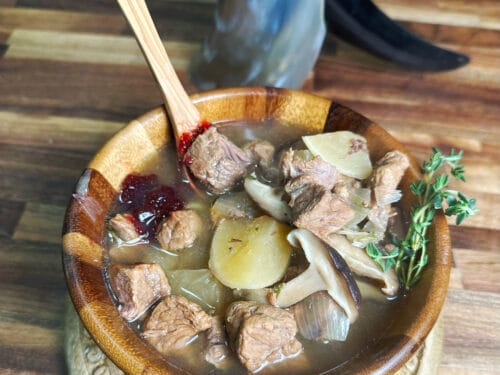
Viking Berserker Stew

Don’t lose this one.
I’ll email it to you so it’s waiting when you’re ready to cook.
Ingredients
Instructions
Notes
- Lingonberries are available in most supermarkets in the Scandinavian or international foods section, or online. IKEA stocks them. They are not optional. The acidity is the only thing in this stew that provides any brightness and the dish needs it.
- If you want to add some more wild mushrooms, a large handful of dried or fresh porcini soaked in warm water for 20 minutes and added along with their soaking liquid in the final 30 minutes of cooking is a historically accurate addition that improves the depth of the broth significantly.
- The stew reheats well and is arguably better the next day after the broth has had time to settle and concentrate overnight. Norse warriors on campaign would have eaten yesterday’s stew cold or reheated over a fire the following morning. This is not a bad way to eat it.