
Go Back

1667 Dutch Oliekoecken (Early Oliebollen)

Print Recipe
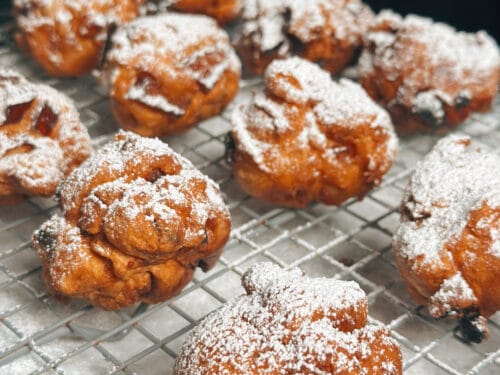
These 1667 Dutch oliebollen are a window into the past, when fried dough was meant to sustain rather than indulge. Made from a simple yeast batter with optional fruit for sweetness, they are heavier, more breadlike, and far less sweet than modern versions. Apples or dried fruit provide subtle bursts of flavor, while the exterior fries up crisp and deeply golden. Finished with a light dusting of powdered sugar, they bridge the gap between their practical origins and the celebratory New Year’s tradition they later became.
Prep Time 15 minutes
Cook Time 20 minutes
Rise Time 1 hour

Ingredients

  • 2 cups all-purpose wheat flour
  • 1 cup warm milk or water
  • tsp active dry yeast
  • Pinch of salt
  • Optional additions historically noted:
  • Chopped apples
  • Raisins or currants
  • Oil lard, or beef fat for frying
  • Powdered sugar for dusting (later tradition)

Instructions

  • Dissolve yeast in warm milk or water and let stand until foamy.
  • Stir in flour and salt to form a thick, sticky batter. Do not knead.
  • Cover and let rise in a warm place until bubbly and expanded, about 1 hour.
  • Fold in apples or dried fruit if using.
  • Heat oil or fat in a deep pot until hot but not smoking.
  • Drop batter by spoonfuls into the oil and fry until deep golden brown, turning as needed.
  • Remove and drain briefly.
  • Dust with powdered sugar before serving.

Video

Notes

  • This is a batter, not a dough. It should be sticky and loose enough to drop by spoon, which matches early written descriptions.
 
  • Fruit is optional but historically accurate. Apples, raisins, or currants were used depending on what was available in winter stores.
 
  • Powdered sugar is a later addition. For strict authenticity, serve plain, but dusting reflects how oliebollen became a New Year’s Eve tradition.