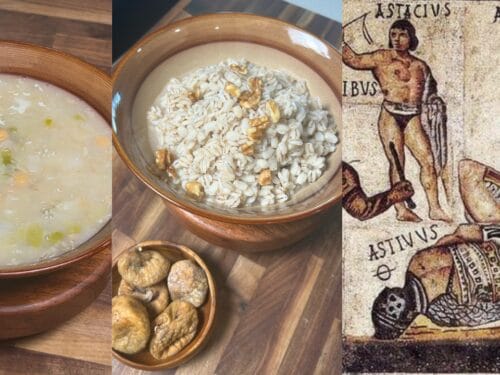

This full-day gladiator menu is a stark reconstruction of what Roman fighters actually ate. Built almost entirely on barley, legumes, and nuts, it reflects a diet engineered for cost efficiency, endurance, and survivability rather than enjoyment. Breakfast is a punishing bowl of plain barley porridge with a few figs and nuts. Lunch offers dense grain cakes with just enough honey to keep energy up. Dinner returns once again to barley in the form of a thick vegetable and legume stew finished with fish sauce. It is repetitive, heavy, and relentlessly functional, exactly as ancient sources describe.
Prep Time 20 minutesmins
Cook Time 1 hourhr
Ingredients
1½cupspearl barley
½cupoats or barley flour
¼cuplentils
¼cupcooked chickpeas
¼onionchopped
1cupchopped cabbage
2dried figs
Small handful mixed nutswalnuts, pine nuts, or similar
1–2 tsp honey
1tbspolive oil
1–2 tsp fish sauce or garum
Water
Instructions
Rinse barley thoroughly. Cook half of it in water until thick and soft for breakfast. Top with nuts and chopped dried figs.
Mix oats or barley flour with water to form a stiff dough. Press into small cakes and cook on a dry skillet or bake until firm. Add nuts and drizzle lightly with honey for lunch.
Cook the remaining barley with lentils in water until tender. Add onion and cabbage and simmer until soft. Stir in chickpeas, olive oil, and fish sauce. Serve thick as a stew for dinner.
Video
Notes
Barley is the non-negotiable core of this diet. Ancient sources and skeletal evidence both confirm gladiators consumed it daily, often multiple times a day.
Meat is intentionally absent. Gladiators were slaves, meat was expensive, and a high-carbohydrate diet helped maintain a protective layer of body fat.
Fish sauce is the only real seasoning used. Even a small amount dramatically improves flavor and reflects common Roman cooking practices across social classes.