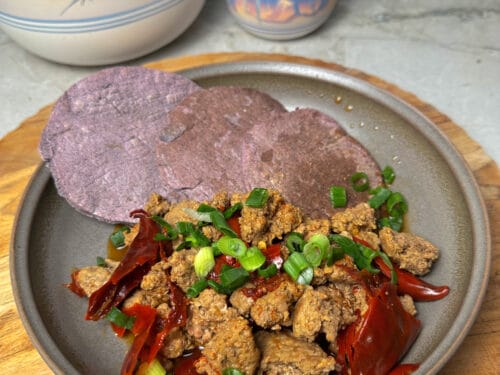
Stewed venison with guajillo chiles served on hand-pressed blue corn flatcakes is a reconstruction of everyday food in the Ancestral Puebloan world of the Four Corners region, circa 1000 to 1300 CE. Ground venison is browned and slow-simmered with whole dried guajillo chiles until the broth turns deep reddish-brown and the meat absorbs that dark, earthy heat. The filling is spooned onto blue corn masa cakes pressed flat by hand and toasted dry on cast iron until they deepen to a storm-cloud blue-grey unlike anything you have seen on a plate before. Topped with sliced green onion and folded in the hand, this is the thing that tacos are a very distant echo of: corn pressed flat, spiced meat, eaten without utensils, built from three ingredients that people in the high desert Southwest have been cooking with for over two thousand years.
Prep Time 20 minutesmins
Cook Time 30 minutesmins
Ingredients
For the Blue Corn Flatcakes
2cupsblue corn masa harinaMaseca Azul, available at Latin grocery stores, Walmart, or Amazon
1½cupswarm water
½teaspoonsaltomit for maximum historical accuracy; include for maximum flavor
For the Stewed Venison
1poundground venisonavailable at Whole Foods, specialty butchers, or online — lean ground beef works as a substitute
3whole dried guajillo or ancho chiles
Water to coverapproximately 2 cups
Salt to tasteoptional
For the Garnish
3 to 4green onionssliced thin
Instructions
The Blue Corn Flatcakes
Combine blue corn masa harina and salt in a bowl. Add warm water gradually, mixing with your hands until the dough comes together into something that feels like soft clay. It should be pliable and smooth, not sticky and not crumbly. If it cracks at the edges when you press it, add water one tablespoon at a time. Knead gently for 2 minutes.
Cover with a damp cloth and rest for 15 minutes. The rest is not optional. The masa needs time to fully hydrate, and the dough will be significantly more workable after resting.
Pull off a golf-ball sized piece of dough. Press flat between your palms to about 5 to 6 inches wide and a quarter inch thick. Use your hands, not a rolling pin or tortilla press. The hand-pressed shape is part of the authenticity of this preparation. The edges will be slightly uneven. That is correct.
Heat a dry cast iron skillet over medium-high heat until genuinely hot. No oil. Place a flatcake in the dry pan. Cook 3 to 4 minutes per side until dark spots appear and the edges begin to lift. The cake will deepen from grey-blue raw dough to a darker, almost storm-cloud blue-grey as it cooks. Stack finished flatcakes in a clean cloth to keep warm and pliable while you cook the rest.
The Stewed Venison
Heat a heavy skillet or Dutch oven over medium-high heat with no oil. Add the ground venison and cook, breaking it apart with a spoon, until browned and no pink remains. The venison is lean enough that it requires no fat in the pan.
Add the whole dried guajillo chiles directly to the pan alongside the browned venison. Do not seed or stem them. Add water to cover, approximately 2 cups.
Bring to a boil, then reduce to a steady simmer. Cook uncovered for 10 to 15 minutes, pressing the chiles occasionally with a spoon to keep them submerged. As they rehydrate, they will release their color, turning the broth a deep reddish-brown. Their heat and earthiness will slowly infuse the venison.
Taste the broth after 10 minutes. Add salt if using. Simmer until the broth has reduced by about half and thickened slightly around the meat.
Assembly
Lay a warm blue corn flatcake on a board. Spoon a generous portion of the stewed venison across the center.
Lay one whole boiled chile from the pan directly on top of the meat. This is the visual anchor of the dish.
Scatter sliced green onions over the top. Fold the cake around the filling and eat with your hands. No utensils. No sauce. Nothing else on the plate.
Video
Notes
The salt decision is the most important choice you will make cooking this dish. Without salt the chiles and venison are interesting but flat. With salt everything opens up: the chile heat sharpens, the gaminess of the venison becomes an asset rather than a challenge, and the blue corn cake tastes like something you chose to eat. Cook a small tasting portion unsalted first so you understand what the dish is without it, then salt the broth and taste again. That moment of comparison is worth doing.
The cast iron must be completely dry and genuinely hot before the first flatcake goes down. Blue corn masa harina behaves differently from yellow or white masa: it is slightly denser and needs real heat to develop those dark spots and lift at the edges properly. If the pan is lukewarm the cakes steam instead of toast and you lose both the color and the texture. Give the skillet a full two minutes over medium-high heat before the first cake goes in.
Ground venison is widely available at Whole Foods and specialty butchers and is the most historically accurate protein for this dish. If venison is unavailable, lean ground bison is the best substitute and carries a similar slight gaminess that works well with the guajillo chiles. Standard lean ground beef works in a pinch but produces a noticeably milder result. Whatever you use, the meat is lean enough that no oil is needed in the pan for browning.