Go Back

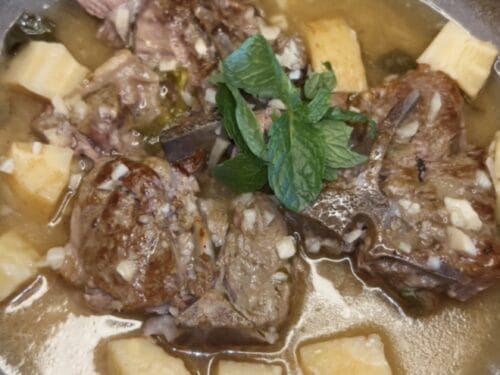
Babylonian Lamb & Parsnip Stew

Print Recipe
Immeru Šuḫutinnu is one of the oldest recorded stews in history, originating from the Babylonian Yale Tablets written in cuneiform over 4,000 years ago. This slow-cooked lamb and parsnip stew was likely enjoyed by the elite, temple priests, and nobility of ancient Mesopotamia. Using lamb, cumin, coriander, garlic, parsnips, and mint, this dish brings deep, earthy flavors with a balance of warmth and freshness. Slow-cooked for hours, the result is tender, fall-apart lamb infused with the essence of one of the world’s first civilizations.
Prep Time 15 minutes

Ingredients

  • 2 lbs lamb or mutton, cubed
  • 2 tbsp olive oil or lamb fat
  • 2 tbsp flour samidu, as referenced in the Yale Tablets
  • 4 cups water
  • 1 tsp cumin
  • 1 tsp coriander
  • ½ tsp black pepper
  • ½ tsp salt
  • 4 cloves garlic crushed
  • 2 large parsnips peeled and chopped (suhutinnu)
  • 1 handful fresh mint leaves

Instructions

  • Sear the lamb – In a large pan over medium-high heat, heat olive oil or lamb fat and sear the lamb until browned on all sides. Remove and set aside.
  • Make the sauce – In the same pan, reduce heat to medium. Add the flour and mix with the remaining drippings, stirring continuously. Slowly add water, whisking until a smooth sauce forms.
  • Assemble the stew – Transfer the lamb and sauce into a slow cooker (or a pot for stovetop cooking). Add the parsnips, garlic, coriander, cumin, black pepper, and salt. Pour in the remaining water, ensuring the ingredients are submerged.
  • Slow cook for 6+ hours – Cover and cook on low heat for 6-8 hours, until the lamb is tender and the broth has deepened in flavor.
  • Add fresh mint – In the last 30 minutes of cooking, add the fresh mint leaves and stir gently.
  • Serve & enjoy – Spoon the stew into bowls and experience the flavors of ancient Babylon!
Notes

  • Historical Accuracy vs. Modern Adaptation: The original Babylonian recipe was written in broad terms without specific measurements. This version is adapted using modern cooking techniques while staying true to the historical ingredients and methods.
 
  • Cooking Method Variations: While a slow cooker is ideal for replicating the long, slow simmering process, this stew can also be made in a Dutch oven or traditional clay pot, cooked over low heat for the same duration.
 
  • Serving Suggestions: This stew was likely eaten with flatbreads or barley-based grains, common staples of ancient Mesopotamian diets. To keep it historically inspired, serve with homemade flatbread or a side of cooked barley instead of rice or modern grains.