
Go Back

Colonial American Mushroom Ketchup

Print Recipe
Adapted from Hannah Glasse, The Art of Cookery, Made Plain and Easy, 1747, the dominant cookbook in colonial American households
The original Glasse recipe text: Take the large Flaps of Mushrooms, pick nothing but the Straws and Dirt from it, then lay them in a broad earthern Pan, strow a good deal of Salt over them, let them lie till next Morning; then with your Hand brake them, put them into a Stew-pan, and let them boil a Minute or two, then strain them thro' a coarse Cloth; and wring it hard. Additional historical documentation: Harriott Pinckney Horry manuscript cookbook, Charleston, South Carolina, 1770, the earliest known American recipe for mushroom ketchup.
Prep Time 15 minutes
Cook Time 30 minutes
Resting Time 1 day

Ingredients

  • 1 lb mushrooms any variety — button mushrooms are the most accessible. Field mushrooms or cremini produce a more complex, more deeply flavoured result. Portobello mushrooms, which are mature cremini, produce the darkest and most intensely flavoured ketchup and are the closest equivalent to the large flaps of mushrooms Glasse specifies
  • A generous handful of coarse salt approximately 2 to 3 tablespoons — the salt draws the liquid from the mushrooms and is the primary preservative. Do not skimp
  • Warm spices to taste — nutmeg allspice and black pepper in the combination I used. Glasse specifies ginger, pepper, mace and cloves. Both are historically documented and both produce excellent results. Adjust quantities to your preference but keep the spice additions modest. The mushroom flavour should remain primary

Instructions

Clean and mash the mushrooms

  • Clean the mushrooms by wiping with a damp cloth. Do not wash them under running water as they will absorb water and produce a diluted ketchup. Remove any obviously dirty or damaged spots. Place in a large bowl and crush them firmly with your hands until they are broken down into rough pieces. Glasse's instruction to brake them with your hand is both practical and correct. Crushing rather than cutting releases more liquid from the cell structure and begins the macerating process.

Salt and macerate overnight

  • Strow a good deal of salt generously over the crushed mushrooms. Toss to distribute the salt throughout. Cover the bowl with a cloth or plastic wrap and refrigerate for 12 to 24 hours. Overnight is the standard documented preparation time. The salt will draw a remarkable quantity of dark, intensely flavoured liquid from the mushrooms. By the following morning the mushrooms will have reduced dramatically in volume and be sitting in a pool of deeply coloured liquid.

Cook briefly

  • Transfer the mushrooms and all their liquid to a saucepan. Add your chosen spices. Bring to a boil over medium heat and cook for 10 to 15 minutes, stirring occasionally. Glasse says a Minute or two but a longer cooking time drives off any raw mushroom flavour and begins the reduction. The kitchen will smell extraordinary at this stage.

Strain and press

  • Pour the cooked mushroom mixture into a cheesecloth-lined strainer set over a bowl. Gather the cheesecloth around the mushroom solids and wring firmly until every possible drop of liquid has been extracted. This step requires effort. Press as hard as you can. The liquid is the ketchup. The pressed solids can be discarded or used in a stock.

Reduce to desired consistency

  • Return the strained liquid to the saucepan. Bring to a simmer over medium heat and reduce until you have reached your desired consistency. For a thin, sauce-like ketchup reduce by approximately one third. For a thicker, more concentrated ketchup suitable for using in small quantities as a seasoning, reduce by half or more. Taste frequently and remove from heat when the balance of salt, umami and spice is right to you.

Bottle and store

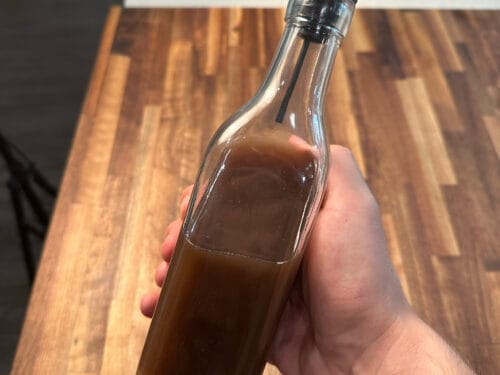
  • Pour the finished ketchup into a sterilised glass jar or bottle. To sterilise: wash the jar thoroughly, place it in a 200°F oven for 10 minutes, and allow to cool slightly before filling. The finished mushroom ketchup will keep in the refrigerator for several weeks. Properly reduced and stored in a sterilised container it will keep considerably longer, consistent with Glasse's two-year claim for her bottled version.

How to Use It

  • Mushroom ketchup is not a table condiment in the modern sense. Do not put it on a burger. Use it as a seasoning agent. A teaspoon stirred into a gravy adds depth. A splash in a soup or stew enriches the base without adding any identifiable mushroom flavour. A small amount added to a braised meat dish in the final minutes of cooking adds the same umami roundness that Worcestershire sauce provides, with a cleaner, more directly savoury character. It is an extraordinary kitchen tool and one that colonial American cooks understood and used continuously. The fact that it has been almost entirely replaced by tomato ketchup in the modern pantry is one of the more straightforward losses in the history of American condiment culture.

Video

Notes

  • The portobello or field mushroom produces the darkest, most intensely flavoured ketchup and is worth using if you want maximum depth. Button mushrooms produce a lighter result that is perfectly good but less complex.
 
  • The spice combination is adaptable. Glasse's original combination of ginger, whole pepper, mace and cloves is the historically documented version. My combination of nutmeg, allspice and black pepper produces a warmer, slightly sweeter spice note. Both are defensible. The spices should be present but subtle. If you can distinctly taste the nutmeg or the allspice above the mushroom flavour you have used too much.
 
  • The salt quantity seems alarming but is correct and necessary. The salt is doing two jobs simultaneously: drawing the liquid from the mushrooms through osmosis and preserving the finished product. A properly salted mushroom ketchup will taste seasoned and savoury rather than aggressively salty in the finished product because the reduction concentrates the mushroom flavour to the same degree it concentrates the salt.