
Go Back

Corned Beef and Cabbage - 1896

Print Recipe
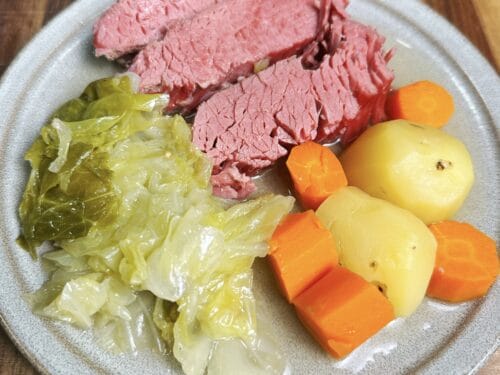
This corned beef and cabbage recipe from Fannie Farmer's Boston Cooking School Cookbook is relatively simple and easy to prep, as most of the work is the long boiling process. With subtle notes from the peppercorns and mustard seeds, the broth is a perfect flavor enhancer for the finished beef. Serve alongside your vegetables, and for that added St. Patricks Day charm, pair it with a Guiness!
Prep Time 10 minutes
Cook Time 4 hours

Ingredients

  • 3 to 4 lb corned beef brisket pre-brined
  • 1 tbsp whole peppercorns
  • 1 tbsp mustard seeds
  • 1 lb baby potatoes halved
  • 3 large carrots cut into chunks
  • 1 small head green cabbage cut into wedges

Instructions

  • Place the brisket in a large pot and cover with cold water. Add peppercorns and mustard seeds. Bring slowly to a boil, skim any foam from the surface, then reduce to a low simmer
  • Cover and cook low and slow until the brisket is completely tender and easily pierced with a fork, about 2.5 to 3 hours depending on size
  • Add potatoes and carrots to the pot and cook 20 minutes until just tender
  • Add cabbage wedges and cook a final 15 minutes until bright and slightly tender but still holding their shape
  • Remove brisket and rest 10 minutes before slicing thick across the grain. Serve with vegetables and ladle the hot broth over everything

Notes

  • Buy the pre-brined brisket from your butcher or grocery store rather than brining your own unless you have five days to spare. The store-bought brine is well seasoned and produces excellent results.
 
  • Do not rush the simmer. A rolling boil will tighten the muscle fibers and produce tough, stringy beef. A gentle, barely-there simmer for the full cook time is what gives you brisket that pulls apart cleanly under a fork.
 
  • The broth is the secret ingredient. It is deeply seasoned from the curing salts and spices and every vegetable that goes in soaks it up. Do not throw it out. Ladle it generously over the finished plate and use any leftover broth as the base for a soup the next day.