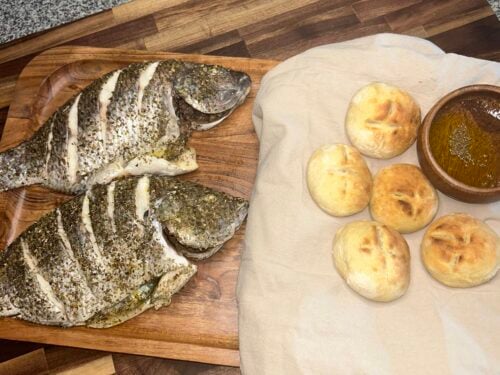
This recipe recreates one of the most iconic meals in biblical history: the miraculous feeding of the 5,000. With only five small barley loaves and two fish, Jesus fed a massive crowd in what became one of the most powerful demonstrations of divine provision recorded in the Gospels. This meal is both symbolic and satisfying, rooted in the everyday ingredients of first-century Galilee: barley, the humble grain of the poor, and tilapia, a freshwater fish commonly caught in the Sea of Galilee and still eaten in the region today.
Prep Time 10 minutesmins
Cook Time 25 minutesmins
Ingredients
Ingredients: Barley Loaves (Makes 5 small loaves)
2cupsbarley flouror substitute with half barley, half whole wheat
1tspsalt
1tsphoney or date syrupoptional, for mild sweetness
2tspolive oil
1/2tspinstant yeastor 1 tsp active dry yeast
3/4cupwarm waternot hot
Ingredients: Roasted Tilapia
2whole tilapiacleaned, scaled, and scored
2tbspolive oil
1tspdried thyme
1tspdried oregano
1tspsalt
Optional: fresh herbs or lemon wedges for garnish
Instructions
Make the Dough (Barley Loaves)
In a large bowl, combine barley flour, salt, and yeast.
Add warm water, honey (if using), and olive oil. Mix until a sticky dough forms.
Knead for 6–8 minutes until smooth. Barley dough may be denser than wheat but should be pliable.
Cover and let rise in a warm place for 1 hour, or until slightly puffed.
Shape & Bake the Loaves
Preheat oven to 400°F (200°C).
Divide dough into 5 small round or oval loaves. Flatten slightly for rustic shape.
Place on a baking sheet lined with parchment paper. Optionally score tops.
Bake for 18–22 minutes, or until golden brown and firm. Cool on rack.
Prepare the Tilapia
Preheat oven to 400°F (200°C) if not already on.
Place cleaned and scored tilapia on a baking sheet.
Drizzle with olive oil and rub with dried herbs and salt.
Roast for 20–25 minutes, or until the fish flakes easily and skin is crisp.
Video
Notes
Don’t expect these loaves to be fluffy, think of them more like a dense flatbread or early pita. They're excellent when warm, served with olive oil or dipped in herbaceous sauces.
Ask your fishmonger to clean and scale the fish for you. Leave the head and tail on for historical presentation, or remove them for ease of serving.
The beauty of this dish lies not just in its simplicity, but in its symbolism. Whether you’re hosting a Bible study or sharing a meal with family, use this moment to reflect on the themes of the miracle: generosity, faith, and transformation. Light candles, read from John 6 or Matthew 14, and invite your guests to imagine the crowd sitting on the hillside, tasting bread and fish made miraculous by divine hands.