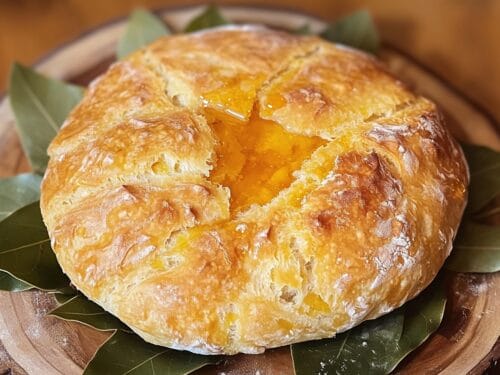
Libum offers us a flavorful connection to ancient Roman life and their religious traditions. This ancient cheesecake is a reminder of how food played a role not only in nourishing the body but also in spiritual practices. Whether you're a history buff or just curious about ancient cuisines, Libum provides a delicious window into the world of the Romans. Enjoy this simple and rich treat as they did—perhaps imagining the bay leaves as a nod to the gods of old!
Prep Time 10 minutesmins
Cook Time 40 minutesmins
Ingredients
1cupof flour
1cupof ricotta cheeseor any fresh soft cheese
1egg
Bay leaves
Honeyfor drizzling
Instructions
Preheat your oven to 375°F (190°C).
In a bowl, mix the ricotta cheese with the egg until smooth.
Gradually fold in the flour to create a soft dough.
Shape the dough into small rounds or a single large loaf, depending on preference.
Place bay leaves on the bottom of a baking tray or parchment paper and set the dough rounds on top of the leaves. The bay leaves infuse a subtle flavor during baking.
Bake in the preheated oven for about 30-40 minutes, or until golden brown and firm.
Texture of the Dough: The dough for Libum should be soft but firm enough to hold its shape. If it feels too sticky, you can add a little extra flour. Conversely, if it's too dry, mix in a bit more ricotta or a small splash of water to achieve the right consistency.
Bay Leaf Flavoring: Placing the dough on bay leaves adds a subtle aromatic flavor. Be sure to use fresh or dried bay leaves, but remove them before eating as they aren't meant to be consumed directly.
Honey Drizzle: While the recipe calls for drizzling honey over the baked Libum, you can warm the honey slightly to make it easier to pour and to give the cheesecake a glossy finish. Additionally, try infusing the honey with herbs like thyme or rosemary for an extra layer of flavor.