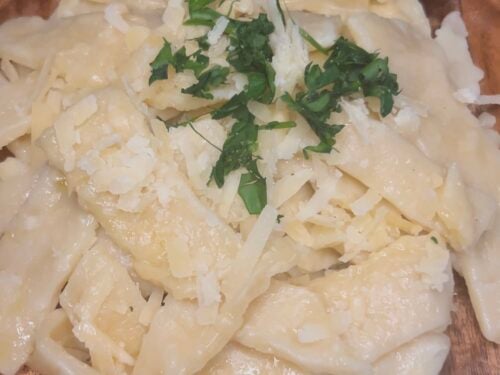

Macrows is a 14th-century medieval pasta dish recorded in The Forme of Cury (c. 1390), one of the oldest English cookbooks, compiled by the cooks of King Richard II’s court. This dish consists of handmade pasta sheets boiled, then layered with grated cheese and butter, resembling an early form of mac and cheese or lasagna (losyns). Unlike modern pasta dishes, there was no creamy sauce or additional spices, relying solely on the richness of butter and the sharp, nutty flavor of aged cheese. Forks were uncommon at the time, so Macrows would have been eaten with a wooden stick or knife, making it a simple but satisfying meal for medieval nobility.
Prep Time 10 minutesmins
Cook Time 10 minutesmins
Ingredients
For the Dough (Fresh Medieval Pasta)
1cupflourpreferably whole wheat, as used in medieval times
¼tspsalt
¼cupwateradjust as needed
For the Dish
½cupgrated cheeseParmesan or an aged English cheese like Cheshire or Gloucester
2tbspbutteror animal fat for authenticity
1tbschopped Parsleyoptional for garnish
Salt to taste
Water for boiling
Instructions
Step 1: Make the Pasta Dough
Mix flour and salt in a bowl.
Gradually add water (and egg, if using), kneading until a firm dough forms.
Roll out into a thin sheet (~1/8 inch thick).
Cut into long, thin strips (similar to lasagna or fettuccine).
Let rest while you prepare the other ingredients.
Step 2: Cook the Pasta
Bring a pot of water to a boil, adding a pinch of salt.
Drop in the freshly cut pasta and boil for 2–3 minutes (fresh pasta cooks quickly).
Drain and set aside.
Step 3: Assemble the Dish
In a serving dish, layer pasta, butter, and grated cheese, repeating as needed.
Ensure cheese is both beneath and on top, as instructed in the original recipe.
Bake for 5-10 minutes at 350, or until cheese melts.
Step 4: Serve Warm
Serve immediately while the cheese and butter are still melty.
Garnish with chopped Parsley.
Traditionally, this would be eaten with a wooden stick or knife instead of a fork.
Video
Notes
Hand-rolled pasta creates a more rustic texture: Medieval pasta was made by rolling thin sheets of dough by hand, which resulted in a slightly chewier texture than modern machine-pressed pasta.
Cheese selection affects the flavor: The original recipe does not specify the type of cheese, but medieval England had access to Parmesan (imported from Italy) and local cheeses like Cheshire or Gloucester. Choosing an aged, hard cheese will give the dish an authentic nutty-salty taste.
Layering with butter mimics an early lasagna: The instruction to "cast butter beneath and above" suggests that butter was used to prevent sticking and add richness, much like later lasagna or buttered noodles.