
Go Back

Natufian Flatbread

Print Recipe
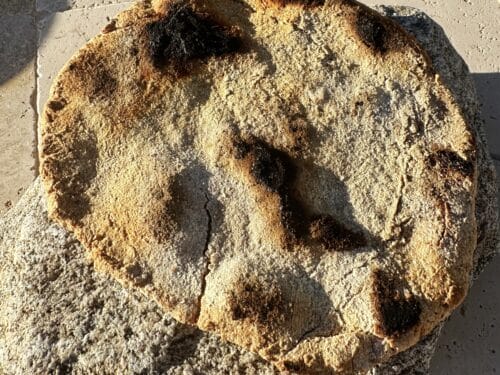
This Natufian flatbread is dense, nutty, and earthy — far closer to a primitive cracker or survival flat cake than modern bread. The einkorn provides a subtle sweetness, the barley adds bitterness and depth, and the crushed tiger nuts contribute starchy body reminiscent of ancient wetland tubers. There is no salt, no yeast, and no softness — only grain, water, and heat. It is food at the edge of agriculture, representing a turning point in human history when wild cereals were laboriously transformed into something portable, durable, and revolutionary.
Prep Time 20 minutes
Cook Time 10 minutes
Resting Time 15 minutes

Ingredients

  • 1 cup whole einkorn flour
  • ½ cup barley flour
  • ½ cup crushed tiger nuts as a stand-in for prehistoric tubers
  • About ¾ cup warm water add gradually

Instructions

Step 1: Prepare the Flour Blend

  • In a large bowl, combine the einkorn flour, barley flour, and crushed tiger nuts. If you want a slightly more authentic texture, pulse the flours briefly in a food processor to create a coarser grind — Natufian flour would not have been finely milled.
  • Mix thoroughly so the tiger nuts are evenly distributed. These represent the pulverized tubers found in archaeological analysis and add both starch and subtle sweetness.

Step 2: Form the Dough

  • Slowly add warm water a few tablespoons at a time, mixing with your hands or a wooden spoon.
  • You are aiming for a stiff, dense dough, not soft and elastic like modern bread. It should feel firm and slightly coarse, but hold together when pressed. If it cracks slightly when pressed, that is completely normal — this is closer to a primitive flat cake than a kneaded loaf.
  • Once it holds together, press firmly into a rough ball and let it rest for 10–15 minutes. This allows the coarse grains to hydrate fully.

Step 3: Shape

  • Flatten into a single disc about ¼ inch thick. Keep the edges irregular. Press with your palms rather than rolling thin — prehistoric breads were hand-shaped.
  • If cracks appear around the edges, gently press them back together. Avoid overworking the dough.

Cooking Methods (Choose Your Preferred Method)

    Method 1: Oven with Baking Stone (Most Controlled)

    • Preheat oven to 500°F (260°C) with a pizza stone or baking steel inside for at least 45 minutes.
    • Carefully transfer the flatbread directly onto the hot stone. Bake for 8–10 minutes. Flip halfway through if needed.
    • You are looking for: Light blistering, Dry surface, Some browning or mild charring.
    • The bread should not puff dramatically. It should firm up and dry out slightly.

    Method 2: Grill with Stone (More Rustic)

    • Preheat a grill to high heat (450–550°F). Place a flat stone or cast iron griddle on the grill grates and allow it to heat thoroughly.
    • Place the flatbread directly on the hot surface. Close the lid and cook 4–5 minutes per side.
    • This method gives you more char and smokiness — closer to hearth-style cooking.

    Method 3: Fire Pit or Open Flame (Most Authentic)

    • Build a hardwood fire and allow it to burn down to glowing embers.
    • Place a flat stone near or partially over the coals and allow it to heat fully.
    • Lay the flatbread directly on the heated stone. Cook 4–6 minutes per side.
    • You can also experiment with lightly covering the bread with hot ash for part of the bake to mimic prehistoric ash baking (ensure only clean hardwood ash is used).
    • This method produces the most authentic texture and uneven charring.

    Step 4: Rest and Break

    • Remove from heat and allow to cool for several minutes.
    • Do not slice — break it apart by hand. The interior should be dense, slightly chewy, and rustic.

    Video

    Notes

    • Keep the Dough Firm: If the dough feels too soft, you’ve added too much water. This bread should feel sturdy and slightly coarse — that texture is part of its authenticity.
     
    • Do Not Overbake: You want light charring and dryness, not complete brittleness. Overbaking will turn it into a hard cracker rather than a flatbread.
     
    • Embrace Imperfection: Irregular shape, cracks, and uneven browning are historically accurate. The more “primitive” it looks, the closer you are to recreating a 14,400-year-old food tradition.