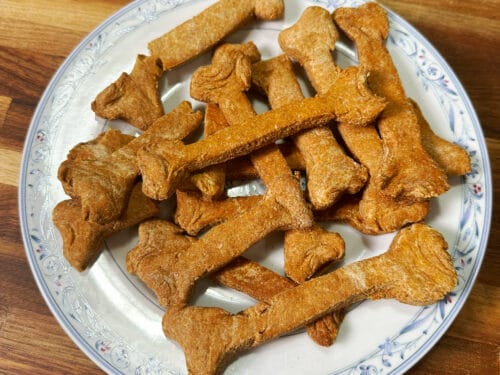

Reconstructed from documented ingredients of the formula developed by Carleton Ellis, F.H. Bennett Biscuit Company, New York, 1907 to 1915. The exact proprietary formula has never been publicly released. This reconstruction is based on the documented primary ingredients emphasised in the original marketing materials and period food production practices. The high milk content, malt component and grain base are all specifically documented in historical accounts of the original formula.
Prep Time 20 minutesmins
Cook Time 30 minutesmins
Ingredients
Ingredients
2cupsplain flour
½cupwhole wheat flour
½cuppowdered whole milk — the documented primary ingredientused at a high percentage that gave the product its name. Full fat powdered milk produces the most authentic result
2tbspmalted milk powder — malt is documented as a key Ellis ingredient contributing both flavour and the enzymatic activity that Ellis understood improved digestibility
1egg
½cupwhole milk
2tbspbeef dripping or lard — period-appropriate fat consistent with commercial biscuit production of the era
1tbspmolasses — for colour and flavourconsistent with the appearance of the original biscuits documented in period photographs
Pinchof salt
Instructions
Make the dough
Preheat oven to 350°F. Combine all the dry ingredients in a large bowl: plain flour, whole wheat flour, powdered whole milk, malted milk powder and salt. Whisk together briefly to distribute the powdered milk evenly through the flour. An uneven distribution of the powdered milk will produce biscuits with inconsistent colour and flavour.
In a separate bowl whisk together the egg, whole milk, melted beef dripping and molasses until combined. The molasses will not fully incorporate into the cold milk immediately. This is not a problem. Pour the wet ingredients into the dry and mix with a wooden spoon or your hands until a firm dough forms. The dough should be stiff enough to hold its shape when cut but not crumbly. If it seems too sticky add flour one tablespoon at a time. If too dry add whole milk one teaspoon at a time.
Shape the biscuits
Lightly flour a clean surface. Roll the dough out to approximately 6mm thickness. Cut into bone shapes using a bone-shaped cookie cutter. If you do not have one, Ellis's original shape was round before his dog refused to eat them and he changed the design. Either shape is historically defensible. Place the cut biscuits on a lined baking sheet with a small amount of space between each one.
Bake
Bake at 350°F for 25 to 30 minutes until the biscuits are firm and lightly golden on the surface. For a harder, crunchier biscuit that more closely resembles the commercial product, reduce the oven temperature to 275°F after the initial bake and continue drying for a further 20 to 30 minutes. The finished biscuit should be genuinely hard and require significant effort to bite through. This is correct. The dental cleaning benefit that Milk-Bone has always emphasised in its marketing depends entirely on the hardness of the biscuit.
Cool completely on a wire rack before storing. The biscuits will harden further as they cool.
Store
Store in an airtight container at room temperature. Unlike fresh food, these biscuits will last for several weeks, which was a key commercial advantage of the Milk-Bone formula from the beginning. Shelf stability was the problem Ellis was solving and the formula he developed solved it effectively.
Notes
The double drying method, initial bake at 350°F followed by extended drying at 275°F, is the technique that produces the hardness closest to the commercial product. The commercial Milk-Bone is produced in a continuous industrial oven that achieves this hardness through controlled temperature and extended drying time. The home oven version requires the two-stage process to approximate the same result.
Full fat powdered milk produces a noticeably more flavourful biscuit than skim powdered milk. This is the documented intent of the original formula and is worth the additional sourcing effort. Full fat powdered milk is available at most supermarkets and online.
The beef dripping is the fat most consistent with the period of the original formula. Commercial lard is an acceptable substitute. Vegetable shortening will produce a biscuit that rises slightly more and browns more evenly but is less period-accurate and produces a somewhat different flavour profile. For the most historically grounded version use beef dripping.
A note on human consumption: every ingredient in this recipe is a standard human food product. The biscuit is not harmful or dangerous to eat. It is simply not particularly enjoyable for a human palate and I say this having eaten one in the interest of this channel. Make them for your dog. Let your dog enjoy them. Consider the 2 out of 10 my contribution to the research so that you do not have to contribute yours.