
Instructions
Notes
1. Orange Blossom & Anise:
These two ingredients define the bread’s traditional flavor. If orange blossom water isn’t available, the zest of one fresh orange makes a perfect substitute. Anise adds an old-world sweetness reminiscent of the colonial convent kitchens that first refined this bread. 2. Perfect Dough Texture:
Pan de Muerto dough should feel soft and slightly sticky before kneading. The secret to its tender crumb is patience—knead thoroughly for elasticity and allow both rises to complete fully. This gives the bread its signature airy texture and rich aroma. 3. Sweet Symbolism:
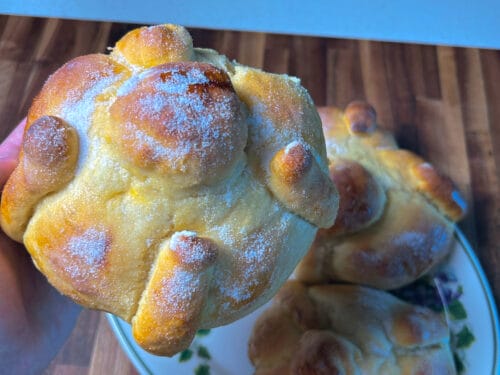
Each element has meaning: the round loaf symbolizes the circle of life, the dough “bones” represent the departed, and the sugar crust reflects the sweetness of memory. Share this bread with family and friends, ideally alongside champurrado or café de olla, to honor both flavor and tradition.
These two ingredients define the bread’s traditional flavor. If orange blossom water isn’t available, the zest of one fresh orange makes a perfect substitute. Anise adds an old-world sweetness reminiscent of the colonial convent kitchens that first refined this bread. 2. Perfect Dough Texture:
Pan de Muerto dough should feel soft and slightly sticky before kneading. The secret to its tender crumb is patience—knead thoroughly for elasticity and allow both rises to complete fully. This gives the bread its signature airy texture and rich aroma. 3. Sweet Symbolism:
Each element has meaning: the round loaf symbolizes the circle of life, the dough “bones” represent the departed, and the sugar crust reflects the sweetness of memory. Share this bread with family and friends, ideally alongside champurrado or café de olla, to honor both flavor and tradition.