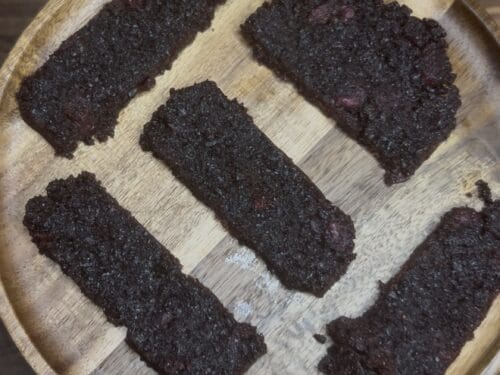

Pemmican is one of the oldest energy-dense foods in the world—used for centuries by Indigenous North American peoples as fuel for travel, survival, and trade. This pre-Columbian-inspired version blends venison jerky, rendered duck fat, and dried cranberries into a rich, portable bar that’s shelf-stable, calorie-rich, and nutritionally balanced. It honors traditional preparation while offering a practical way to connect with ancestral food knowledge.
Prep Time 25 minutesmins
Cook Time 4 hourshrs
Ingredients
1cupvenison jerkyhomemade or store-bought, ideally without added sugar or seasoning
½cupdried cranberriesunsweetened if possible
⅓cuprendered duck fatsoftened but not fully melted
Pinchof sea saltoptional
Instructions
Bake the Jerky
If your jerky isn’t already brittle:
Preheat your oven to 200°F (93°C).
Place the venison jerky on a baking rack or tray and bake for 3–4 hours, flipping once halfway through.
The jerky should be completely dry and crisp—it should break when snapped, not bend.
Let cool completely.
Grind the Jerky
Using a food processor, mortar and pestle, or sharp knife, grind the jerky into fine bits—like coarse meal or shredded floss.
Aim for small, even pieces that will mix easily with the fat.
Chop the Cranberries
Finely chop the dried cranberries so they distribute evenly in the mix. You can pulse them in the food processor briefly.
Mix the Pemmican Base
In a mixing bowl, combine the ground jerky and chopped cranberries.
Add the softened duck fat gradually and knead together with your hands or a spatula until the mixture binds together like thick dough.
Add a pinch of salt if desired.
Shape and Set
Press the mixture into a parchment-lined dish or mold (or form into individual bars by hand).
Chill in the refrigerator for at least 1 hour to firm up.
Once set, cut into 4 equal bars and wrap individually for storage.
Jerky Texture Matters: For proper shelf-stability and texture, the jerky should be completely brittle before grinding. If it's chewy, moisture may shorten the storage life of your pemmican.
Duck Fat Flavor: Duck fat adds a rich, savory depth to this recipe and was historically used in regional Indigenous diets. You can substitute with bison tallow or beef tallow if preferred.
Customize the Ratio: Traditional pemmican is roughly 1:1 by weight of meat to fat. Adjust your ratios slightly depending on how dry your ingredients are—just enough fat to bind the mix into a firm, non-greasy bar.