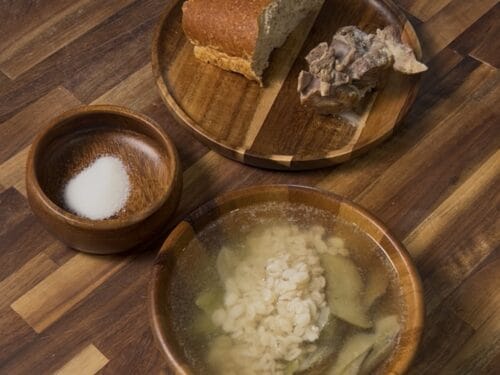
This reconstruction shows the reality of a gulag prisoner’s daily diet. It provides roughly 1200 calories, most of which come from bread and barley. The soups are extremely low in nutrients and protein. This food did not sustain life so much as prolong survival under forced labor.
Prep Time 5 minutesmins
Cook Time 1 hourhr
Ingredients
Breakfast
½cupbarley
1 ½cupswater
1small piece stale breadabout 150 g according to NKVD rations
1cupweak black tea or hot water
Lunch
4cupswater
1–2 cleaned scrap bonesbeef or pork
handful potato peels
handful cabbage scraps
small piece of onion
1small piece stale bread
Dinner
Remaining bone broth soup from lunch
¼cupbarley
1small piece stale bread
1tablespoonsugar
Hot water or weak tea
Instructions
Breakfast: Barley Porridge and Bread
Add barley and water to a small pot.
Simmer until the mixture thickens slightly, about 15–20 minutes.
Do not add fat, milk, salt, or sugar.
Serve with stale bread and weak tea.
Lunch: Thin Scrap-Bone Soup
Place bones in a pot with 4 cups of water.
Simmer for 45–60 minutes until the water becomes slightly cloudy.
Add potato peels, cabbage scraps, and a small amount of onion.
Cook 20 minutes more.
Serve with stale bread.
Dinner: Barley Soup, Bread, and Sugar
Reheat leftover soup from lunch.
Add barley and simmer until soft.
Serve with your final bread ration.
Dissolve the tablespoon of sugar into hot water or tea.
Notes
The soup is intentionally thin. Adding more vegetables or fat would make it historically inaccurate.
The bread ration is the main calorie source. Reducing it dramatically changes the realism.
This meal is educational and should not be eaten regularly. The nutritional deficiencies are severe.