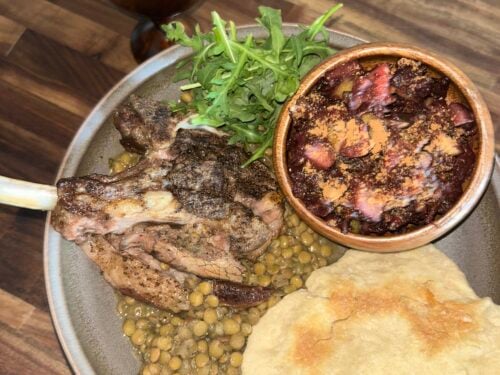
This recreated Last Supper meal is a humble, symbolic spread inspired by 1st-century Judean Passover traditions. It includes unleavened flatbread, a cumin-spiced lentil stew, roasted lamb with bitter herbs, a sweet charoset paste, and diluted red wine. Rooted in biblical texts and archaeological findings, each dish reflects both the cultural reality and spiritual symbolism of Jesus's final meal.
Prep Time 30 minutesmins
Cook Time 1 hourhr30 minutesmins
Ingredients
Unleavened Flatbread (Matzah-Style)
1cupwhole wheat flouror emmer flour
½cupwateradjust as needed
Pinchof salt
Optional: olive oil for brushing
Lentil Stew
1cuplentils
1onionoptional
2clovesgarlicminced
2tbspolive oil
1tspcumin
½tspsalt
~2½ cups water
Roasted Lamb with Bitter Herbs
1–2 lbs lambshoulder or leg
2tbspolive oil
1tspsalt
1tspcoriander or cumin
1sprig rosemary or thyme
1bunch bitter herbschicory, endive, arugula
Optional: splash of red wine or lemon juice
Charoset (Date-Nut Paste)
1cupMedjool datespitted
¼cupchopped walnuts or almonds
2tbspred wine or grape juice
Pinchof cinnamonoptional
Diluted Red Wine
½cupred wine
½cupwateror to taste
Instructions
Flatbread
Preheat a dry skillet or griddle to medium heat.
Mix flour and salt. Gradually add water until a stiff dough forms.
Knead lightly, divide into 2–3 balls, and roll into thin circles.
Cook 2–3 minutes per side until golden spots appear.
Serve warm. Optionally brush with olive oil.
Lentil Stew
Heat oil in a pot. Sauté onion, then garlic.
Add lentils, cumin, salt, and enough water to cover.
Bring to a boil, then simmer 30–40 minutes.
Mash slightly if desired. Serve warm.
Roasted Lamb with Bitter Herbs
Rub lamb with oil, salt, and spices. Optional: marinate in wine or lemon.
Roast at 375°F (190°C) for 60–75 minutes.
Let rest 10 minutes, then slice.
Serve with bitter herbs.
Charoset
Chop dates and nuts into a small pieces
Heat wine to a soft simmer
Mix in dates and nuts, cook down into a simmering paste
Chill or serve immediately.
Diluted Red Wine
Mix wine and water to desired dilution.
Serve at room temperature in simple cups.
Video
Notes
Historical Ingredients: For authenticity, try using emmer wheat for the bread and Medjool dates for the charoset. These were staples in 1st-century Judea.
Bitterness Varies: Use greens like dandelion, endive, or arugula for the bitter herbs. The bitterness should be noticeable to reflect the symbolism of slavery and hardship.
Wine Dilution Tip: Adjust your wine-to-water ratio based on taste, but keep it at least 1:1 or 1:2 for historical accuracy. Romans considered undiluted wine excessive.