
Go Back

Torelletti with Capon Meat (Serves 4)

Print Recipe
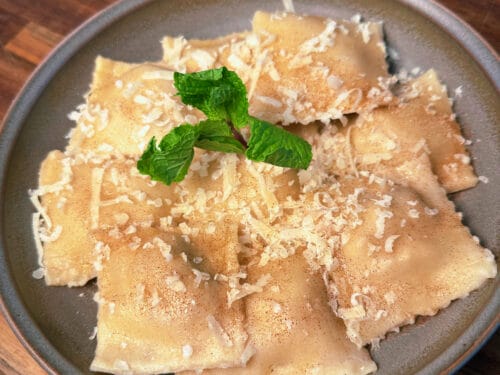
This Renaissance stuffed pasta draws directly from the refined kitchens of papal Rome, where flavor, symbolism, and nourishment were carefully balanced. Finely chopped chicken or capon is enriched with custardy bone marrow, fresh ricotta, warm spices, herbs, and saffron, creating a filling that is aromatic and deeply savory with subtle sweetness. The thin pasta dough, lightly scented with rosewater, acts as a delicate vessel rather than the focus, allowing the filling to take center stage. Served simply in broth or lightly drained with cinnamon sugar and Parmesan, this dish reflects a period when pasta was a demonstration of intellect and restraint rather than rustic comfort. The result is elegant, unfamiliar, and unmistakably Renaissance in character.
Prep Time 1 hour 30 minutes
Cook Time 15 minutes

Ingredients

Dough

  • 2 cups all-purpose flour
  • 1 tablespoons unsalted butter softened
  • teaspoons sugar
  • ¾ teaspoon salt
  • 3 tablespoons rosewater
  • 3 tablespoons warm water

Filling

  • 3/4 cup cooked capon or chicken breast finely chopped
  • 1/2 cup beef bone marrow baked and removed from bone (about 2 bones total)
  • 1 cup fresh ricotta
  • 1 egg
  • tablespoons sugar
  • 1 teaspoon ground cinnamon
  • ½ teaspoon freshly ground black pepper
  • ¼ teaspoon ground cloves
  • ¼ teaspoon ground nutmeg
  • Small pinch saffron crushed
  • ½ teaspoon finely chopped fresh mint
  • ½ teaspoon finely chopped fresh marjoram optional
  • Optional parsley chopped
  • 2 tablespoons finely chopped currants or raisins
  • ¾ teaspoon salt

For Cooking

  • 2 quarts meat broth about 8 cups

Garnish

  • Cinnamon sugar sprinkled
  • Freshly grated Parmesan cheese

Instructions

Make the Dough

  • In a mixing bowl, combine the flour, sugar, and salt.
  • Rub the softened butter into the flour mixture until it resembles coarse crumbs.
  • Add the rosewater and warm water gradually, mixing until a soft dough forms.
  • Knead on a lightly floured surface for 8–10 minutes until smooth and elastic.
  • Wrap tightly and let rest at room temperature for 30–45 minutes.

Prepare the Filling

  • Finely chop the cooked capon or chicken breast and place in a bowl.
  • Mash the baked bone marrow until smooth and add it to the meat.
  • Stir in the ricotta until fully combined.
  • Add the egg, mixing until cohesive.
  • Add sugar, cinnamon, pepper, cloves, nutmeg, saffron, mint, marjoram, currants, and salt.
  • Mix thoroughly until smooth and fragrant.
  • Cover and refrigerate for 30 minutes to firm slightly.

Roll and Shape the Pasta

  • Divide the rested dough into two portions, keeping one covered.
  • Roll the dough very thin until nearly translucent.
  • Cut into 2-inch squares.
  • Place about ½ teaspoon filling in the center of each square.
  • Cover with another sheet of dough, remove air bubbles, and cut again into sealed squares.

Cook the Pasta

  • Bring the meat broth to a gentle boil in a wide pot.
  • Add the pasta in batches, avoiding overcrowding.
  • Cook for 3–4 minutes until tender and floating.
  • Remove with a slotted spoon.

Serve

  • Serve hot, lightly bathed in broth or drained.
  • Finish with cinnamon sugar and freshly grated Parmesan.
  • Serve immediately.

Video

Notes

  • Bone marrow texture matters: The marrow should be baked just until soft and set, not fully melted. If it renders into liquid fat, the filling will lose structure and become greasy. Aim for a custardy consistency that can be mashed smoothly and folded into the meat. If the marrow is slightly warm when mixing, allow the filling to chill briefly before shaping.
 
  • Roll the dough thinner than you think: Renaissance pasta dough was rolled extremely thin. Thicker dough will overpower the delicate, spiced filling and make the dish feel heavy. You should be able to see your fingers faintly through the dough before cutting. This also shortens cooking time and gives the pasta a more historically accurate texture.
 
  • Do not skip the sweetness or spice balance: The sugar, cinnamon, cloves, and nutmeg are not optional embellishments. They are essential to the dish’s historical flavor profile. Modern palates often want to reduce sweetness in savory dishes, but doing so flattens the character of the filling. Keep the quantities as written and adjust only after tasting the finished dish, not before.