When people imagine the Spartan diet, they picture warriors carved out of marble, feasting on protein-heavy meals designed to build massive muscle. Modern fitness culture has turned “Spartan” into a marketing slogan, often tied to bodybuilding meals or extreme fad diets.
If you’re enjoying my recipes, check out Eats History Shop as all of my e-cookbooks are 40% Off!
The truth, preserved in fragments from ancient authors like Plutarch, Xenophon, and Herodotus, paints a very different picture. Spartans did not eat to bulk up or chase flavor. They ate to endure. Their food supported a lifestyle centered on discipline, warfare, and constant physical hardship, and their meals reflected their values far more than any Hollywood portrayal ever has.
The Ancient Sources Behind the Spartan Meal
Our understanding of Spartan eating habits comes primarily from Plutarch’s Life of Lycurgus, Xenophon’s discussions of Greek food customs, and Herodotus’s broader descriptions of Greek military life. These writers never recorded a cookbook, but they offered scattered details that historians can piece together.
Next week
I cook these before I write them. Some of it never makes the post.
The failures, the source documents, the version that actually tasted good. That part goes out by email, and next week’s is already on the stove.
 Written and cooked by Donnie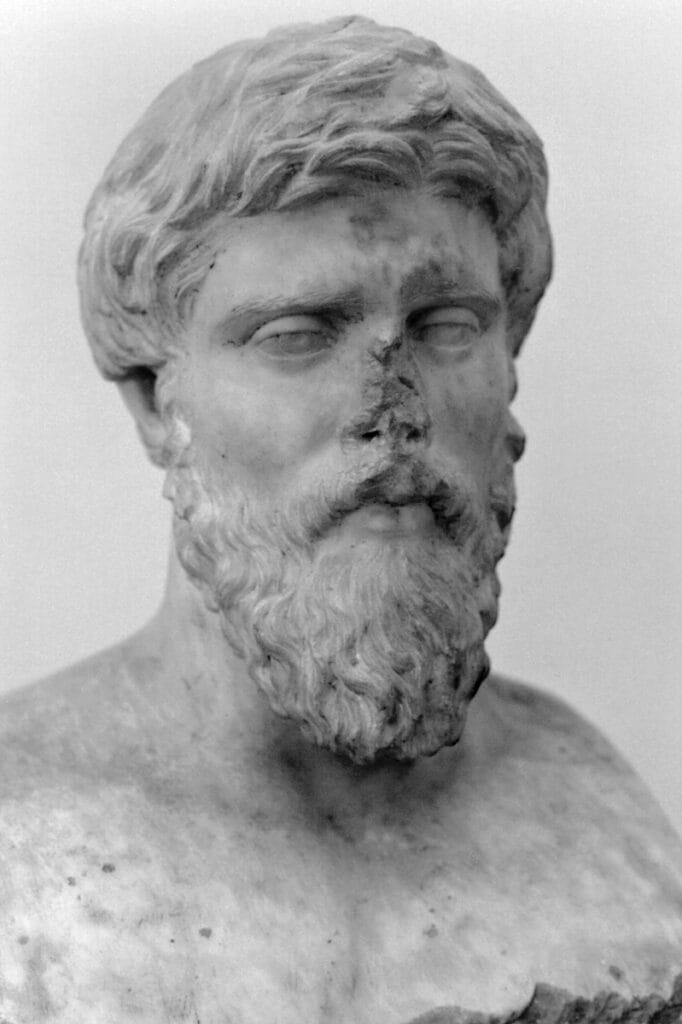
What emerges is a diet that was extremely simple, intentionally plain, and built around the needs of a hoplite who had to remain fast, lean, and battle ready. Unlike the Athenians, who enjoyed elaborate dinners and refined dishes, the Spartans saw indulgence as a sign of weakness. Their meals were a daily exercise in restraint.
Breakfast: Barley, Fruit, and Spartan Practicality
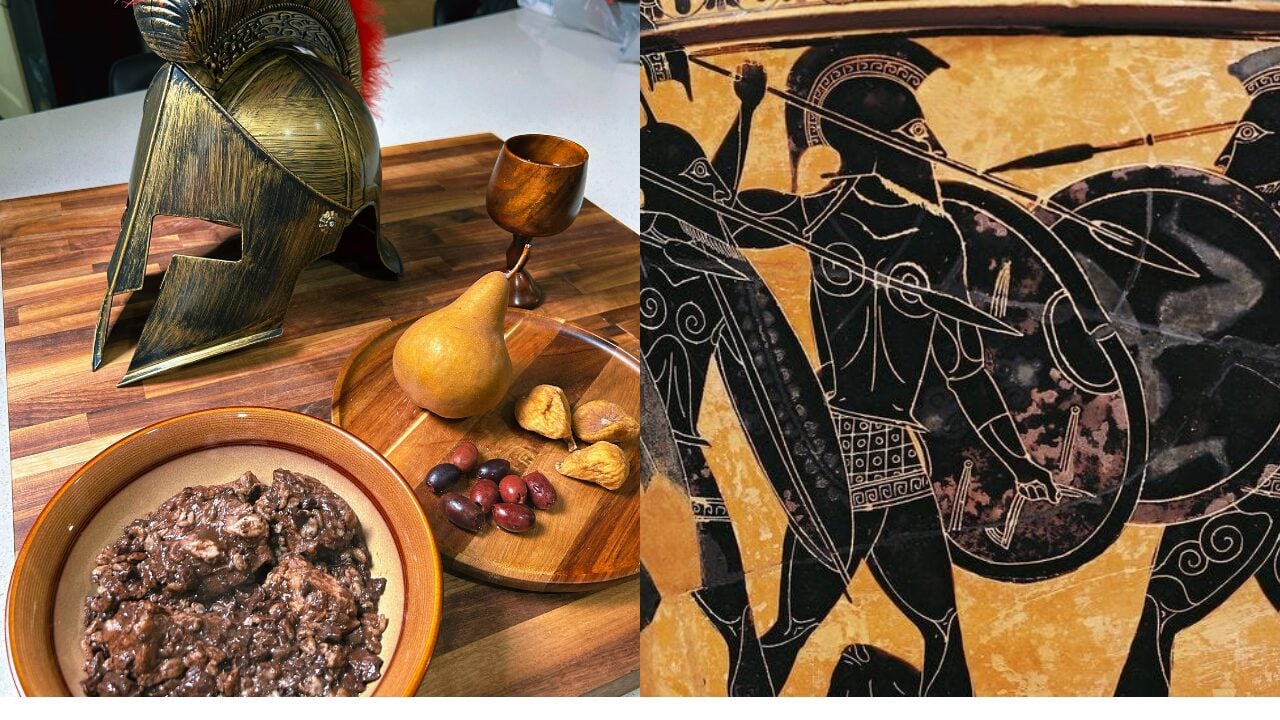
Breakfast for a Spartan warrior was straightforward, intentional, and predictable. I recreated it with maza, the barley cakes mentioned throughout Greek literature, along with dried figs, a pomegranate, goat cheese, olives, and a drizzle of olive oil. These ingredients formed a complete breakfast across the Greek world, but in Sparta they took on a harsher character.
Plutarch describes how Spartan youths were raised on limited, plain food to toughen their bodies and sharpen their discipline. Nothing about breakfast was meant to be luxurious. The barley cakes are dry, dense, and functional, and they were designed for one purpose: deliver carbohydrates quickly so a warrior could train or march without wasting time.
The Spartan Morning and the Discipline of Hunger
Once breakfast was finished, the day shifted immediately into physical training or labor. Spartan boys entered the agoge at age seven and were conditioned for a life of endurance, suffering, and martial excellence. Adult hoplites continued this rhythm, often drilling, hunting, or performing communal labor. One of the striking features of the Spartan diet is what they did not eat.
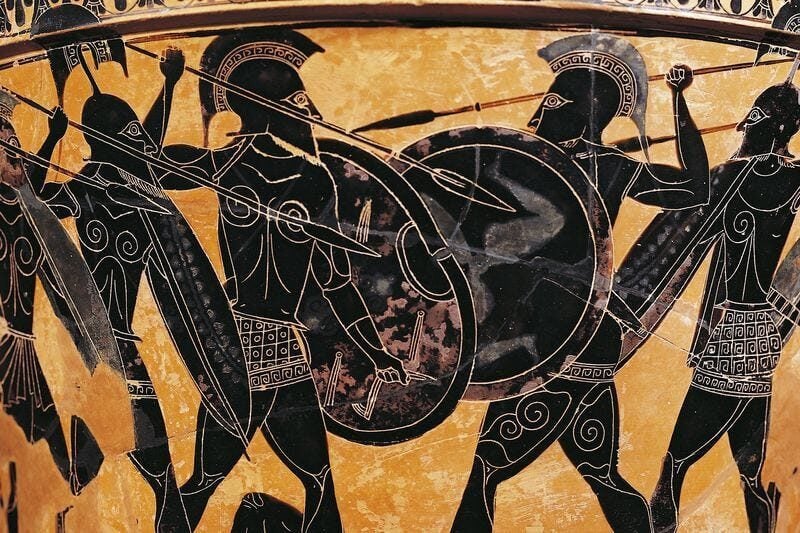
Spartans commonly skipped lunch, especially when on campaign or working in the fields. This was not a mistake or a scarcity issue. It was strategy. A full belly slows a fighter, and the ancient authors make it clear that Spartans valued mobility above all else. They saw hunger as a natural state for a warrior. Eating lightly was part of their military identity.
Dinner and the Communal Mess Halls of Sparta
Dinner was the centerpiece of Spartan food culture, eaten in the syssitia, the communal mess halls that reinforced loyalty and equality among citizens. Xenophon describes these meals as deliberately modest, and Plutarch emphasizes how every man contributed food to the common pot.
This was where Spartans shared the iconic dish that defined their cuisine, the meal outsiders mocked and Spartans proudly defended: melas zōmos, or the black broth. This dish appears repeatedly in ancient texts, always with the same ingredients, which says a lot about its importance. It was not a flavor-driven recipe. It was a physical and mental test served every night.
The Legend of the Black Broth
The black broth was made from pork, its blood, vinegar, and barley, simmered together until the pot turned almost ink dark. According to Plutarch, a visiting Sicilian cook tasted the broth and joked that once he tried it, he understood why Spartans were fearless in battle. The broth is intense, iron rich, and surprisingly simple. Blood was the thickener, vinegar kept it from clotting, and barley added the calories needed to finish the day. When I made my version, I served it with a pear, more figs, and a handful of olives, which aligns with what we know about Spartan agricultural staples. It is not a meal designed for pleasure, but it has a primal quality that fits the culture that created it.
Calories, Protein, and the Spartan Body
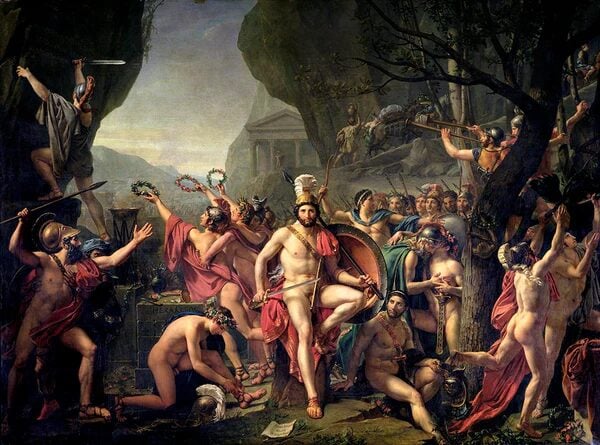
If you ate everything in this reconstructed Spartan day, including a full pot of black broth, your calorie intake lands around 2,100 calories with roughly 80 grams of protein. This surprises many people who imagine Spartans as early bodybuilders. In reality, they intentionally lived lean, not muscular. Sculptures of Greek athletes are artistic ideals, not documentary evidence.
Spartans prioritized agility, endurance, and the ability to hold the phalanx formation for long periods. A heavy or overly muscular body would have been a liability. Modern gym influencers advertising “Spartan diets” without blood soup are missing the point entirely. The Spartan ideal was discipline first, food second, and aesthetics last.
The Spartan Day in Perspective
When you follow their diet for a day, you feel the rhythm of Spartan life. Breakfast is functional. Lunch does not exist. Dinner is communal and symbolic. The lack of variety is not a flaw in the system but a feature.
It forces the body to adapt and teaches the individual to focus on duty rather than appetite. You get glimpses of how their world operated, where food supported the state, and the state shaped the citizen. It is austere, challenging, and strangely coherent. Eating like a Spartan is not enjoyable, but it is enlightening.
My Thoughts on the Meal
This is not a high rating day. The breakfast is fine once you accept that the barley cakes will be dry and require plenty of fruit and olive oil to get down. The black broth, however, is better than its reputation suggests. It is earthy, strong, and carries a sense of history that is hard to ignore.
Overall, it lands around a 3.5 out of 10, and most of those points come from the figs and olives. Still, as a historical experience, it is worth trying. You get to feel the Spartan world the way their warriors might have, and that alone makes it an interesting culinary experiment.
Recipe: Spartan Breakfast – Maza with Fruit, Cheese, & Olives
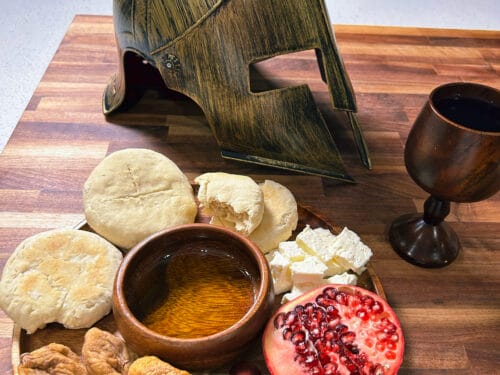
Breakfast: Spartan Maza with Fruit, Cheese, and Olives

Don’t lose this one.
I’ll email it to you so it’s waiting when you’re ready to cook.
Ingredients
Instructions
Notes
- Barley flour absorbs water quickly, so add the water slowly to form a stiff dough. Maza should be dense and firm, not soft like modern flatbreads.
- Dry-bake the cakes with no oil to stay historically accurate. This keeps them crisp, slightly chewy, and true to how Spartans prepared their daily grain.
- Pairing with figs and olive oil is essential, since the barley cakes are intentionally dry. The fruit and oil help balance the texture and replicate how ancient Greeks softened difficult staple foods.
Recipe: Spartan Dinner – Black Broth (Melas Zomos)
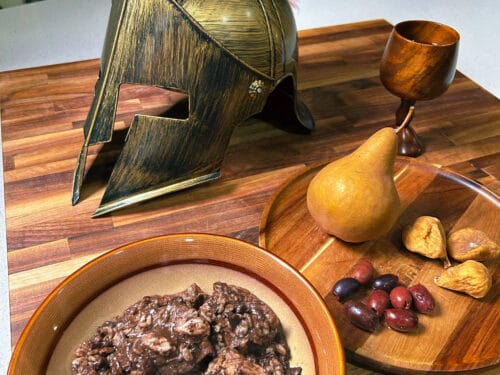
Spartan Black Broth (Melas Zomos)
Don’t lose this one.
I’ll email it to you so it’s waiting when you’re ready to cook.
Ingredients
Instructions
Notes
- Add the blood slowly while stirring to prevent curdling. The vinegar helps stabilize it, but steady stirring recreates the smoothness described in the ancient accounts.
- Barley thickens the soup over time, so the longer you simmer, the heartier and darker the broth becomes. Aim for a texture somewhere between a soup and a thin stew.
- Use pork shoulder or ribs for authenticity, since Spartans boiled down tough cuts rather than roasting tender ones. The bone adds flavor and makes the broth closer to what the syssitia likely served.