
Go Back

Breakfast: Spartan Maza with Fruit, Cheese, and Olives

Print Recipe
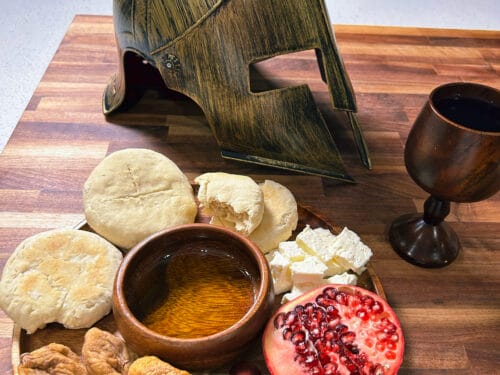
The Spartan breakfast was a study in simplicity and discipline, built entirely around fueling the body rather than satisfying it. The centerpiece was maza, a dry barley cake mentioned by Plutarch and Xenophon as the fundamental grain food of Sparta. These cakes were dense, plain, and meant to deliver quick carbohydrates with no indulgence. They were paired with dried figs, pomegranate seeds, goat cheese, olives, and a drizzle of olive oil, all foods that Spartan farmers could produce reliably in Laconia. The meal is humble but complete, and it reflects the Spartan worldview: nourishment should support duty, training, and endurance, not comfort or pleasure. When you eat this breakfast, you immediately feel how practical their eating habits were. It is a light, functional start to a day built around discipline.
Prep Time 10 minutes
Cook Time 20 minutes

Ingredients

For the Maza (Barley Cakes)

  • 1 cup barley flour
  • ¼ –⅓ cup water
  • Pinch of salt
  • Optional: small drizzle of olive oil

For the Spartan Breakfast Plate

  • 4 –6 dried figs
  • ½ pomegranate
  • Small wedge of goat cheese 1–2 oz
  • Handful of olives
  • 1 tablespoon olive oil for drizzling

Instructions

  • In a bowl, combine barley flour, salt, and just enough water to form a stiff dough.
  • Press the dough into flat cakes about ½ inch thick.
  • Bake at 375 for about 20 minutes.
  • Serve with dried figs, pomegranate, olives, goat cheese, and a drizzle of olive oil.

Video

Notes

  • Barley flour absorbs water quickly, so add the water slowly to form a stiff dough. Maza should be dense and firm, not soft like modern flatbreads.
 
  • Dry-bake the cakes with no oil to stay historically accurate. This keeps them crisp, slightly chewy, and true to how Spartans prepared their daily grain.
 
  • Pairing with figs and olive oil is essential, since the barley cakes are intentionally dry. The fruit and oil help balance the texture and replicate how ancient Greeks softened difficult staple foods.