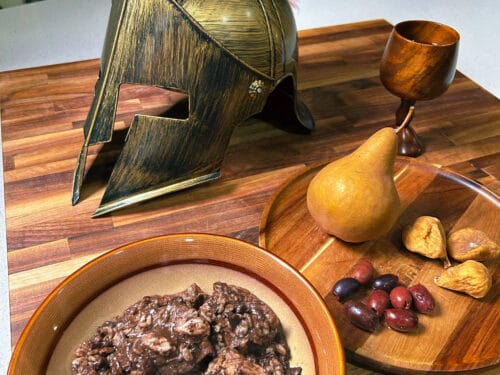

Spartan black broth, or melas zōmos, is the iconic evening meal of ancient Sparta, mentioned by writers like Plutarch and Xenophon as the defining dish of a warrior society built on discipline and endurance. It is a stark, iron-rich soup made from pork simmered in its own blood with vinegar to keep the broth smooth, and barley for slow-burning carbohydrates. Outsiders mocked it, but Spartans ate it proudly in their communal mess halls as a symbol of unity and toughness. The flavor is earthy and elemental, more about function than pleasure, and when paired with simple fruit and olives, it becomes a window into the harsh and disciplined world of a hoplite. This recipe recreates that experience as faithfully as possible.
Prep Time 10 minutesmins
Cook Time 1 hourhr30 minutesmins
Ingredients
For the Broth
1poundpork shoulder or ribs
1cuppork bloodor substitute with beef blood if needed
3tablespoonsred wine vinegar
½cupbarleypearled or cracked
6cupswater
Salt to taste
Optional: garlic or bay leaf for a more modern flavor
Sides (Optional but Historically Inspired)
Dried figs
Olives
1pear
Instructions
Prepare the Pork
Cut pork into chunks and place them in a pot with a bit of olive oil
Brown the pork
Add the Blood and Vinegar
In a separate bowl, mix the pork blood with vinegar.
Slowly pour the mixture into the pot while stirring constantly.
Add the Barley
Add barley to the pot and continue simmering.
Simmer
Let the broth cook for 1.5 to 2 hours, or until the pork is tender and the liquid has darkened and thickened.
Season and Serve
Salt lightly.
Serve hot with figs, olives, or a fresh pear.
Notes
Add the blood slowly while stirring to prevent curdling. The vinegar helps stabilize it, but steady stirring recreates the smoothness described in the ancient accounts.
Barley thickens the soup over time, so the longer you simmer, the heartier and darker the broth becomes. Aim for a texture somewhere between a soup and a thin stew.
Use pork shoulder or ribs for authenticity, since Spartans boiled down tough cuts rather than roasting tender ones. The bone adds flavor and makes the broth closer to what the syssitia likely served.