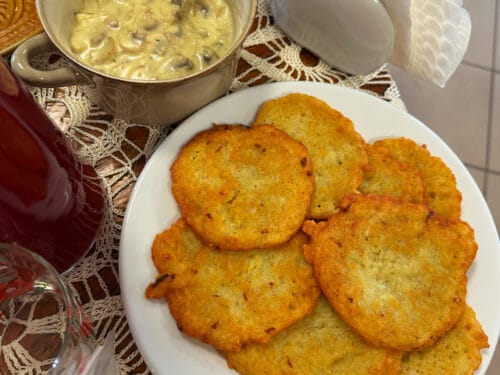
Peel the potatoes and the onion. Using the largest holes of a box grater, grate the potatoes and onion together into a large bowl. The grating of onion alongside the potato is not decorative. It adds flavour, helps prevent the potato from oxidising and provides a small amount of additional moisture that balances the pressing step.
Now press the liquid from the grated mixture. This is the most critical step in the entire recipe and cannot be abbreviated. Working in batches, take a large handful of the grated mixture and place it in the centre of a clean kitchen cloth or several layers of cheesecloth. Wrap the cloth around the potato mixture and twist and squeeze over the sink with as much force as you can manage. The liquid that comes out will be cloudy and starchy. Continue pressing batch by batch until all the grated mixture has been pressed. The pressed mixture should feel noticeably drier and more compact than raw grated potato. When you think you have pressed enough, press again.
The starchy liquid you have pressed out will separate in the bowl into a clear liquid on top and a white starchy sediment at the bottom. Carefully pour off the clear liquid and reserve the white starch at the bottom of the bowl. This starch goes back into the potato mixture and acts as an additional binder.
In a large bowl combine the pressed potato and onion mixture with the reserved starch, the eggs, flour, salt and pepper. Mix thoroughly. The mixture should hold together when you press a handful of it. If it seems too wet, add another tablespoon of flour. If it seems too dry, it is correct.