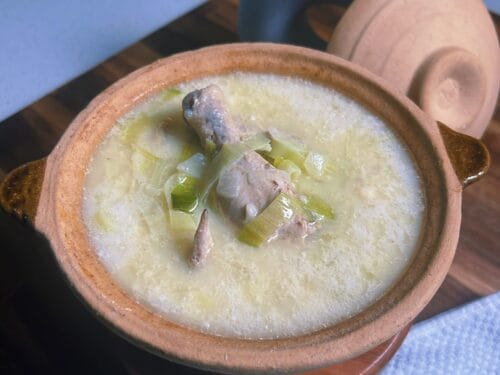

This 4,000-year-old Babylonian Pigeon Stew is one of the oldest recipes ever recorded. With a creamy broth, tender meat, and subtle aromatics, it’s a surprisingly modern-tasting dish that proves some comfort foods are truly timeless.
Prep Time 10 minutesmins
Cook Time 45 minutesmins
Ingredients
1Cornish henor small bird, roughly the size of a pigeon
1tbspclarified butteror ghee
1small onionchopped
2clovesgarlicminced
1leeksliced
4cupswater
1cupmilk
1tbspflourto thicken
1tspsaltor to taste
Instructions
Brown the Bird: In a pot, heat clarified butter over medium heat. Pan-fry the Cornish hen until golden on all sides, then remove and set aside.
Sauté the Aromatics: Add onion and garlic to the pot and cook until soft and translucent.
Build the Stew: Return the bird to the pot with sliced leeks and water. Simmer for about 10 minutes.
Add the Milk: Pour in milk and stir in salt. Let simmer until the flavors meld.
Thicken the Broth: Whisk in the flour to create a lightly creamy consistency.
Serve: Spoon the stew into bowls and enjoy warm — a taste of ancient Babylon brought to life.
Video
Notes
Cornish hen makes the perfect substitute: While the original recipe calls for pigeon, Cornish hen mimics its size and tenderness almost exactly, with only a slightly milder flavor. You can also use quail or small chicken pieces if Cornish hen isn’t available.
Use clarified butter for authenticity: The Babylonians cooked with rendered animal fat, so using ghee or clarified butter adds a nutty richness that brings the dish closer to its ancient roots. It also helps create that golden sear on the meat before stewing.
Don’t overcomplicate it: This is one of the world’s oldest recipes, and its beauty lies in its simplicity. Avoid modern seasoning blends or extra vegetables — the mild creaminess of milk, the sweetness of onions and leeks, and the savoriness of the broth are exactly what make it timeless.