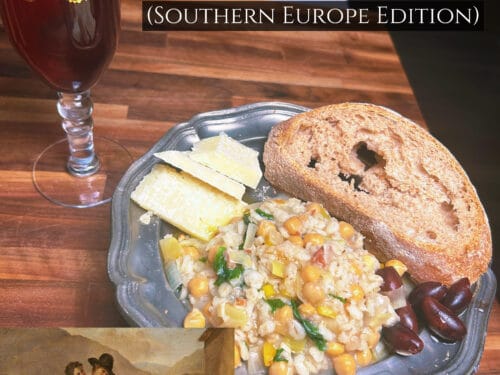
A warm, hearty stew of chickpeas, barley, and pancetta simmered with vegetables and olive oil. Rooted in 13th–15th century southern Europe, it reflects the resilience and resourcefulness of the medieval peasantry. Simple, honest, and satisfying — a meal that bridges centuries.
2small carrotsor wild greens such as chard, spinach, or kale
2tablespoonsolive oil
Pinchof saltor brine, as poorer peasants used
Optional: 1 sprig rosemary or bay leaf
To serve: rustic sourdougholives, and hard cheese like Pecorino or Parmesan
Instructions
Sauté aromatics: Heat olive oil in a pot and add onions, leeks, carrots, and garlic. Cook until softened and lightly golden.
Add pancetta: Stir in diced pancetta and cook until the fat renders and flavors the vegetables.
Simmer the stew: Add soaked chickpeas, barley, and broth. Bring to a gentle boil, then reduce to low heat. Simmer uncovered for 45–60 minutes, stirring occasionally.
Season: Add salt and herbs toward the end. The stew should be thick, rustic, and earthy.
Serve: Spoon into bowls with a drizzle of olive oil, rustic sourdough, olives, and a wedge of cheese.
Video
Notes
Historical accuracy: Olive oil and legumes were staples of southern European diets, though meat would have been rare — substitute extra olive oil for a fully peasant-accurate version.
Bread pairing: Use a coarse, sour loaf or flatbread made from durum or whole wheat flour.
Modern touch: Add a squeeze of lemon or fresh herbs when serving to echo the bright flavors of the Mediterranean fields.