
Go Back
Doro Wat

Doro Wat and Injera

Print Recipe
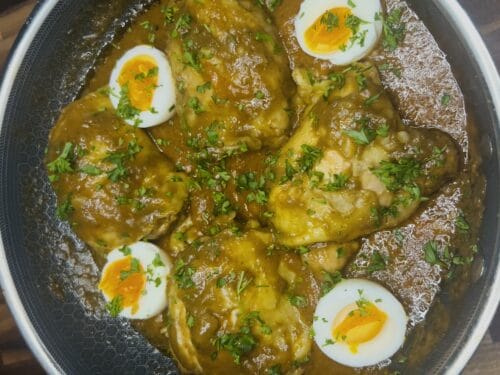
Doro Wat with Injera is Ethiopia’s iconic celebratory dish, a deeply spiced chicken stew enriched with niter kibbeh (spiced clarified butter) and berbere spice. Traditionally served with injera—Ethiopia’s fermented teff flatbread—it forms the centerpiece of major religious holidays and royal feasts. The slow caramelization of onions, the layering of spices, and the addition of boiled eggs make it a dish full of bold, layered flavors. This Solomonic Dynasty-style preparation reflects the royal grandeur of historical Ethiopian cuisine while honoring its rich Orthodox Christian traditions.
Prep Time 1 hour
Cook Time 1 hour
Injera Fermentation 2 days

Ingredients

For Doro Wat:

  • 4 bone-in chicken drumsticks or thighs
  • 1 large red onion finely chopped
  • 2 tbsp niter kibbeh spiced clarified butter
  • 1 –2 tbsp berbere spice
  • 2 –3 cloves garlic crushed
  • 1 tsp ginger
  • Salt to taste
  • Juice of ½ lemon
  • 2 boiled eggs

For Injera (Traditional Teff Style):

  • cups teff flour
  • cups water more as needed
  • Pinch of salt
  • Optional: a bit of starter from a previous batch for faster fermentation

Instructions

Injera (Start 2–3 Days Ahead):

  • Mix the teff flour, water, and salt in a bowl to form a smooth batter. Cover it loosely and allow it to ferment at room temperature for 48–72 hours. The batter will bubble and take on a pleasantly sour aroma as it ferments.
  • Heat a nonstick, cast iron, or traditional mitad (injera pan) over medium heat. When hot, pour a ladleful of the batter in a spiral motion, covering the surface evenly.
  • Steam Cook the injera by covering it with a lid. It should develop signature bubbles ("eyes") on the surface and cook through without needing flipping. Once done, remove carefully and let it cool on a clean basket or cloth.

Doro Wat:

  • Marinate Chicken: Rub the chicken with lemon juice and salt, and let it marinate while you prepare the onions.
  • Sweat the Onions: In a dry heavy-bottomed pot, cook the chopped onions over very low heat, stirring constantly, until deeply golden and soft. This slow process can take up to 45 minutes but is essential for a deep, caramelized flavor.
  • Spice It Up: Add niter kibbeh to the onions, followed by the crushed garlic, ginger, and berbere spice. Stir thoroughly to coat the onions in the aromatic fat and toast the spices.
  • Simmer: Add the chicken pieces, coating them in the spice mixture. Pour in enough water or chicken stock to just cover the chicken, and let it simmer slowly, stirring occasionally.
  • Cook until the chicken is tender and the sauce is thick and deeply red—about 45 minutes to an hour. Add boiled eggs during the last 10 minutes, allowing them to soak up the spicy sauce.
  • Finish by adjusting seasoning and stirring in a bit more kibbeh if extra richness is desired.

Notes

Onion Patience is Key: Sweating the onions slowly and without oil is critical for developing the deep, rich base flavor. Rushing this step will result in a less complex stew.
Berbere Spice Level: Start with 1 tablespoon of berbere for moderate heat and flavor; increase to 2 tablespoons for a spicier, more traditional kick. You can always add more later but it's hard to remove!
Injera Fermentation Tip: If you're fermenting injera from scratch, letting the batter sit for 2–3 full days in a warm spot (like on top of the fridge) will create that authentic, slightly sour flavor. For quicker fermentation, you can add a tablespoon of starter dough from a previous injera batch if you have it.