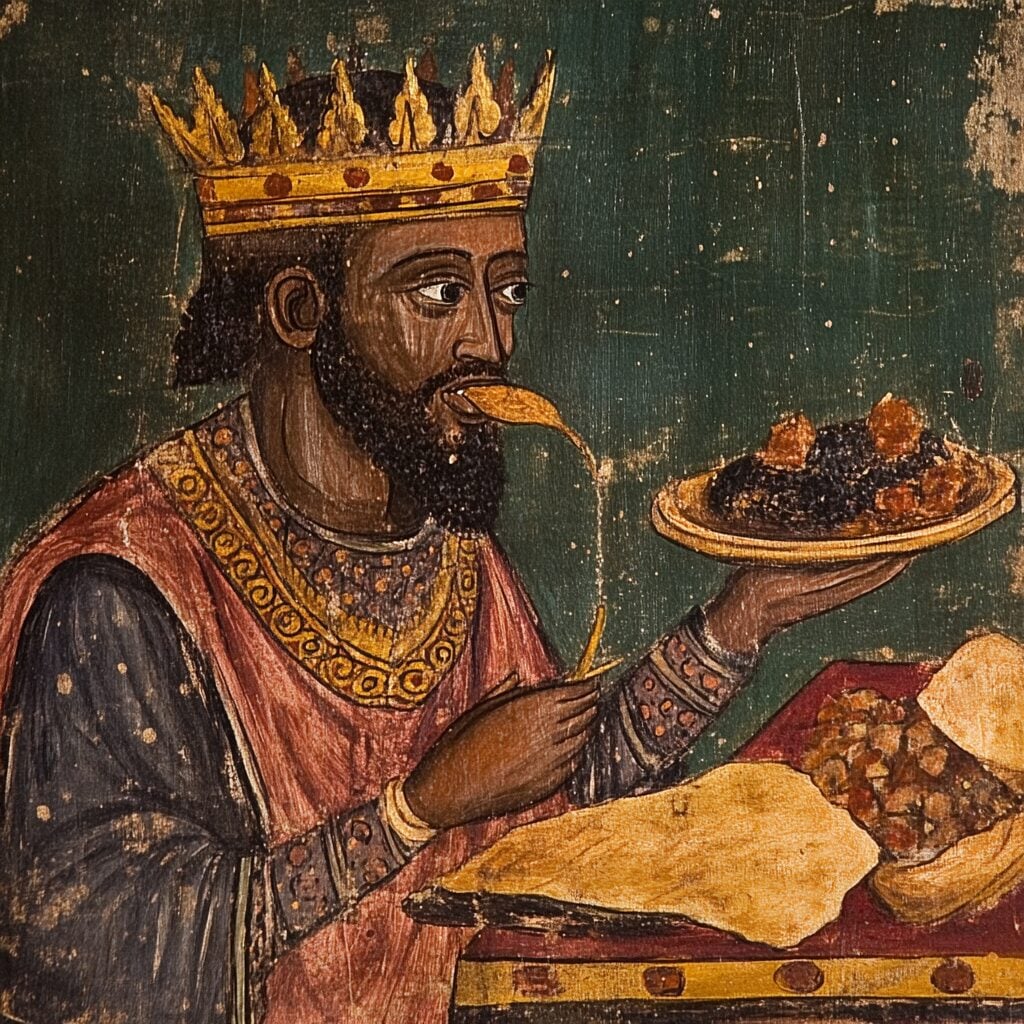
Few dishes capture the soul of a nation like Doro Wat served with Injera. Rich, fiery, and deeply comforting, this spiced chicken stew paired with the soft, spongy flatbread has been the centerpiece of Ethiopian celebrations for centuries. It is more than just food—it is a cultural ritual, an act of hospitality, and a bridge to the country’s ancient traditions.
In Ethiopia, meals are often communal experiences, with friends and family gathering around a shared platter, using injera to scoop up mouthfuls of flavorful wat (stew). The experience is intimate and symbolic, emphasizing unity and generosity. Doro Wat, in particular, holds a place of honor at these gatherings, especially during important religious holidays and life milestones. It is a dish that speaks of patience, devotion, and the layering of complex flavors—a true reflection of Ethiopia itself.
Today, we’ll dive deep into the history behind Doro Wat and Injera, tracing their origins from the powerful days of the Aksumite Empire to their evolution under the Solomonic Dynasty. We’ll also uncover the secrets behind Ethiopia’s celebrated spice blends and the enduring importance of these dishes in modern Ethiopian life.
The Legacy of Doro Wat
Doro Wat’s legacy is built on tradition and ceremony. It is not an everyday meal; it is a celebration in a bowl. Preparing Doro Wat is often a labor of love that can stretch over an entire day or more—slowly caramelizing onions, meticulously layering spices, and gently simmering chicken and eggs to perfection. Each step is done with care, signifying respect for guests and marking the importance of the occasion.
Next week
I cook these before I write them. Some of it never makes the post.
The failures, the source documents, the version that actually tasted good. That part goes out by email, and next week’s is already on the stove.
 Written and cooked by Donnie
In Ethiopian Orthodox Christian households, Doro Wat often takes center stage during holidays such as Genna (Ethiopian Christmas) and Fasika (Easter). The dish’s richness—laden with niter kibbeh (spiced butter) and the fiery kick of berbere—makes it a fitting offering for breaking long religious fasts. Adding a boiled egg to each guest’s portion, an Ethiopian tradition, symbolizes blessings, abundance, and new life, tying the dish to religious and cultural renewal.
Across generations, families have passed down their own slight variations on the Doro Wat recipe—some using more berbere, some adding extra garlic or a hint of fenugreek. Yet the heart of the dish remains unchanged: it is a meal that binds people together, weaving a common thread through Ethiopia’s rich and diverse heritage.
The Aksumite Empire and the Birth of a Cuisine
The origins of Doro Wat and Injera can be traced back to the mighty Aksumite Empire (circa 100–940 CE), a civilization that stood as one of the four great powers of the ancient world alongside Rome, Persia, and China. Aksum’s strategic location on the Red Sea allowed it to become a bustling hub of commerce, linking Africa to Arabia and India. This exchange of goods, ideas, and ingredients laid the foundation for Ethiopia’s distinctive food traditions.
Agricultural records and archaeological evidence suggest that teff, the tiny yet nutrient-rich grain essential for making injera, was already a staple crop during the Aksumite era. With its ability to thrive in highland climates and its superior nutritional profile, teff naturally became the heart of daily sustenance. Flatbreads were common across many ancient cultures, but injera’s spongy, slightly sour flavor is uniquely Ethiopian, shaped by generations of fermentation practices.
Beyond agriculture, the Christianization of the empire under King Ezana in the 4th century profoundly influenced Ethiopian cuisine. Orthodox fasting periods, requiring abstinence from meat and animal products for months at a time, led to the creation of vegetable-heavy dishes, spicy lentil stews, and creative uses of limited ingredients. On feast days, however, dishes like Doro Wat became a grand reward, celebrating survival, faith, and community.
Berbere and the Spice Trade
The story of Doro Wat’s flavor is the story of berbere—Ethiopia’s signature spice blend. Berbere is a fiery, aromatic mixture typically containing chili peppers, garlic, ginger, fenugreek, coriander, cinnamon, and cardamom. The exact composition can vary wildly from household to household, with recipes passed down and guarded like family heirlooms.
Much of Ethiopia’s complex spice palate owes its richness to ancient trade routes. Through its ports on the Red Sea, Ethiopia had access to spices from India, Persia, and Arabia. In return, it exported ivory, gold, frankincense, and myrrh. Merchants and traders introduced ingredients that eventually became deeply rooted in Ethiopian kitchens, where local cooks adapted them into their own distinct flavor profiles.
The process of grinding spices by hand, often with mortar and pestle, ensured that berbere remained deeply personal and regionalized. To this day, some Ethiopian families prepare their own berbere once a year in grand ceremonies, roasting and grinding each component with careful attention. In Doro Wat, berbere not only imparts heat but a layered, smoky complexity that cannot be replicated by any single spice alone.
Doro Wat: Ethiopia’s National Dish Today
In today’s Ethiopia, Doro Wat stands as a unifying emblem of national pride. No major celebration is complete without it. Whether at rural countryside gatherings or sophisticated urban feasts in Addis Ababa, Doro Wat brings people together around a shared sense of heritage and identity.
Despite modernization, many Ethiopian families still uphold the old traditions of preparing Doro Wat the traditional way, refusing to rush the process. The dish’s continued importance speaks to a broader Ethiopian ethos—valuing patience, respect, and communal living. Even young Ethiopians, raised in the hustle of contemporary life, often return to Doro Wat as a symbol of roots and belonging.
Globally, Doro Wat has found new admirers, appearing in international food festivals and Ethiopian restaurants across the diaspora. Its story—of empire, trade, faith, and resilience—continues to inspire. In every tender piece of chicken, every scoop of berbere-laden sauce mopped up with injera, centuries of Ethiopian history come alive.
If you’re enjoying these historical recipes, check out Eating with Empires, which is available now!
Solomonic Dynasty-Style Doro Wat with Injera Recipe:
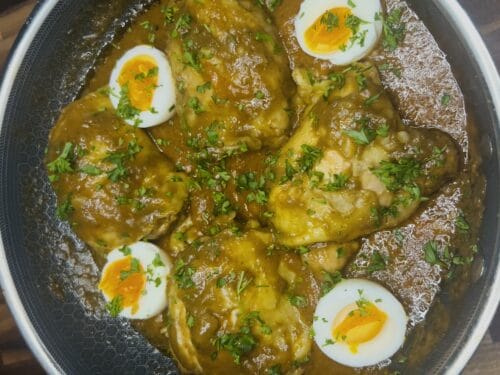
Doro Wat and Injera

Don’t lose this one.
I’ll email it to you so it’s waiting when you’re ready to cook.