Is This Breakfast? Is This Dessert? I Don’t Know. I Don’t Care. Give Me More.
Not quite breakfast. Not quite dessert. Not quite a pancake. Not quite a cake. Sometimes a recipe exists in the delicious grey zone between all of these categories and is simply in its own category.
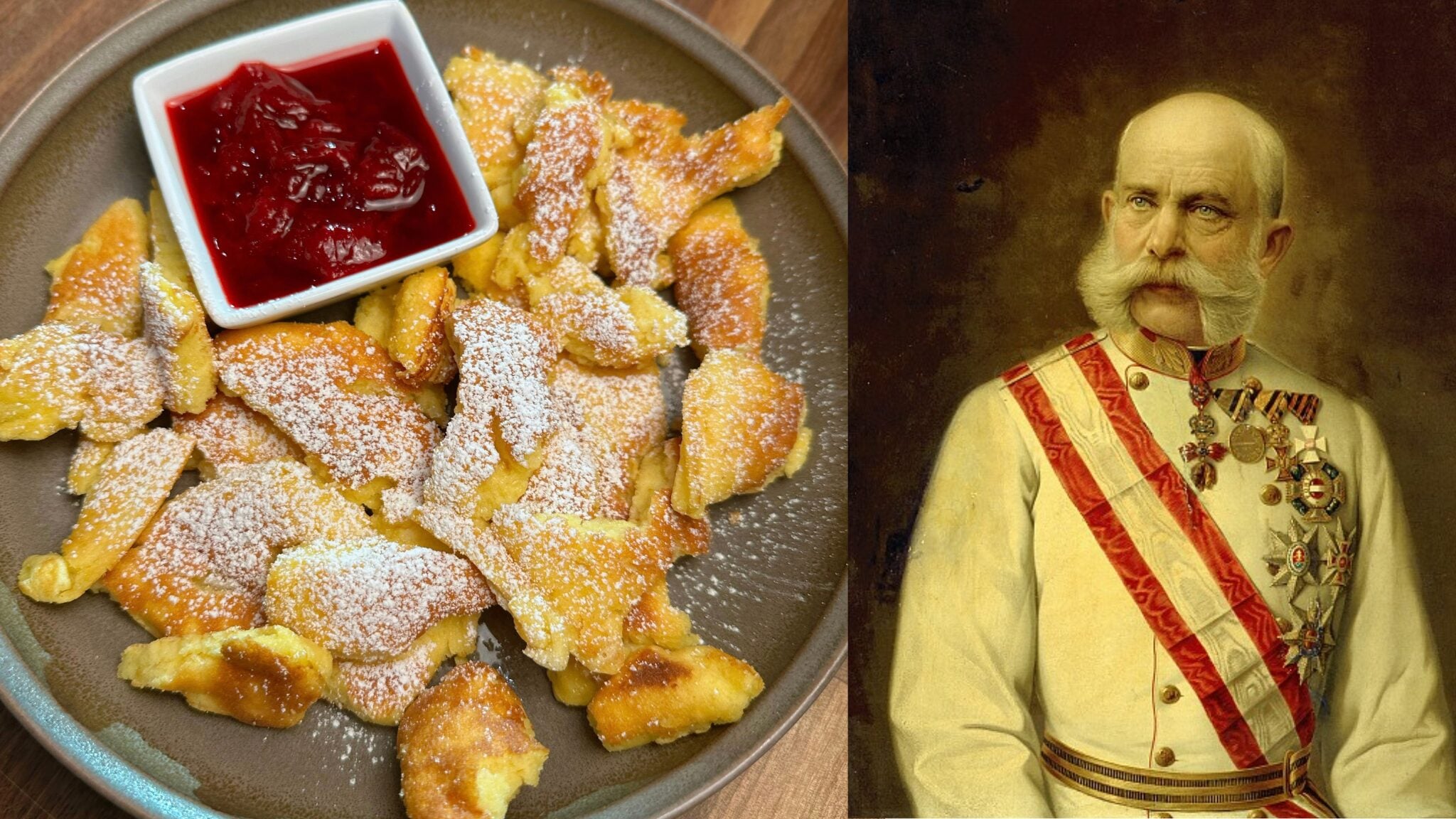
Kaiserschmarrn is that dish. A light, airy, slightly caramelised shredded pancake, dusted with powdered sugar and served alongside a warm plum compote, it is the dish that made me understand why Austrian confectionery culture has no equal in the world. I ate it in Vienna on the Eats History Project and then immediately went back to the Airbnb and made it. It is a 9.2 out of 10.
Here is the full story behind one of Austria’s most beloved dishes.
Next week
I cook these before I write them. Some of it never makes the post.
The failures, the source documents, the version that actually tasted good. That part goes out by email, and next week’s is already on the stove.
 Written and cooked by Donnie
The Emperor’s Mess: The Legend of Kaiserschmarrn
The name Kaiserschmarrn translates literally from German as the Emperor’s mess or the Emperor’s nonsense. Kaiser means emperor. Schmarrn means mess, rubbish or nonsense in Austrian dialect. That a dish associated with the Habsburg imperial court carries a name meaning imperial mess is the first and most charming piece of information about it, and it requires an explanation.
It is generally agreed that the dish is associated with Emperor Franz Joseph I of Austria, who ruled the Austro-Hungarian Empire from 1848 until his death in 1916, one of the longest reigns in modern European history. Beyond that general agreement the story fractures into at least three competing legends, none of which has been verified by a single contemporary document, all of which are entertaining enough to tell.
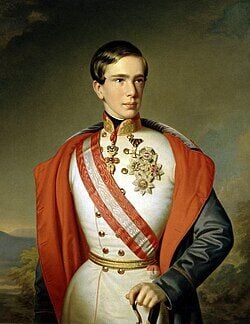
The most widely told version involves Franz Joseph and his wife Empress Elisabeth of Bavaria, the woman most Austrians know simply as Sisi. Elisabeth was famously, obsessively concerned with maintaining what contemporaries described as her minimal waistline. She directed the royal chef to prepare only light desserts for her, much to the dismay of her notoriously austere husband, who was documented as a man of simple, plain tastes who ate boiled beef every day and did not particularly enjoy being told what to have for dinner. When the chef presented his confection, Empress Elisabeth found it too rich and refused to eat it. The exasperated Franz Joseph quipped: ” Now let me see what Schmarrn our chef has cooked up”. It met his approval. He finished his serving and then ate hers as well. The dish was subsequently named after the Emperor who had salvaged it from imperial rejection.
The second version takes place not at the Viennese court but in the Alps, during one of Franz Joseph’s many hunting expeditions in the Salzkammergut region. According to this telling, the Emperor dropped into a farmhouse feeling hungry. The farmer’s panicked household attempted to create a luxurious pancake for the unexpected imperial guest. In his nervousness, the cook made a mess of it, tearing and mangling the pancake beyond rescue. Applying what one historical account calls a little Alpine cunning to save the day, he shredded the remains, added plum jam, dusted it with powdered sugar, and presented it as the finished article. The Emperor loved it. The dish was named after him.
The third version, documented by several Austrian culinary historians, traces Kaiserschmarrn to a simpler predecessor called Holzfällerschmarrn, the woodcutter’s mess, a basic scrambled pancake eaten by working people in Upper Austria. When Franz Joseph was served this during a hunting trip in the Salzkammergut, it was refined in his honour with premium ingredients, milk, eggs, and raisins being the documented additions, and the ordinary rural dish was elevated into a court preparation named after the emperor for whom it was improved.
What all three legends share is a messed-up pancake, an emperor, and a happy outcome. What none of them can offer is a contemporary primary source confirming any specific version. The honest historical assessment, as several Austrian culinary historians have noted, is that Kaiserschmarrn almost certainly predates its association with Franz Joseph I, existing in some form as a rural Alpine preparation long before it was refined for the imperial court, and that the various origin legends represent the cultural desire to attach a beloved dish to a beloved historical figure rather than a documented account of its creation. The dish is real. The legends are probably embellished. Both are worth knowing.
Austria’s Confectionery Culture: The World That Made Kaiserschmarrn
To understand why Kaiserschmarrn became iconic rather than simply popular requires understanding the specific food culture of Vienna and the broader Habsburg Empire in the 19th century, because Austrian confectionery is one of the great culinary achievements in European history, and it does not receive the recognition it deserves.
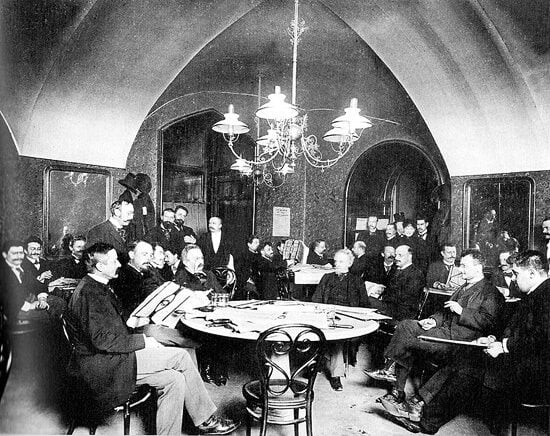
The Viennese café culture that developed from the late 17th century onward, supported by the legend, probably apocryphal but widely told, that coffee beans were captured from the defeated Ottoman army after the 1683 Battle of Vienna, produced an environment in which confectionery and pastry were elevated to the status of high art. The Konditorei, the specialist pastry shop, became a Viennese institution that had no real equivalent in most of the rest of Europe. The Demel, founded in Vienna in 1786 and still operating today as one of the most celebrated pastry shops in the world, is the direct institutional expression of this tradition. The Sacher Hotel’s Sachertorte, the Strudel tradition, the Kipferl that became the French croissant, the Cremeschnitte that became the Polish kremówka, the Linzer torte, which is considered the oldest named torte in the world, all of them emerged from or were refined within the Vienna confectionery tradition.
Kaiserschmarrn fits within this tradition in a specific and revealing way. It is not a sophisticated technical achievement in the manner of the Sachertorte or the Linzertorte. It requires no specialist equipment, no elaborate technique and no expensive ingredients beyond butter, eggs, and cream. What it requires is the specific Austrian understanding that a simple preparation made with care and good ingredients can be as satisfying as anything technically more demanding. The combination of a perfectly airy batter, properly caramelised in butter, torn into pieces and dusted with sugar, served with the sharp sweetness of plum compote, is a balance of flavour and texture that no more complex dessert necessarily improves upon.
The schmarren family of dishes, of which Kaiserschmarrn is the most famous member, represents the Austrian culinary tradition at its most characteristically honest. These were working people’s food, rural Alpine preparations made from pantry staples, that the Viennese and then the imperial court adopted and refined without changing their essential character. The dish that fed a woodcutter in the Salzkammergut was made better with better ingredients but remained recognisably the same dish. That continuity between the rural and the imperial is one of the more endearing characteristics of Austrian food culture.
How Kaiserschmarrn Spread: From the Imperial Table to Every Tourist Trap in Vienna
The dish appears in Viennese recipe collections and handwritten household documents from the latter half of the 19th century, confirming that it had moved from imperial association to broader domestic preparation within decades of its documented connection to Franz Joseph. The Leo Baeck Institute’s research into Jewish Viennese cooking, which documented the remarkable assimilation of Jewish households into Viennese food culture in the 19th century, confirms that Kaiserschmarrn appears regularly in the handwritten recipe collections of Jewish Viennese families from the imperial period. The dish that carried an emperor’s name was being made in kosher kitchens across Vienna with appropriate modifications within a generation of its imperial association.
Across the former Austro-Hungarian Empire, Kaiserschmarrn appears in the culinary traditions of Austria, Bavaria, Slovenia, Hungary and the Czech Republic, each with regional variations reflecting local ingredients and preferences. The Hungarian kürtős kalács and the Czech palačinky are related but distinct preparations. The Bavarian version is virtually identical to the Austrian. The unifying characteristic across all regional versions is the torn, caramelised pancake texture that distinguishes Kaiserschmarrn from every other pancake tradition in the world.
In Austria today, Kaiserschmarrn occupies a specific cultural position as the defining dish of the Alpine hut, the Hütte, the mountain refuge where skiers and hikers stop for lunch or an afternoon meal. The association between Kaiserschmarrn and the Alpine outdoor experience is so thoroughly embedded in Austrian culture that ordering it feels like the correct response to a cold mountain day regardless of whether you have been skiing. Whether you are in a Michelin-starred restaurant in Vienna or a wooden hut at 2,000 metres above sea level in the Tyrol, the Kaiserschmarrn is likely to be on the menu.
My Rating
I genuinely cannot tell you whether Kaiserschmarrn is breakfast or dessert, and after eating it three times in the past month I have concluded that the question is philosophically unanswerable and practically irrelevant. It is sweet enough to be dessert. It is substantial enough to be a meal. It is light enough that you could eat it first thing in the morning and feel entirely justified. The Austrians serve it as both a dessert and a light lunch without apparent cognitive dissonance, and I think they have the right approach.
The key to the home version is the batter. The folded egg whites are not a complication you can skip or abbreviate. They are the entire reason the finished dish is light and airy rather than dense and stodgy. Taking the time to whip the egg whites to proper stiff peaks and fold them carefully into the yolk mixture produces a batter that puffs dramatically in the buttered pan and maintains an almost soufflé-like quality in the finished dish that a standard flat batter cannot approach.
The quarter-cutting technique before flipping, rather than attempting to flip the whole pancake at once, is the practical solution to the problem of an airy batter that would collapse under the stress of a full flip. It is also, not coincidentally, the origin story of the dish: a cook who could not flip his pancake properly discovered that cutting it into pieces and flipping those individually produced something better than the original intention.
The plum compote is the component that elevates the finished dish from very good to genuinely extraordinary. The sharpness of the plum against the sweet caramelised pancake is the balance that makes this work as something more sophisticated than a pancake with sugar. Make the compote. Do not substitute jam or skip it. The contrast is the point.
Rating: 9.2 / 10
Is it breakfast? Is it dessert? It’s great. That’s enough.
The Recipe: Kaiserschmarrn with Plum Compote
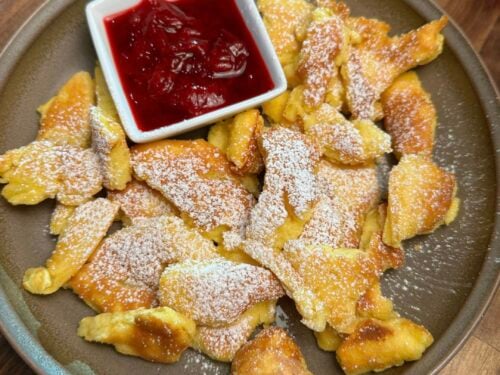
Kaiserschmarrn with Plum Compote

Don’t lose this one.
I’ll email it to you so it’s waiting when you’re ready to cook.
Ingredients
Instructions
Notes
- The egg white folding is the single most important technique in this recipe. Properly whipped, properly folded egg whites produce a Kaiserschmarrn that is light, almost soufflé-like, and significantly more satisfying than a dense batter version. The extra five minutes this takes is the difference between a good result and a genuinely extraordinary one.
- The pan size matters. Too small and the batter will be too thick and take too long to cook through, producing a dense, undercooked centre. Too large and the batter will be too thin and lack the airy depth that makes Kaiserschmarrn itself rather than simply a flat torn pancake. A 26 to 28cm pan for this quantity of batter is the correct range.
- The plum compote, zwetschgenröster in Austrian German, is the traditional accompaniment and the correct one. Apple sauce is the second most common accompaniment in Austrian restaurants and is an excellent alternative when plums are not in season. The compote can be made ahead and refrigerated for up to a week.