
Ketchup is in 97 percent of American refrigerators. It is the default condiment on every diner table in the country, the thing that appears automatically alongside a burger or a plate of fries without anyone having to ask. Most people could not tell you much about where it came from beyond a vague association with Heinz and the colour red.
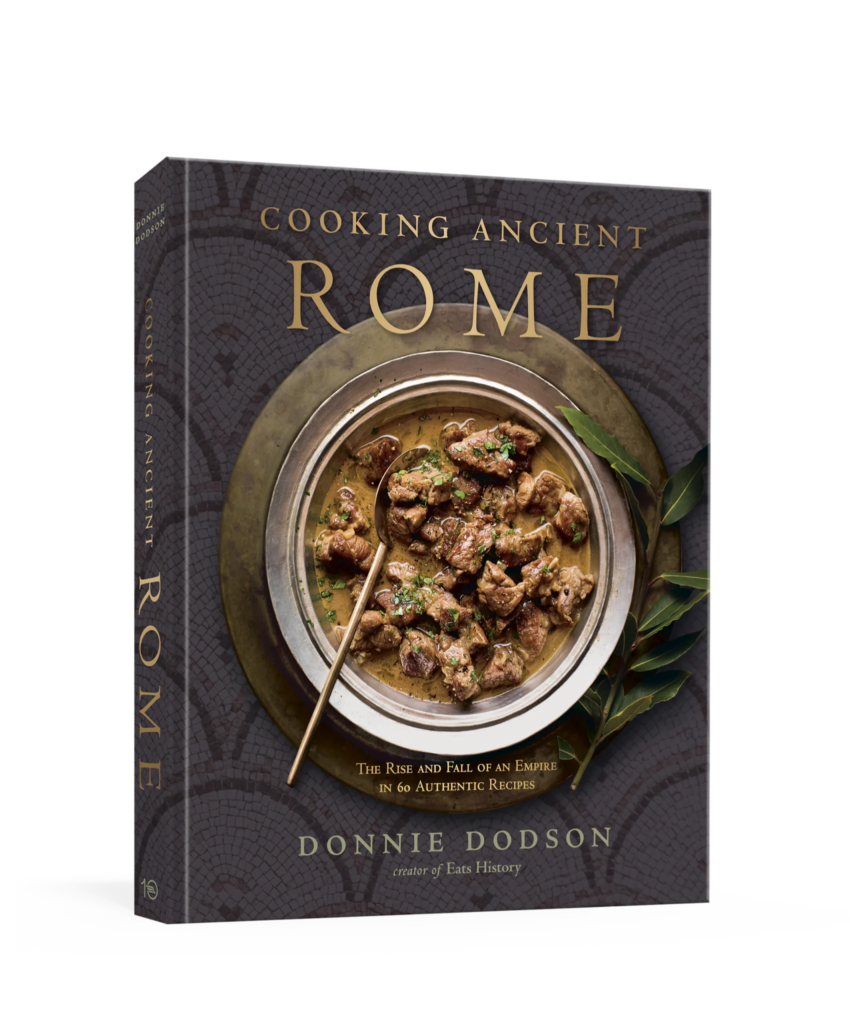
Hey, my first cookbook, Cooking Ancient Rome, is now available for pre-order!!! Check it out!
The real history of ketchup is considerably stranger and considerably more interesting than the bottle suggests. It started as a fermented fish sauce in Southeast Asia around 300 BC. It traveled via British and Dutch trade ships to Europe, where it spent a century as a mushroom and walnut condiment. It was feared as a poison in tomato form. It killed people before vinegar became a standard ingredient. And then one former horseradish salesman from Pittsburgh cleaned the whole thing up and made it the most successful condiment in American history.
Before Tomatoes: The Fish Sauce That Became Ketchup
Next week
I cook these before I write them. Some of it never makes the post.
The failures, the source documents, the version that actually tasted good. That part goes out by email, and next week’s is already on the stove.
 Written and cooked by Donnie
The word ketchup traces directly to the Hokkien Chinese word kôe-chiap or kê-chiap, meaning the brine of pickled fish or shellfish. Food historians have traced ketchup’s origins to fermented fish pastes used in southeastern China and what is now northern Vietnam as far back as 300 BC. These fish sauces were intensely savoury, salt-preserved and loaded with the glutamate compounds that make fermented fish products, from garum to fish sauce to Worcestershire, so extraordinarily effective as flavour amplifiers in cooking.
The sauce traveled via the maritime trade routes of Southeast Asia and was encountered by British and Dutch sailors in the 17th century, who brought the concept if not the exact recipe back to Europe. The first printed mention of ketchup in the English language dates to 1690. The first known printed English language recipe, published in 1727, described combining white wine, wine vinegar, shallots, anchovies, mace, cloves, lemon peel and horseradish and leaving it to ferment. The tomato was not in that recipe. The tomato was not in any ketchup recipe for another hundred years, because for most of the 17th and 18th centuries Europeans genuinely believed tomatoes were poisonous.
I made mushroom ketchup for this channel previously and it is a direct descendant of this early European ketchup tradition. Mushroom ketchup was the dominant form in British kitchens from the 18th century through well into the 19th century, with walnut ketchup, oyster ketchup and anchovy ketchup all coexisting in the same culinary tradition. Jane Austen’s closest friend Martha Lloyd documented a walnut ketchup recipe. None of them contained tomatoes. Ketchup for most of its existence as a named preparation was simply a category of fermented or concentrated savoury sauce, not a specific product.
The Tomato Enters the Picture: Slowly and Dangerously
The first known tomato ketchup recipe appeared in 1812, created by a Philadelphia horticulturist named James Mease. He included brandy in the recipe and minimal spices. This early tomato ketchup was genuinely dangerous, not because tomatoes are poisonous, which they are not, but because 19th century food preservation was unreliable and the acidic but low-vinegar tomato sauces of the early period spoiled in the bottle. Food poisoning and death were not uncommon fates after consumption of poorly preserved tomato ketchup. Mushroom, walnut and fish ketchups were still more popular in the United States until the mid-1800s because they were safer to eat.
In the 1900s, ketchup was also subject to widespread adulteration. Sodium benzoate, a chemical preservative now considered potentially harmful, was used widely. Coal tar dyes were added for colour. The Pure Food and Drug Act of 1906, which Harvey Washington Wiley and a group of volunteers helped push into law after literally feeding themselves potential food adulterants to document their effects, specifically addressed the ketchup industry’s practices.
Henry Heinz of Pittsburgh had already been working toward a cleaner solution. Heinz and Noble had produced tomato and walnut ketchups since 1872, gone bankrupt, and reemerged as the H.J. Heinz Company. In 1876 Heinz introduced a tomato ketchup made with ripe whole tomatoes, distilled vinegar, sugar, salt and spices. The key insight was using ripe tomatoes, which contain natural pectin, combined with significantly more vinegar than competitors were using. The increased acidity created a product that did not need additional preservatives to remain shelf stable. Heinz reserved the spelling ketchup for this product while competitors continued using catsup, a deliberate brand differentiation that stuck. His 57 Varieties marketing slogan, adopted in 1896, was made up by combining his favourite number and his wife’s favourite number. He already had more than 60 products at the time. The number was fiction. The product was genuine and it worked.
Ketchup is now found in 97 percent of American homes. The industry Heinz built from a horseradish salesman’s pivot into vinegar-forward tomato sauce now produces billions of bottles annually. All of it descending from a Southeast Asian fish brine that British sailors brought home from their trading voyages three hundred years ago.
The 1900 Wisconsin Family Cookbook Recipe: Back to the Basics
The recipe I used is documented in a handwritten Wisconsin family cookbook dated approximately 1900 to 1920, held in the Szathmary Culinary Arts Collection at the University of Iowa Libraries. The collection contains over 4,000 handwritten and printed cookbooks and is one of the most significant archives of American domestic cooking in existence.
The instruction is simple to the point of being almost minimal: tomato juice strained through a sifter, combined with sugar, salt, black pepper, cinnamon, cloves, cayenne and vinegar, boiled three hours until thick. That is the entire recipe. No quantities, no ratios, no yield. The home cook of 1900 to 1920 was expected to know from experience and instinct how to calibrate those proportions. I scaled it to a modern workable batch and tested the ratios until the flavour was correct.
The spice profile of this recipe is noticeably different from modern Heinz. The cinnamon and cloves give it a warm, sweet-spiced depth that reads almost like a savoury fruit preserve rather than the clean, sharp tomato vinegar profile of the commercial version. That spice complexity was standard in 19th and early 20th century American tomato ketchup and was gradually refined out of the commercial product as Heinz standardised and simplified toward mass market taste preferences. The 1900 version tastes like what ketchup was before it became what ketchup is.
Is It Worth Making at Home? The Honest Cost-Benefit Assessment
The honest answer depends entirely on what you are comparing it to.
Two pounds of Roma tomatoes produces approximately one cup of finished ketchup. At current grocery prices, the cost of the tomatoes alone roughly equals the cost of a standard bottle of Heinz. When you factor in the vinegar, sugar and spices, plus approximately three hours of simmering and active attention, the homemade version costs more in both money and time than simply buying Heinz.
That said, this is not the right comparison. The right comparison is whether the homemade version produces something meaningfully different from the commercial version. And the honest answer to that question is yes. The 1900 Wisconsin recipe produces a ketchup that is sweeter and more warmly spiced than Heinz, with a complexity from the cinnamon and cloves that the commercial product does not have. It is not a perfect replica of the ketchup in your refrigerator. It is something older, richer and more interesting.
If you want Heinz, buy Heinz. If you want to understand what ketchup tasted like before it was standardised for mass production, or if you want a more complex, spiced condiment for specific applications where that flavour profile is an asset, make this. The effort is not enormous and the result is genuinely worthwhile.
Rating: 8.5 / 10. Back to the Basics Series approved.
The Recipe: Wisconsin Family Tomato Ketchup, c.1900-1920

Tomato Ketchup c.1900

Don’t lose this one.
I’ll email it to you so it’s waiting when you’re ready to cook.
Ingredients
Instructions
Notes
- The three-hour reduction is not optional for the correct consistency. Ketchup that has not fully reduced is thin, watery, and lacks the concentrated tomato flavour that makes the finished product worthwhile. Low and slow with regular stirring is the method.
- The cinnamon and cloves are the flavour details that most distinguish this 1900 recipe from modern commercial ketchup and they are worth keeping rather than reducing. They are historically accurate to the period and they produce a noticeably more complex flavour than plain tomato vinegar ketchup. If you want something closer to modern Heinz, reduce the cinnamon to ⅛ tsp and omit the cloves entirely.
- Roma tomatoes specifically produce the best result for home ketchup because their flesh-to-liquid ratio is higher than other varieties. Beefsteak or vine tomatoes work but require a longer reduction time to reach the same consistency. Out of season or pale hothouse tomatoes will produce a noticeably inferior result. Make this in late summer when Roma tomatoes are at peak season and you will get a significantly better ketchup than at any other time of year.