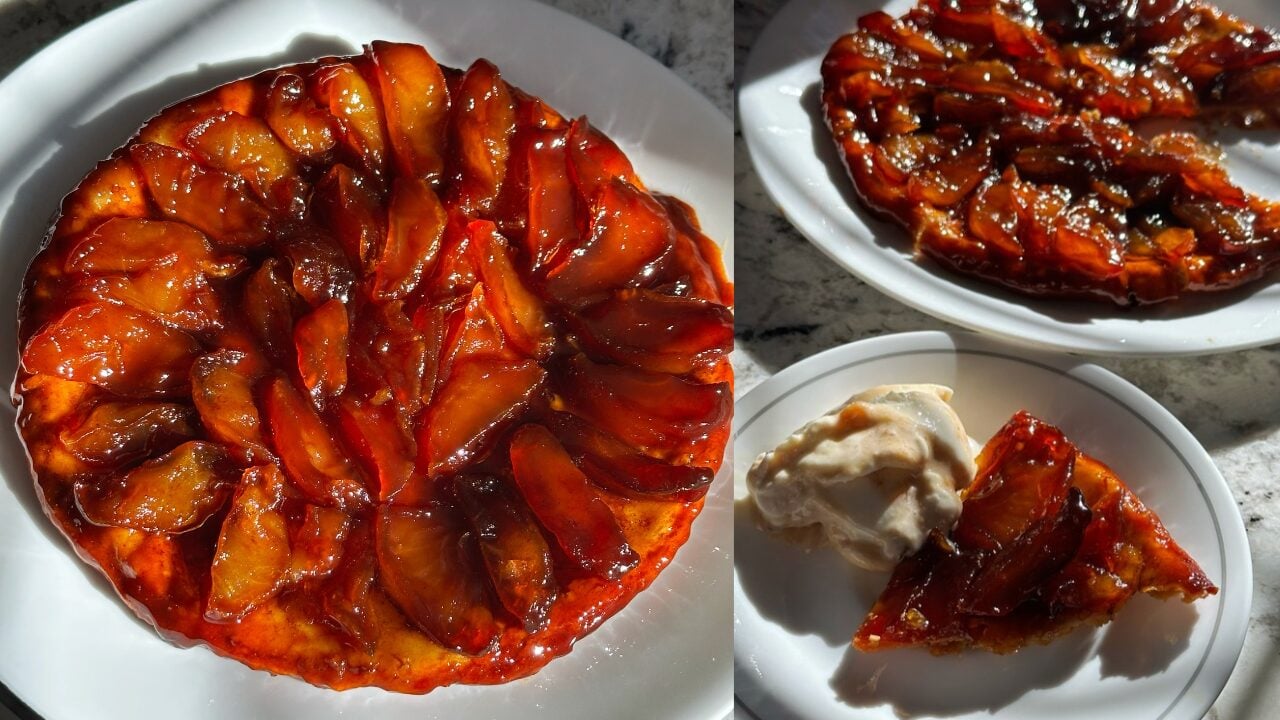
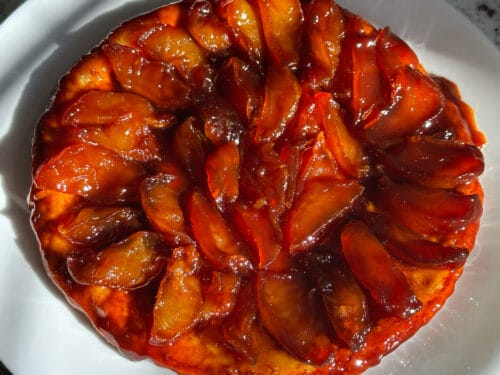
Some desserts earn their reputation through technique. Tarte Tatin earns it through a single dramatic moment: the flip. You bake apples, sugar, and butter under a lid of pastry, then turn the whole hot pan over onto a plate and hope. When it works, you get a glossy, mahogany-colored crown of caramelized apples sitting on a crisp golden base. It looks like something from a Paris patisserie window, and it comes out of one cast iron skillet.
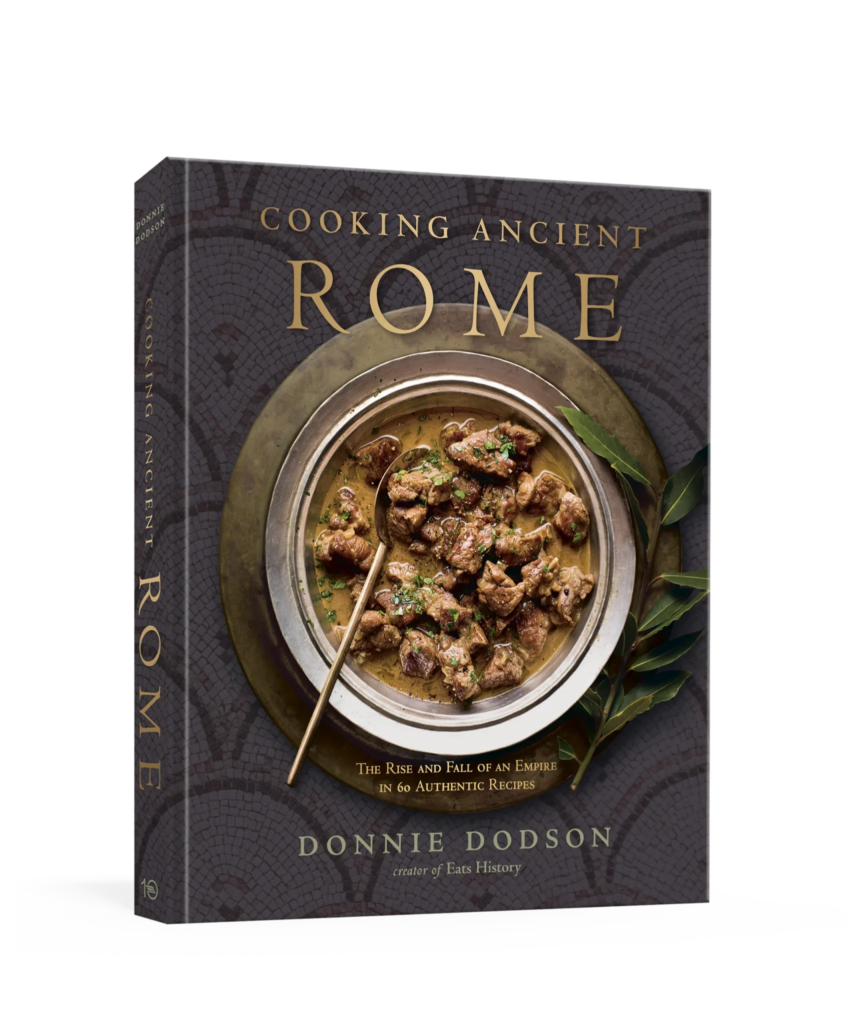
Hey, my first cookbook, Cooking Ancient Rome, is now available for pre-order!!! Check it out!
It also comes with one of the best origin stories in French food: two sisters, a busy hunting season, a kitchen disaster, and a happy accident. The only problem is that the story is mostly legend.
The Legend: Stéphanie Tatin’s Accident
Next week
I cook these before I write them. Some of it never makes the post.
The failures, the source documents, the version that actually tasted good. That part goes out by email, and next week’s is already on the stove.
 Written and cooked by Donnie
The popular version goes like this. In the 1880s, two sisters, Stéphanie and Caroline Tatin, ran the Hôtel Tatin in Lamotte-Beuvron, a small town in the Sologne region, about 100 miles south of Paris. The area was hunting country, and during the busy autumn season the hotel was full of hungry guests.
Stéphanie, the story says, was making a classic apple tart when she got flustered. In one telling she left the apples cooking in butter and sugar too long and, to save the dish, covered the pan with pastry and baked it. In another she put the tart together upside down by mistake. In a third, the tart was dropped and she scooped it back into the pan. Whichever version you prefer, she turned it out, served it anyway, and the guests loved it.
It is a charming story. It is also unattested, and it has a basic logic problem. If she set out to bake a tart, why were the apples already cooking in a pan on the stove?
What the Record Actually Shows
The Tatin sisters were real. Their parents, Jean and Aimée Tatin, took over a hotel near the Lamotte-Beuvron train station in 1858, and their daughters ran it later. Stéphanie, known as Fanny, lived from 1838 to 1917, and Caroline from 1847 to 1911. They sold the hotel in 1906. Beyond that, the story gets murky.
Upside-down fruit tarts already existed in the region. A dish called tarte solognote, named for the Sologne, had been made there long before the sisters made their version famous, and food historians generally see the Tatin tart as an improved or rebranded version of it. The idea was not even new in Paris, since Carême’s Pâtissier Royal Parisien mentions glazed upside-down cakes (gâteaux renversés) with apples in an 1841 edition.
The paper trail is thin. The sisters never wrote a cookbook, never published their recipe, and probably never called it “tarte Tatin” themselves. The earliest printed mention is reported to be a 1903 article in the Bulletin de la Société Géographique du Cher. The earliest known written recipe was set down by Marie Souchon, a schoolteacher in Lamotte-Beuvron and a friend of the sisters, and was uncovered by researcher Bernard Munos.
The name came later, and from two sources. The famous critic Curnonsky, nicknamed the Prince of Gastronomes, put the tart in a 1926 volume of La France Gastronomique devoted to the Orléanais region, recommending the apple or pear tart of the demoiselles Tatin. Then Paris took it up. The restaurant Maxim’s put it on its menu as tarte des demoiselles Tatin, which is how it became a national dessert.
Maxim’s has its own legend, too. Its longtime owner Louis Vaudable claimed he discovered the tart as a young hunter near Lamotte-Beuvron. Another story says Maxim’s sent a cook disguised as a gardener to steal the recipe. Both stories have a timeline problem. Vaudable was born in 1902, the sisters retired in 1906, and the Vaudable family did not buy Maxim’s until 1932. Good legends, bad dates.
From Provincial Tart to Michelin Menu
Tarte Tatin is one of those rare dishes that Michelin-level chefs keep returning to without improving it, because the basic idea is already so good.
- Raymond Blanc, chef-patron of Le Manoir aux Quat’Saisons, which has held two Michelin stars since 1985, has published a classic tarte Tatin built on all-butter puff pastry.
- Michel Roux Jr. has a fig tarte Tatin, noting that the classic is apple but that the method works with many fruits.
- Christophe Hay, a starred chef in the Loire region, is known for reinterpreting the Tatin with a contemporary touch while staying faithful to the original flavors.
- Alain Passard of the three-Michelin-star L’Arpège in Paris is famous for his apple “bouquet of roses” tart, served with a caramiel sauce (caramel and honey). It is a cousin of the Tatin rather than a true one, but it shows how far chefs have taken the apple-and-caramel idea.
The fact that a 19th-century hotel tart sits comfortably on the same menus as modern tasting menus says a lot.
Why It Is the Perfect Thanksgiving and Holiday Dessert
This is my opinion, but I think it is a strong one.
First, apples. They are at their peak in the fall, they are cheap, and they are familiar, so the dessert feels seasonal without being strange. Second, it is a better answer to the Thanksgiving pie table than another pie. It has the same comforting flavors, but the deep caramel and the flaky pastry make it feel more elegant. Third, it comes together in one cast iron skillet, so you are not juggling pans on a crowded stove. Fourth, the flip is theater. Turning it out at the table in front of guests is a showpiece moment, and it works whether you are feeding four people or twelve. Serve it warm with crème fraîche, whipped cream, or vanilla ice cream.
The Keys to a Perfect Tarte Tatin
Tarte Tatin is simple in concept and unforgiving in a few specific places.
Dry the apples first. Apples are mostly water, and water is the enemy of good caramel. Leaving the quartered apples uncovered in the fridge for a few hours or overnight dries the surface, which gives you a darker, less soupy caramel.
Pick the right apples. Firm apples like Golden Delicious or Braeburn hold their shape. Soft apples collapse into sauce.
Make the caramel, then stop stirring. Cook the sugar and water until it turns a deep amber, like an old penny. Cast iron holds heat, so pull it a shade lighter than you want. Bitter, burned caramel cannot be fixed, so if it smells acrid, start over.
Pack the apples tightly. They shrink a lot as they cook, so stand them on edge in tight concentric circles with no gaps to tip over.
Cook them on the stove first. This is the step that builds the color. Baste every five minutes and rotate the pan so hot spots even out. The syrup goes from thin and pale to thick and deep brown.
Keep the pastry cold. Let the pan cool for just three to five minutes so the caramel stays fluid, then lay cold pastry over it and cut vents. Warm pastry melts and loses its flake.
Flip it while it is hot. Rest it for only three to five minutes, run a knife around the edge, and invert onto a rimmed plate in one quick motion. Wait 30 seconds before lifting the pan so the caramel flows down. The handle stays dangerously hot, so use oven mitts. If it sticks, put the pan back on low heat for 30 to 45 seconds to re-melt the caramel and try again.
My Rating
This is one of the best things I have made for this channel. The caramel is the star, deep and slightly bitter in the best way, and it soaks into tender apples while the pastry stays crisp underneath. It is rich without being heavy, and it tastes far more complicated than the ingredient list suggests.
Rating: 9.7 / 10
The Recipe: Tarte Tatin

Don’t lose this one.
I’ll email it to you so it’s waiting when you’re ready to cook.
Ingredients
Equipment
Instructions
Notes
- Handle warning: The skillet handle stays dangerously hot after the oven, so keep a mitt on it until the pan is off the plate.
- Serving: Best served warm with crème fraîche, whipped cream, or vanilla ice cream.
- Holiday timing: You can bake it a few hours ahead and leave it in the pan. Re-warm it on a burner for about a minute to loosen the caramel before flipping.
- Other fruits: The same method works with pears, quince, or figs, as the chefs above show.